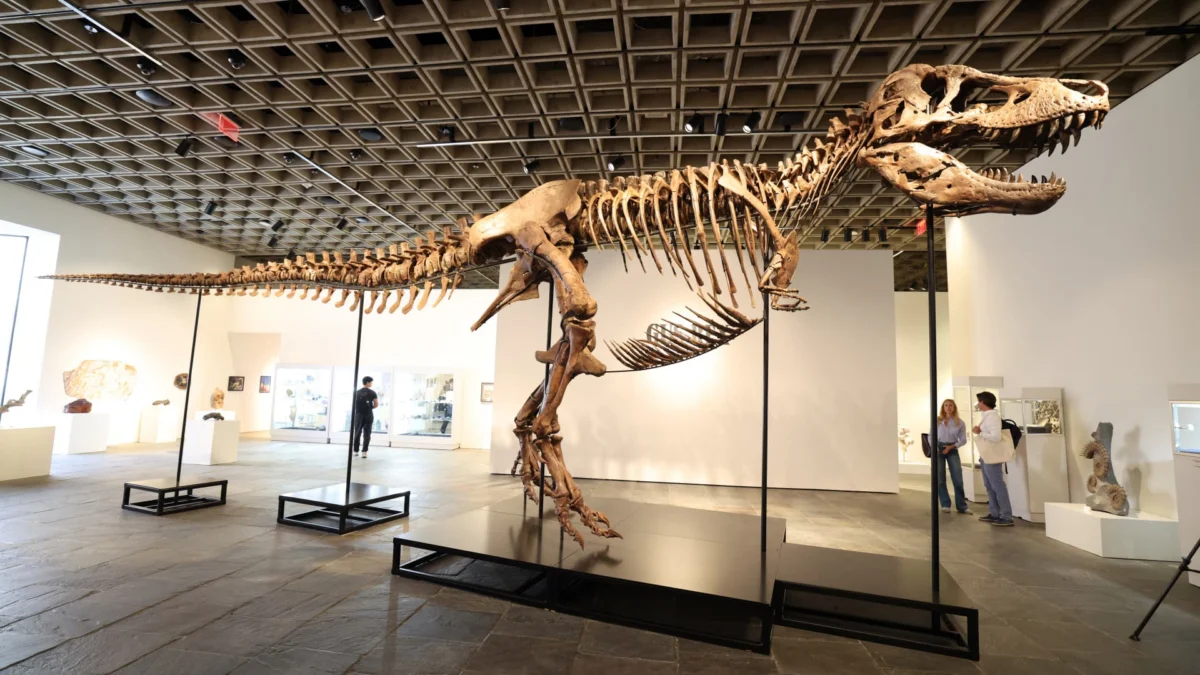
A Tyrannosaurus rex specimen nicknamed Gus sold at Sotheby’s for $50.1 million, establishing a new benchmark as the most expensive dinosaur fossil ever auctioned. The sale underscores a surge in dinosaur prices at auction, helped by a growing demand from collectors seeking rare long-term value beyond traditional art categories. The winning bid came after a ten-minute auction with seven bidders, propelling Gus beyond its estimated range of $20 million to $30 million and surpassing the previous record set by a Stegosaurus skeleton known as Apex, which sold for $44.6 million in 2024 to billionaire Ken Griffin.
Gus was discovered in South Dakota and is estimated to be about 67 million years old. Sotheby’s notes that the specimen is one of the most complete T. rex finds, with 183 fossil bone elements, representing roughly 61% of the skeleton by bone count. The dinosaur measures about 38 feet in length, stands around 12.5 feet tall, and features a skull length of about 54 inches, making it one of the largest T. rex fossils known to science and the collecting market. In addition to its size, Gus displays several injuries that include fractured and healed ribs and gastralia, along with bite marks on skull bones, underscoring the specimen’s remarkable preservation state and the challenges of preparation for display.
Cassandra Hatton, Sotheby’s vice chairman and worldwide head of science and natural history, praised Gus as “not only an exceptional find, but a specimen that’s been excavated, documented, prepared and cared for with real excellence.” The sale reflects a broader trend in which dinosaur fossils are among the fastest-growing segments of the collectibles market, as wealthy buyers search for non-traditional stores of value and houses of auction expand their catalog beyond art. The market has also seen notable prior records, such as a T. rex named Stan sold at Christie’s in 2020 for $31.8 million, suggesting a rising trajectory for megafauna fossils among top collectors.
Prospective buyers and paleontologists alike caution that the dinosaur-bone market carries authenticity risks due to limited verification frameworks and provenance records. While Gus’s sale indicates strong demand and willingness to pay premium prices for rare specimens, experts warn that the development of clearer standards will be essential as auctions continue to push price ceilings higher. In the wake of Gus’s sale, museums and collectors will likely reassess sourcing and verification procedures for high-profile fossils, balancing the appeal of extraordinary specimens with the need for credible documentation and long-term stewardship.


