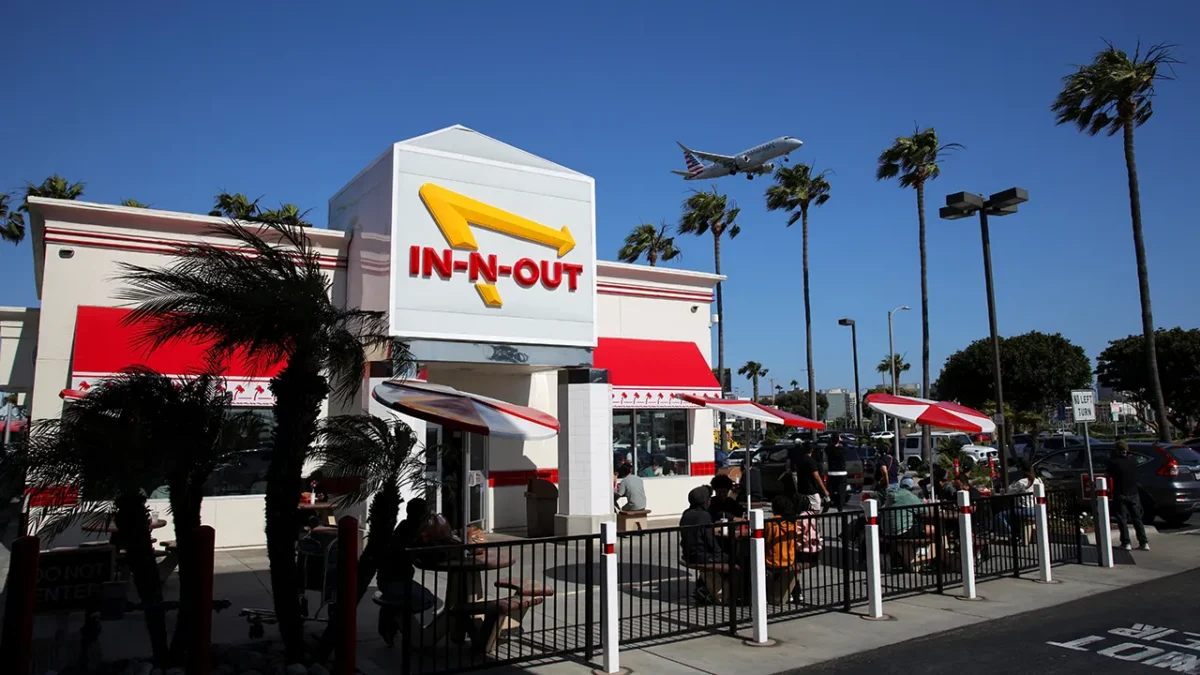
A California city is weighing a ban on drive-throughs after residents expressed concerns that a proposed In-N-Out Burger in Culver City could worsen air quality, traffic, and safety for pedestrians and cyclists. The City Council in Culver City approved a 45-day moratorium last month to prohibit permits for new drive-throughs while staff drafts a potential ban, according to LAist. The moratorium comes after the city’s mobility subcommittee voted in May to recommend staff draft the ban. If adopted, the ban would affect only new businesses, not existing drive-throughs.
In-N-Out would be the first new drive-thru in Culver City since 1997, a detail noted in a city staff report. The proposed restaurant would include 61 parking spaces and a drive-thru lane that could accommodate 26 vehicles. The project’s status and permitting were not finalized when the moratorium was approved, a city spokesperson told LAist. FOX Business reached out to In-N-Out for comment, but the company, described as a private, family-owned firm, typically does not publicize remarks on business matters.
Residents have voiced concerns about density and development. Vanessa Martin, a city resident organizing support for the drive-thru ban, told LAist, “Density is inevitable, and development is inevitable.” Her petition argues the drive-thru would worsen traffic, air quality, and safety for pedestrians and cyclists. Councilmember Bubba Fish, who serves on the mobility subcommittee, emphasized the need for more walkable, bikeable, and safer streets, stating that drive-throughs are the antithesis of that goal. Opponents argue that drive-throughs provide an important option for consumers, including people with disabilities and families with children.
Industry voices have also weighed in. Jot Condie, president of the California Restaurant Association, labeled drive-thru bans generally as “shortsighted,” arguing that such bans effectively prohibit quick-service restaurants without explicit language to that effect. The conversation in Culver City mirrors broader California debates about retail and food-service layouts, including past actions in other cities.
Locally, Culver City is not alone in restricting drive-thrus. The city already bans drive-throughs in its downtown area, while Santa Barbara and San Luis Obispo maintain citywide prohibitions, according to LAist. Nearby Carlsbad recently eased a citywide ban that began in the late 1990s to allow consideration of new drive-throughs on a case-by-case basis. In 2021, San Diego discussed a partial ban, a move that prompted the California Restaurant Association to assert that such prohibitions could exclude groups, including people with disabilities, from accessing products and services.
Industry data indicate that drive-thrus account for a substantial share of fast-food sales, with around 70% of all fast-food purchases coming from drive-thru orders, per the American Planning Association. The ongoing Culver City discussion illustrates how local zoning and traffic considerations can interact with national trends in quick-service dining and consumer convenience.


