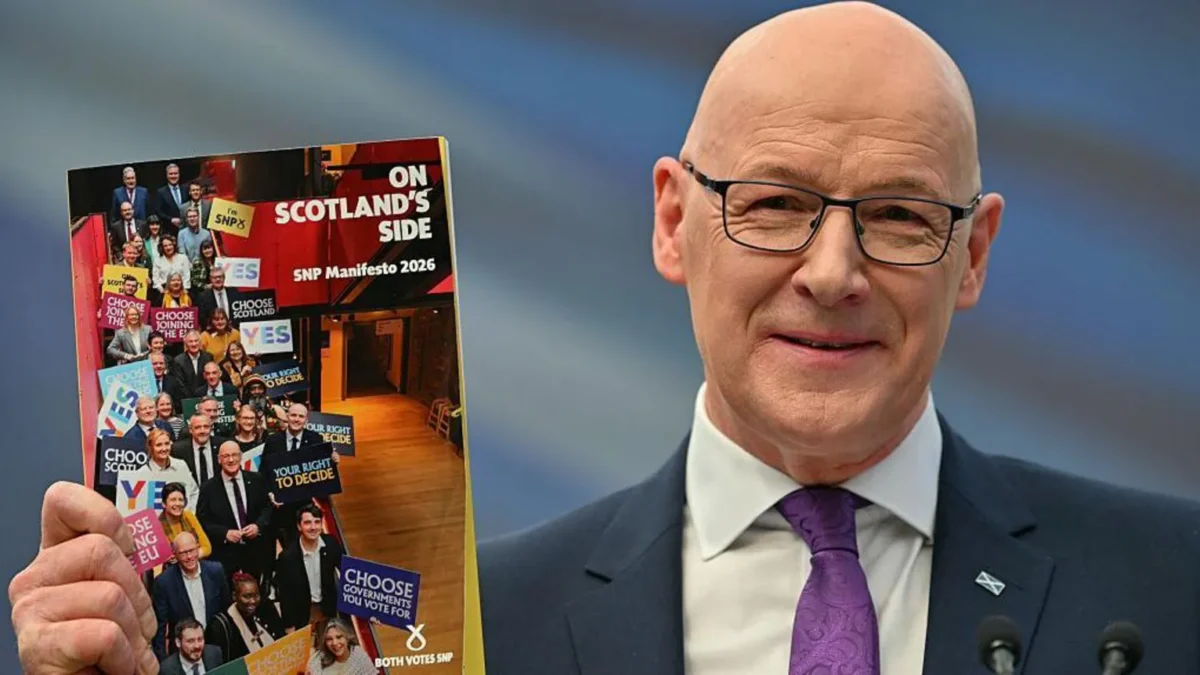
John Swinney, leader of the Scottish National Party (SNP), has defended his party's proposal to legally cap the prices of certain food items in supermarkets, asserting it is a necessary response to the ongoing cost of living crisis. Speaking on the BBC's Today programme ahead of his anticipated re-election as first minister, Swinney emphasized the public health imperative to ensure access to affordable, nutritious food.
"People are struggling to afford a very basic shop," Swinney stated, highlighting his "public health responsibility" to address the issue. The SNP's manifesto pledge outlines a plan to compel large supermarkets to limit the cost of up to 50 essential items, including staples like milk, eggs, cheese, and rice. This policy is part of a broader SNP agenda that also includes capping bus fares at £2 and expanding childcare services.
The proposed food price policy has not been without its critics. The Scottish Retail Consortium (SRC), a trade association, has labeled the initiative a "gimmick." Ewan MacDonald-Russell of the SRC expressed concerns that the policy, if implemented, could disadvantage smaller shops not covered by the legislation, potentially making them uncompetitive.
Swinney acknowledged that implementing such a policy would likely necessitate changes to the UK Internal Markets Act of 2020. This post-Brexit legislation was designed to prevent trade barriers and regulatory divergence between the different nations of the United Kingdom as powers were repatriated from the European Union.
Given that the SNP fell short of securing an outright majority in the recent election, Swinney recognized the need for collaboration. He stated that if the food price policy is to be enacted, he would have to engage with other political parties in the Scottish Parliament, known as Holyrood, as well as with ministers in the UK government.
When questioned about whether the policy was intended to provoke a confrontation with the UK government, Swinney reiterated his focus on assisting individuals facing financial hardship. "What I'm doing is trying to help people who are struggling with the cost of their shopping," he said. He added that he would approach discussions with a spirit of seeking solutions for those finding it difficult to afford their groceries in Scotland.
Swinney is expected to be formally re-elected as First Minister in a vote of Members of the Scottish Parliament (MSPs) later today. Following the SNP's decisive victory in the May 7 election, his success in this vote is considered virtually certain. The SNP secured 58 seats, with Labour and Reform UK trailing with 17 seats each. This outcome makes it highly improbable that opposition parties could unite to nominate and elect an alternative candidate.
Upon confirmation of his appointment by royal warrant, Swinney will be sworn in at the Court of Session in Edinburgh. He is then anticipated to proceed with the formation of his new cabinet. The SNP's performance in the election, while resulting in a win, left them seven seats short of a majority in Holyrood. This parliamentary arithmetic means that the new First Minister will require support from other parties to pass legislation.
Swinney has indicated a willingness to work with all opposition parties except Reform UK, led in Scotland by Malcolm Offord. Swinney cited fundamental differences in values with Nigel Farage's party. Lord Offord, however, criticized this stance as "arrogant, petty and deeply undemocratic."
Regarding the broader political landscape, Swinney also commented on the composition of the new Scottish Parliament, suggesting it is supportive of independence. He stated the need to "find a means of ensuring that the democratic wishes of the people of Scotland take effect." While there is a pro-independence majority in Holyrood when combining the SNP and Scottish Green MSPs, Swinney's election campaign had centered on the necessity of an SNP majority to advance the cause of a second independence referendum.
The SNP's electoral performance showed a decline in their vote share compared to the 2021 election. Their constituency vote share dropped by 9.5 percentage points to 38.2%, and their regional vote share decreased by 13.3 points to 27.2%. Scotland previously voted 55% to 45% in favor of remaining in the union during the 2014 referendum.
The authority to hold an independence referendum rests with the UK Parliament in Westminster. The current UK Labour government has consistently stated its opposition to granting permission for a second vote on the matter.
In a separate development, UK Labour leader Keir Starmer has agreed to a face-to-face meeting with Swinney, indicating a willingness for dialogue between the leaders of the two governments.


