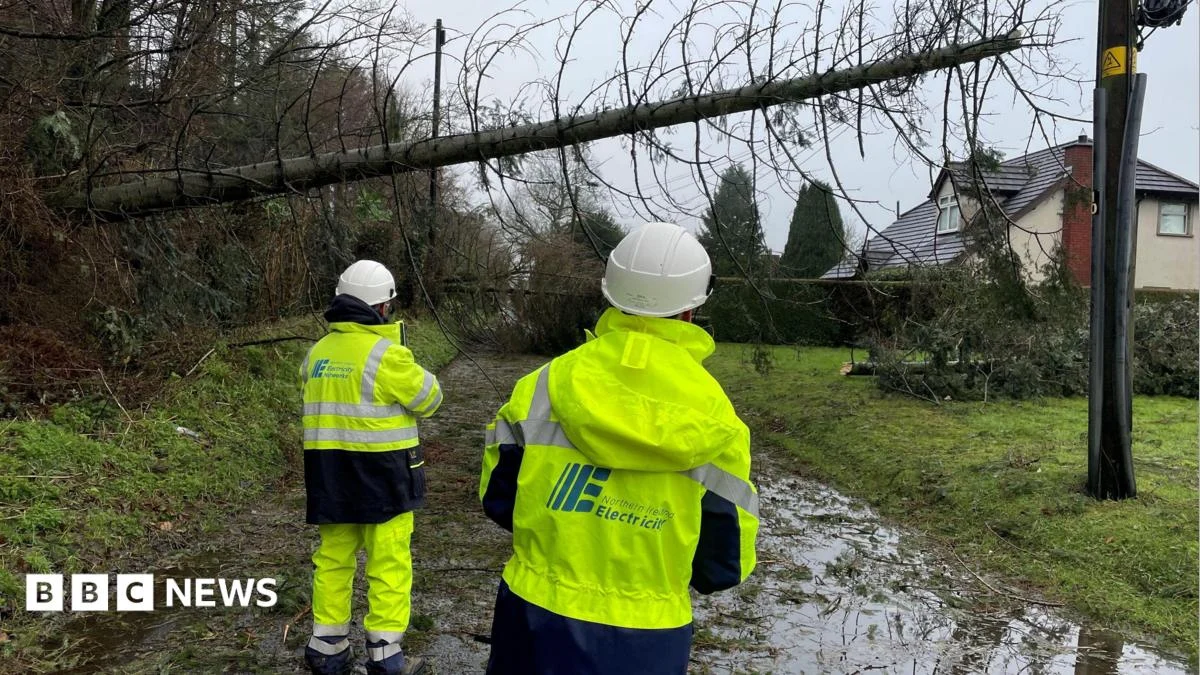
Stormont’s economy minister, Caomihe Archibald, announced plans to bring forward policy proposals to make compensation for households affected by power outages a legal right. Archibald said Storm Éowyn underscored the need for stronger protections for customers experiencing prolonged outages, and instructed officials to prepare detailed proposals to remove the severe weather exemption while minimising costs for all consumers. The move comes despite the independent Utility Regulator’s stance that this is not the right moment to implement a mandate, arguing that funds could be better used to improve network resilience. Northern Ireland remains the only part of the UK without a formal compensation scheme for weather-related outages. NIE Networks, the grid owner, has historically been exempt from certain supply standards during severe weather, a factor contributing to political embarrassment after Storm Éowyn last year. Earlier, the first and deputy first ministers urged NIE Networks to make voluntary compensation payments, but the company declined. At present, it is unclear how much compensation might be offered or how it would be funded—whether by NIE Networks shareholders or socialised across all customers’ bills. Ministers note that “policy costs” have grown as a share of electricity bills, covering programs such as renewable subsidies rather than consumption itself. Proposals are expected to be unveiled before the next Assembly election, with further details to follow.
The case highlights ongoing tensions over how consumers should bear the cost of severe-weather mitigation and compensation schemes, and whether rapid policy changes will align with energy-market resilience goals while protecting households from higher bills.


