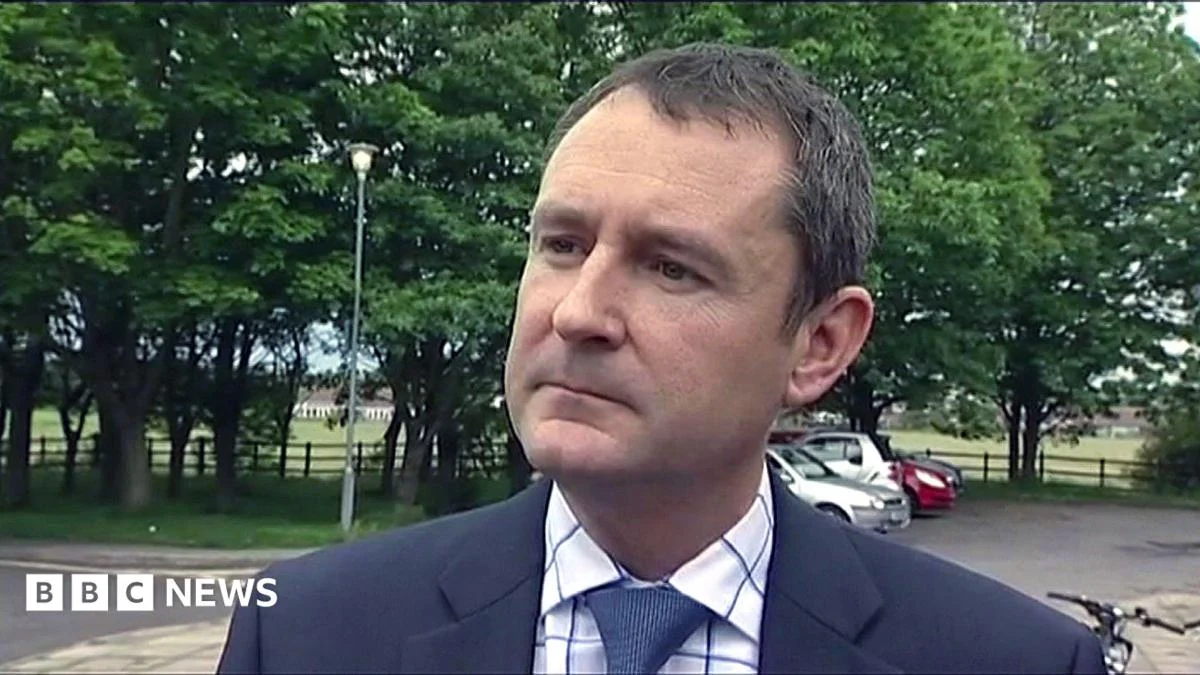
The BBC report details that the former chief executive of Southern Water has been charged, alongside three others, over an alleged scheme to manipulate water quality tests in order to avoid penalties. The charges pertain to the period between 2012 and 2017 and center on defrauding the Environment Agency (EA) and Ofwat, the water regulator. The liability concern focuses on the intended manipulation of operational data linked to wastewater treatment works, with authorities indicating that the action could have helped Southern Water evade penalties worth about £45m.
Matthew Wright, 60, of Haslemere, Surrey, is named as one of the alleged conspirators, joined by Philip Barker, 57, of West Chiltington, West Sussex; Clive Massey, 64, of Brandhill, Shropshire; and Mark Gregory, 63, of Southampton, all former colleagues at Southern Water. The EA had previously asked a judge to issue a summons against Wright and the others, charging them with the offence. Wright’s solicitor asserted that his client denies all wrongdoing and has cooperated fully with the EA investigation.
The summons were issued last year, but Wright challenged the legality of the process in the High Court. In June, his lawyers claimed the EA lacked power to issue the summons and requested that the case be dismissed. However, the court rejected the challenge and lifted reporting restrictions that had previously hindered coverage of the legal action. Separate court listings showed that Wright, Barker, Massey, and Gregory were set to appear at Medway Magistrates’ Court on 14 July.
The four men are accused of conspiring between 2012 and 2017 to defraud those responsible for environmental and financial regulation of Southern Water, including the EA and Ofwat, by implementing artificial no-flow events at wastewater treatment works. The case is part of a wider set of proceedings that include dozens of offences allegedly tied to Southern Water’s failure to comply with environmental permit conditions between 2013 and 2017 at multiple sites.
Court documents indicate that wastewater treatment works operate under an environmental permit issued by the EA, and that treated effluent is monitored under the operator self-monitoring (OSM) regime introduced in 2009. Testing involves sampling teams separate from plant operators, with results shared with the EA and Ofwat; penalties can follow non-compliance with permit terms. In recent years, rules around OSM have tightened, including requirements to reschedule samples if flow conditions are insufficient. The government has pledged to end the practice of relying on limited sampling.
District Judge Stephen Leake previously described the alleged plan as a deliberate attempt by company officers to manipulate the OSM regime by creating conditions with no flow during tests to avoid revealing the true results. The defendants’ legal representatives argued that the EA’s prosecutorial power is limited to environmental offences, while EA advocates contended that the agency can bring private prosecutions where fraud or conspiracy relates to its functions. The judge noted that the law enables the EA to prosecute offenses to facilitate or be incidental to its duties.
The 48-page judgment characterised the charges as involving “very serious allegations of criminal misconduct” and described the purported fraud as being planned at a high level within the company, with examples including arranging for wastewater removal by tankers to produce no-flow test results and to obscure pollution. The EA contends that the company believed the actions could have avoided penalties of around £45m, a figure the EA views as potentially higher. The EA and Southern Water both confirmed ongoing criminal proceedings after the judgment.
In addition to Wright and the other three, three more individuals have been charged with failing to comply with environmental permit conditions. Terry Stephens, 68, from Waterlooville, Hampshire, is accused of a 2015 offence; David James, 60, of Worthing, West Sussex, is charged with a 2016 offence; and Mark Butler, 47, of Hassocks, West Sussex, faces eight counts tied to 2015–2024 activity. The case underscores continuing regulatory scrutiny of wastewater operations in southern England and the tension between environmental enforcement and corporate accountability.


