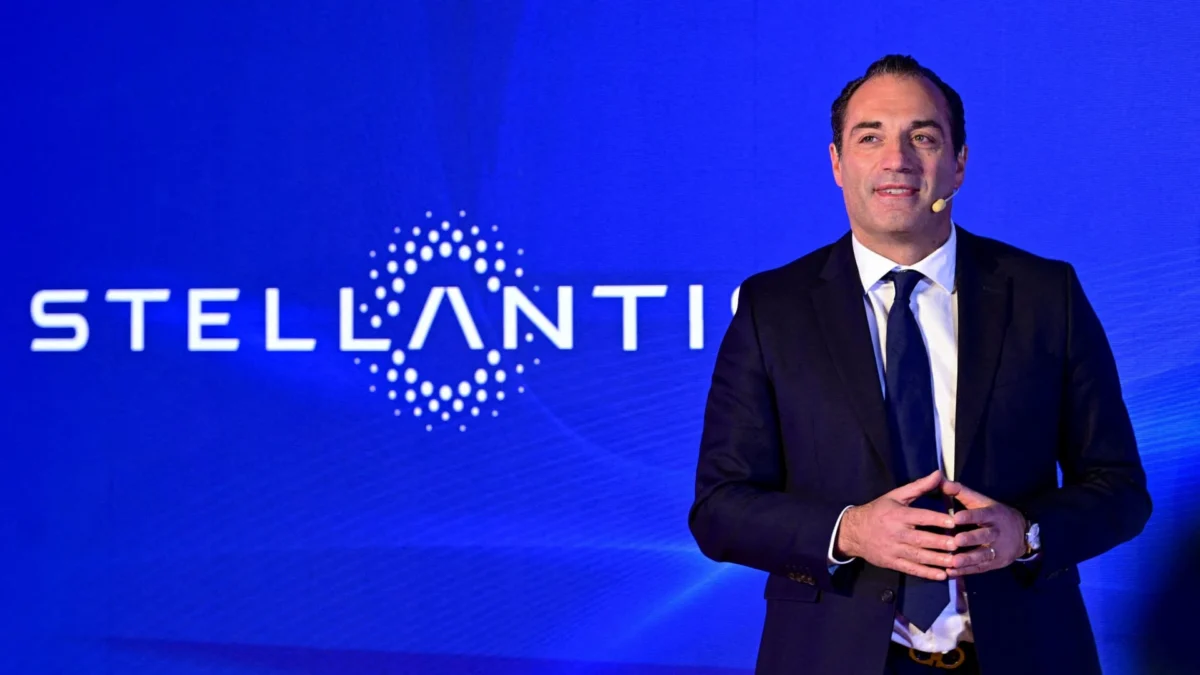
Stellantis CEO Antonio Filosa is set to present a comprehensive turnaround strategy to investors on Thursday, aiming to revitalize the automaker's performance and boost its lagging stock. The capital markets day event, held at Stellantis' North American headquarters near Detroit, marks a critical juncture for Filosa, who assumed leadership nearly a year ago.
Since Filosa's appointment as CEO, Stellantis' stock has experienced a significant downturn, falling nearly 30% since he was named to the top position and approximately 21% since he officially began his tenure in June of the previous year. This performance has put considerable pressure on the transatlantic automaker as it seeks to regain investor confidence.
Filosa has expressed optimism about the company's future, promising that the capital markets day will "outline the next phase of our strategy with clear priorities, clear targets and a focused road map for execution." He believes the company is on a path to "sustainable and comfortable growth."
The strategy to be detailed by Filosa and his executive team is expected to concentrate on key brands in crucial markets, including Jeep and Ram in the United States, and Fiat and Peugeot in Europe. A significant focus will be placed on cost reduction initiatives and outlining a clear path back to profitability, especially following a substantial net loss of 22.3 billion euros ($26.3 billion) recorded in the prior year.
This restructuring effort included a significant move away from all-electric vehicle plans, with last year's results reflecting a 22 billion euro ($26 billion) restructuring charge related to this shift. Despite these challenges, Stellantis has provided initial guidance for 2026, targeting mid-single digit improvements in net revenues, low-single digit adjusted operating income margins, and enhanced industrial free cash flows.
Industry analysts, however, remain cautiously optimistic. BofA Securities analyst Horst Schneider, who recently downgraded Stellantis to "underperform," noted that while initial restructuring efforts under Filosa are showing some positive effects, they have not yet demonstrated a sustainable turnaround. Schneider suggested that the capital markets day might offer strategic headlines, but a credible path to structurally higher margins and cash generation is essential to justify any significant stock recovery.
Despite the stock price decline and the downgrade, the average analyst rating for Stellantis remains "overweight" heading into the investor event, according to FactSet data. This suggests a degree of underlying confidence in the company's potential.
Filosa has characterized 2026 as the "year of execution" for Stellantis. Since taking the helm, he has implemented significant changes, including reshuffling the executive ranks, prioritizing sales growth, and initiating a global cost-cutting program. He emphasized during the company's first-quarter earnings call on April 30 that "Execution will define 2026. Our priorities are clear, and we are confident that the actions we are taking are exactly the right ones."
Partnerships, particularly with Chinese automakers like Leapmotor and Dongfeng Group, are identified as crucial for Stellantis' growth beyond the U.S. market. While specific details of the cost-cutting plan, known as the Value Creation Program, have not been fully disclosed, Filosa indicated that it will feature "ambitious" targets primarily focused on North America and Europe.
The company's diverse portfolio of 14 auto brands is also anticipated to be a central theme during the investor event. This includes efforts to expand the highly profitable SRT performance brand and potentially introduce new products for the struggling Chrysler brand. Stellantis executives have indicated that the company may adopt a more differentiated investment approach across its brands, recognizing that they do not all require equal capital allocation.
Filosa has previously acknowledged the possibility of regionally refocusing or even shrinking the company's extensive brand lineup, which encompasses U.S. staples like Jeep, Ram, and Chrysler, alongside European icons such as Fiat and Alfa Romeo. He stressed the importance of combining efficient capital allocation with brand-specific strategies to maximize value.
The automaker's stock performance has been a significant concern, with the nearly 30% drop since Filosa's appointment highlighting the challenges ahead. The broader automotive industry is also navigating complex issues, including the rise of artificial intelligence, the increasing competitiveness of Chinese manufacturers, and the impact of U.S. tariffs.
Stellantis' struggles have also included historical issues with market share erosion and strained relationships with suppliers and dealers. The company's strategic pivot away from an aggressive all-electric vehicle strategy underscores the difficult decisions being made to adapt to evolving market dynamics and financial pressures.
As Filosa prepares to lay out his vision, the market will be closely watching for concrete evidence of how Stellantis plans to achieve sustainable profitability and growth in a highly competitive and rapidly changing automotive landscape. The success of his turnaround plan will be pivotal in determining the company's trajectory and its ability to deliver value to shareholders in the coming years.


