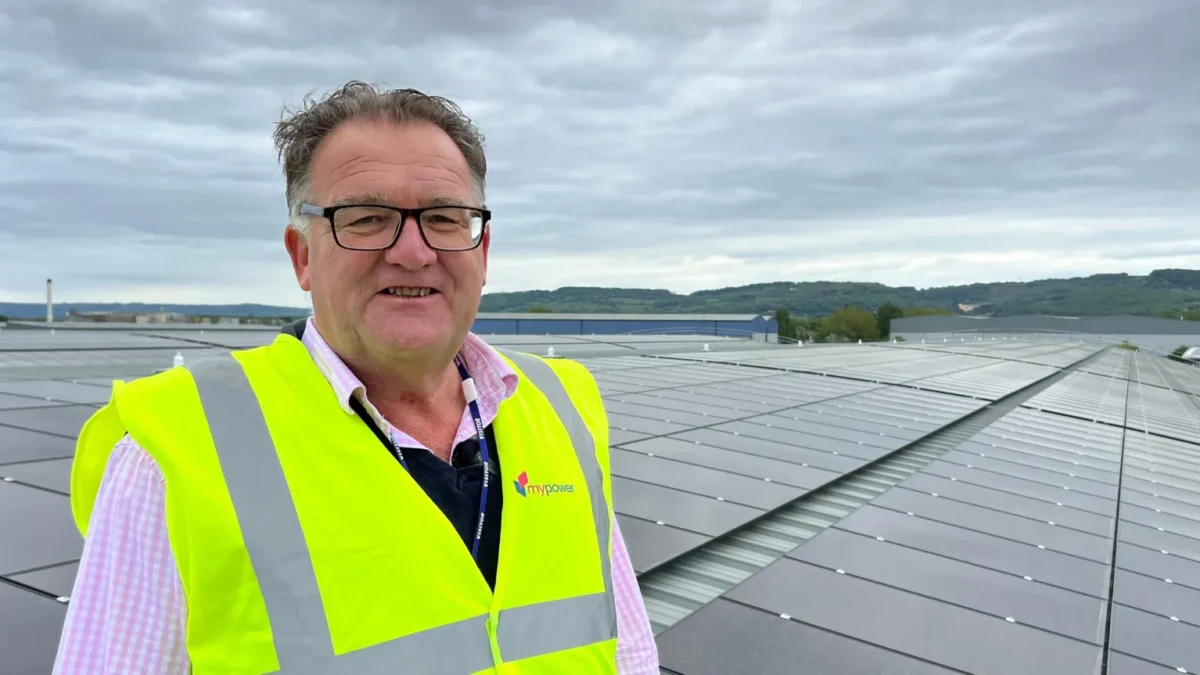
Global conflicts and subsequent energy price hikes have triggered a significant increase in solar panel installations, particularly among businesses looking to secure cost savings and greater energy independence. This shift marks a notable evolution in the industry, moving beyond purely environmental considerations to a primary focus on financial benefits.
Ben Harrison, founder of a solar power firm in Gloucestershire, observes that the primary driver for customers is now "saving money, not just sustainability." His company has reported a 65% rise in solar panel installations for businesses since the onset of the Iran war and a subsequent surge in energy bills. This trend is not isolated; across the UK, total installed solar power capacity has grown by 11% compared to the previous year, according to official government figures.
The financial rationale for companies is compelling. At the Numatic plant in Chard, Somerset, manufacturers of the well-known 'Henry' vacuum cleaner, a substantial investment of £1.5 million has been made in new solar panels for their factory. Steve Whitlock, the firm's financial director, projects that the investment will yield a full return in less than four years. The factory, which employs 1,200 people and produces most components on-site, has a high demand for electricity. Whitlock highlighted that the escalating cost of electricity made the solar field a "step change" in their ability to generate their own power and reduce reliance on the volatile energy market.
On sunny days, the new solar array, comprising 2,672 panels, is capable of powering the entire plant. Over the course of a year, it is expected to supply approximately a quarter of the factory's energy needs. With further investments in advanced inverters and battery storage, the company aims to meet about half of its total energy requirements. This strategic move not only offers immediate cost benefits but also provides a hedge against future energy price fluctuations, particularly those triggered by global geopolitical events.
While the Somerset solar field is notably large, it represents a broader trend. Since the Russian invasion of Ukraine initially sent energy prices soaring, numerous companies have re-evaluated solar power as a strategic investment rather than solely an environmental initiative. The recent escalation of energy bills due to the conflict in Iran has further amplified these concerns, prompting businesses to seek more stable and predictable energy solutions.
Government data indicates a substantial increase in solar installations, with March 2026 expected to see 27,000 new solar systems. This figure marks the highest annual total since 2012, bringing the total number of solar systems in the UK to over two million. Although official statistics do not differentiate between commercial and residential solar power, businesses, with their significant daytime energy consumption, are particularly well-positioned to benefit from solar energy.
Chris Hewett, CEO of Solar Energy UK, noted that the South West region has experienced the most significant growth in corporate solar panel installations. He emphasized that solar power offers the "quickest and most effective" method for businesses to reduce their energy expenditures. Ben Harrison of MyPower, a solar installation firm he founded 15 years ago, echoed this sentiment. He stated that while early installations were primarily driven by sustainability goals, the current market is overwhelmingly focused on financial returns and controlling long-term electricity costs in response to rising energy prices.
Harrison's firm has recently seen a surge in demand, installing an average of 1,783 solar panels per month over the past three months, a 65% increase compared to the rest of the year. At a Laithwaite's Wine warehouse in Gloucester, a 1,710-panel solar system is operational. Loreta Landray, the health and safety manager, described the system's activation as "fabulous," noting its significant contribution to mitigating the "phenomenal" energy cost increases experienced over the last five years.
As many households grapple with the escalating costs of energy, exacerbated by international conflicts, companies are increasingly making substantial investments to gain control over their future energy expenses. This strategic pivot towards solar energy underscores a growing recognition of its dual benefits: environmental responsibility and robust financial prudence in an increasingly unpredictable global energy landscape.


