The intricate world of insider trading continues to pose significant challenges for regulators, particularly with the rise of sophisticated prediction markets and the increasing use of cryptocurrency. These platforms, while offering novel ways to bet on future events, also create avenues for illicit gains based on non-public information, making detection and prosecution increasingly complex.
Recent developments highlight the scale of the issue. Millions of dollars have reportedly been made through well-timed wagers on prediction markets such as Polymarket. These markets allow users to bet on the outcomes of various events, ranging from geopolitical occurrences like potential military actions to political developments. The allure of substantial profits from such bets, especially when informed by privileged information, underscores the persistent problem of insider trading.
One notable case involved an American soldier who allegedly leveraged classified information to transform an initial investment of $33,000 into over $400,000. This instance exemplifies how access to sensitive, non-public data can translate into significant financial windfalls, circumventing legitimate market processes.
The difficulty in policing these activities stems largely from the operational structure of platforms like Polymarket. While some may have U.S.-regulated front-end interfaces, the core of their operations often resides on largely anonymous, crypto-based international back-ends. This setup obscures the identities of those placing large bets, creating a significant hurdle for investigators seeking to establish a clear chain of evidence linking individuals to insider trading activities.
In response to these concerns, U.S. Democratic Senator Richard Blumenthal has proposed legislation aimed at bringing prediction markets under stricter regulatory oversight. His initiative seeks to compel these platforms to operate more like regulated sportsbooks, such as FanDuel and DraftKings. The goal is to enhance transparency by reducing anonymity and thereby curbing the potential for insider trading.
While the use of cryptocurrency can facilitate anonymity, it's important to note that all transactions are recorded on the blockchain, creating a permanent and immutable ledger. This inherent transparency of the blockchain, paradoxically, could offer a pathway for tracing illicit activities, even if the initial identities are masked.
Beyond the realm of financial markets, the article touches upon other significant economic and societal trends. One area of focus is the burgeoning demand for electricity, driven largely by the expansion of data centers. Texas, in particular, is experiencing an unprecedented surge in electricity demand, with forecasts indicating a need for 122 GW of power over the next five years. This figure represents a staggering increase, requiring the state's primary grid, ERCOT, to potentially boost its current capacity of 85 GW by approximately 143%.
Industry experts describe this demand as "off the charts," noting that typical year-over-year increases in power demand are usually less than 2%. The scale of the projected growth presents a substantial challenge for grid operators and utility companies. Jon Wellinghoff, former chairman of the Federal Energy Regulatory Commission (FERC), highlighted the difficulty of meeting such demand, suggesting that while grids might accommodate a 10% to 20% increase, a jump of over 100% is exceptionally challenging.
Furthermore, Wellinghoff expressed skepticism about whether all projected data center projects will materialize. He indicated that competitive pressures and the speed to market could lead to as much as half of these projects being abandoned. Additionally, local community opposition to data center construction has already resulted in the cancellation of at least 20 such projects in the first three months of the year.
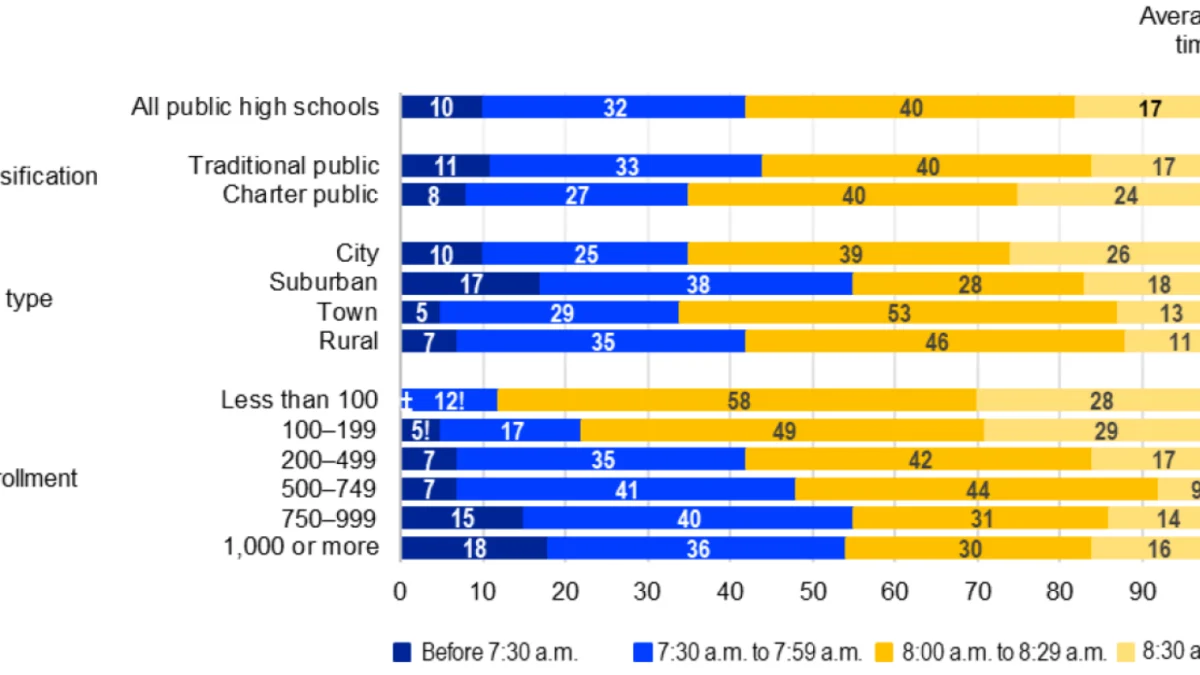
Another segment of the report explores the impact of later school start times on students. A California law enacted in 2022 mandated later start times for middle and high schools, prompting researchers to examine its effects on mental health, sleep patterns, and academic performance. The findings suggest that students, on average, obtained more sleep. Notably, boys experienced significant improvements in mental health, and many students saw gains in math and English scores, with the most pronounced benefits observed among Hispanic and economically disadvantaged students.
This research offers a perspective on how seemingly simple policy adjustments, like altering school schedules, can yield positive outcomes. The findings contrast with the common approach of investing heavily in new educational methodologies, suggesting that a straightforward change in start times can lead to measurable improvements in academic achievement and student well-being.
The article also references data from the U.S. Department of Education, National Center for Education Statistics, National Teacher and Principal Survey (NTPS) from 2017-18, detailing the average start times for public high schools and the distribution of these times. This statistical backdrop provides context for the discussion on the benefits of later school start times.
In essence, the piece navigates the complexities of modern financial regulation, particularly concerning insider trading in evolving market landscapes, while also touching upon critical issues in energy infrastructure and educational policy. The common thread appears to be the challenge of adapting established systems and regulations to new realities and demands.


