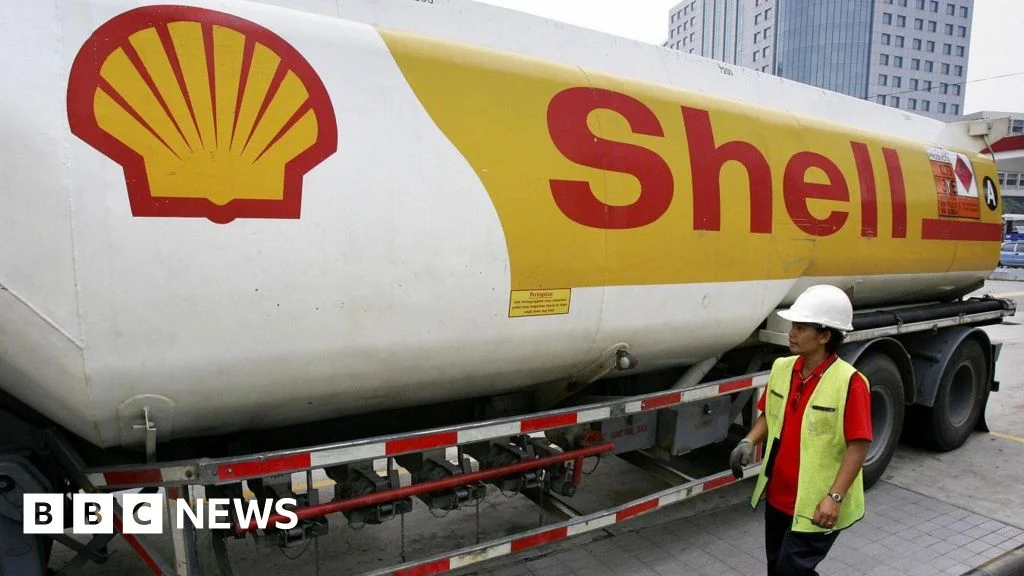
Shell has announced a substantial rise in its profits for the first quarter of the year, reporting $6.92 billion (£5.1 billion). This figure surpassed analyst expectations and represents an increase from the $5.58 billion earned during the same period in the previous year. The surge in earnings is largely attributed to the heightened volatility and price increases in global energy markets, significantly influenced by the ongoing conflict involving Iran.
The price of oil has experienced a sharp escalation since the commencement of the US-Israel war with Iran. A critical chokepoint for global energy transport, the Strait of Hormuz, which typically facilitates the movement of approximately 20% of the world's oil and liquefied natural gas (LNG) supplies, has been effectively rendered impassable. This disruption has had a profound impact on supply dynamics and market pricing.
This trend of increased profitability is not unique to Shell. Rival energy giant BP recently disclosed that its profits for the initial three months of the year had more than doubled. Similarly, Norway's state-owned energy company, Equinor, reported its highest quarterly profit in three years, reaching $9.77 billion for the first quarter.
Shell's chief executive, Wael Sawan, commented on the company's performance, stating, "Shell delivered strong results enabled by our relentless focus on operational performance in a quarter marked by unprecedented disruption in global energy markets." He emphasized that the safety of personnel remains a paramount concern while the company collaborates with governments and customers to meet energy demands.
One of the key contributors to Shell's enhanced profitability, mirroring BP's results, was the improved performance of its oil trading division. The conflict has created significant price swings in the oil market. Prior to the hostilities, Brent crude, the global oil price benchmark, was trading around $73 per barrel. Since then, prices have fluctuated dramatically, at one point exceeding $120 per barrel, while also dipping below $100 at other times, influenced by speculation regarding the reopening of the Strait of Hormuz.
These substantial price movements create wider gaps between the buying and selling prices of oil. Such market conditions are particularly advantageous for trading operations, allowing them to capitalize on the volatility and generate larger profits. Shell's trading arm has evidently benefited from this dynamic.
Beyond trading, Shell's refining business also contributed to the profit increase. The refining segment processes crude oil into finished products like gasoline and jet fuel, and higher margins in this area further bolstered the company's financial results. However, despite these positive financial outcomes, Shell reported a 4% decrease in its overall oil and gas output during the first quarter compared to the preceding three months. This decline is a direct consequence of the conflict.
Specifically, Shell's LNG production facilities in Qatar have been suspended since early March due to the hostilities. Furthermore, its Pearl GTL (Gas-to-Liquids) plant in Qatar sustained damage from attacks, impacting its operational capacity. These disruptions highlight the direct physical risks and operational challenges posed by the conflict to energy infrastructure.
In a strategic move to bolster its long-term production capabilities, Shell recently announced its intention to acquire Canadian shale producer ARC Resources for $16.4 billion. Sawan expressed confidence in this acquisition, stating it "would deliver value for decades to come," indicating a focus on expanding its North American unconventional resources portfolio.
The substantial profits reported by major energy companies have drawn criticism from environmental advocacy groups. Danny Gross, a climate campaigner at Friends of the Earth, voiced concerns, stating, "Once again, fossil fuel giants are pocketing monstrous profits while drivers are being squeezed at the petrol pump and households are set to pay higher energy bills." He called for an increase in the windfall tax on these profits and advocated for a transition towards renewable energy sources.
In the UK, energy companies are subject to the Energy Profits Levy, commonly known as a windfall tax, introduced in 2022 following Russia's invasion of Ukraine. The Labour party has extended the duration of this tax until March 2030. However, the levy primarily targets profits derived from the extraction of oil and gas within the UK. Given that the UK constitutes less than 5% of Shell's global oil and gas production, the majority of the company's earnings are generated from operations in other regions, thus limiting the impact of the UK windfall tax on its overall profits.
For most households in Britain, gas and electricity bills are currently protected by the energy price cap. Until June 30, the typical annual dual-fuel bill for households paying by direct debit is set at £1,641. However, the recent escalation in wholesale oil and gas prices, stemming from the conflict, is projected to lead to an approximate £200 increase in the price cap when it is next revised in July.
Meanwhile, the chief executive of Danish shipping conglomerate Maersk, Vincent Clerc, informed the BBC that the company is passing on increased costs resulting from the energy price surge to its customers. Clerc indicated that the sharp rise in energy prices is imposing an additional cost of approximately half a billion dollars per month on Maersk's operations. "What is really important is actually to pass on these cost increases to our customers as much as possible, so that we can protect our margin and the operations' integrity going forward," he stated.
Clerc also acknowledged the uncertainty surrounding the potential inflationary effects of these cost pass-throughs and their impact on overall demand. Maersk's recent earnings report showed operating profits slightly exceeding analyst forecasts, although this performance was largely attributed to the period preceding the escalation of the Iran conflict. In a separate development, Maersk confirmed that one of its US-flagged vessels, the Alliance Fairfax, which had been detained in the Gulf since late February, successfully navigated out of the Strait of Hormuz under escort from US military assets.
Clerc commented on the strategic implications of Iran's asserted ambitions for control over the Strait of Hormuz and the potential for future toll charges. He likened such a scenario to the established toll systems for the Suez and Panama Canals, which require payment for passage. However, he cautioned that any discussions of toll charges for the Strait of Hormuz are currently "very, very speculative" and contingent on the waterway's eventual reopening.


