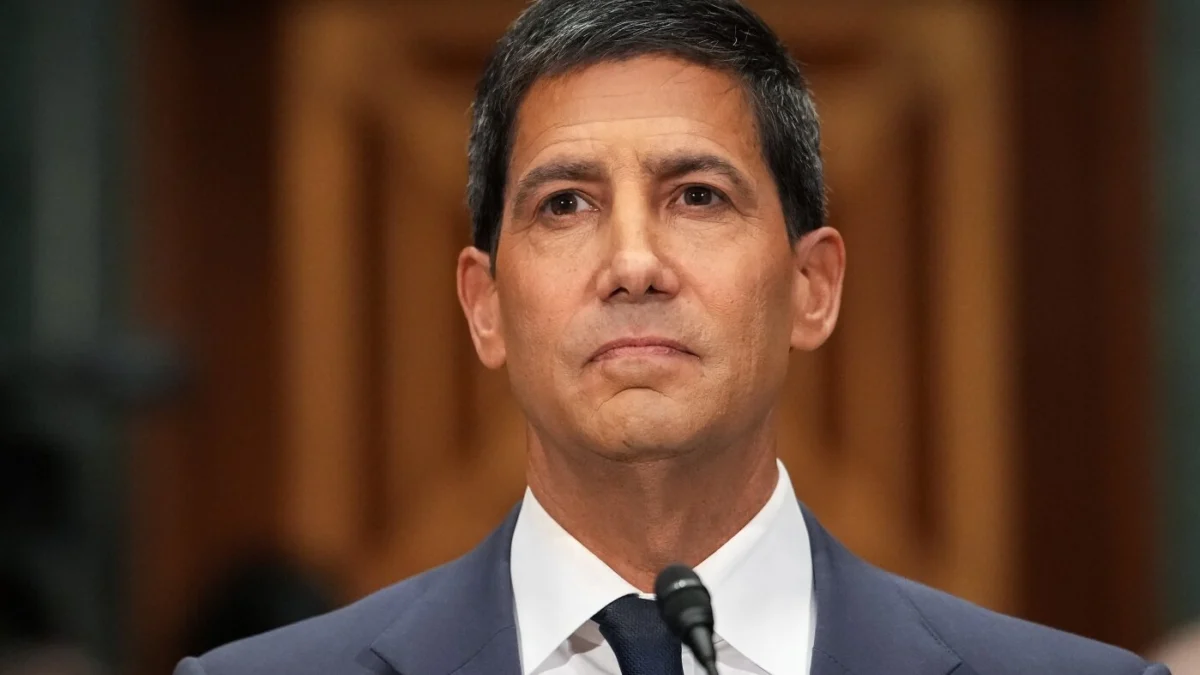
The U.S. Senate has officially confirmed Kevin Warsh as the next chairman of the Federal Reserve, with the vote concluding on Wednesday. President Trump's nominee will assume leadership of the central bank this week, succeeding Jerome Powell. Warsh's appointment comes at a critical juncture for the economy, marked by rising inflation, exacerbated by global energy supply disruptions.
The confirmation process was not without its hurdles. Warsh secured approval by a vote of 54-45, largely along party lines. While Warsh has previously expressed a view that there is scope within monetary policy to lower interest rates, he has also committed to exercising independent judgment in setting policy, asserting that he would not take directives from the White House. This stance was a direct response to concerns raised by some senators, including Elizabeth Warren of Massachusetts, who questioned his potential to act as a "sock puppet" for the President.
Warsh's tenure begins as Jerome Powell's term as Fed chair concludes on Friday. President Trump had been an outspoken critic of Powell, frequently urging more aggressive action to reduce borrowing costs. Powell, who was initially appointed by Trump, will, however, remain on the Federal Reserve's governing board. This is an unusual move, as Fed chairs typically depart the institution upon stepping down from the chairmanship. Powell's decision to stay on the board is seen as an effort to insulate the Federal Reserve from political pressures.
Powell's continued presence on the 12-member rate-setting committee means he will retain a vote on monetary policy decisions. This is significant as some committee members are hesitant to cut interest rates, particularly with inflation persistently exceeding the Fed's 2% target and showing signs of upward momentum. The situation has been further complicated by recent events impacting global energy markets.
Specifically, disruptions to tanker traffic in the Strait of Hormuz, stemming from conflict with Iran, have led to a sharp increase in crude oil and gasoline prices. This surge in energy costs has directly contributed to inflationary pressures. Data released by the Labor Department on Tuesday indicated that the cost of living had risen by 3.8% over the past twelve months, representing the most substantial annual increase in nearly three years.
Warsh's policy views have included calls for reforms within the Federal Reserve. He has advocated for improvements in the methodologies used by the government to measure inflation. Additionally, he has proposed changes to enhance the clarity and effectiveness of how Fed policymakers communicate their strategies and decisions to the public. These proposed adjustments aim to refine the central bank's operational framework and public engagement.
Prior to his nomination as chair, Kevin Warsh served as a member of the Federal Reserve's Board of Governors from 2006 to 2011. During his previous tenure, the former Morgan Stanley executive played a key role as a liaison between the central bank and Wall Street. This involved navigating complex financial markets and communicating Fed policy during the height of the 2008 financial crisis, a period of significant economic turbulence and uncertainty.
His experience during the financial crisis provides a backdrop to his understanding of market dynamics and the challenges of implementing monetary policy in volatile economic environments. The Federal Reserve faces the dual challenge of managing inflation while also considering the impact of interest rate policies on economic growth and financial stability. Warsh's leadership will be tested as he seeks to balance these competing objectives.


