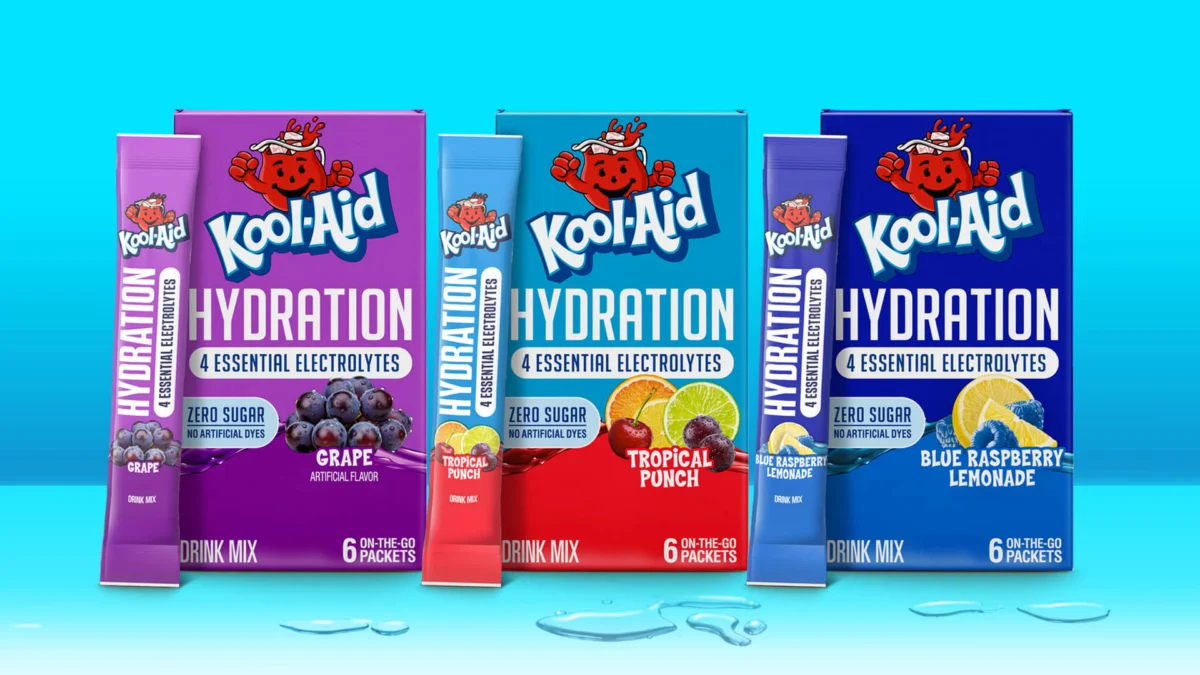
Kool-Aid is introducing a new line of electrolyte powder packets, branded as Kool-Aid Hydration, which will be formulated without artificial dyes and sugar. This strategic move by the iconic beverage brand is part of a larger initiative by its parent company, Kraft Heinz, to modernize its extensive portfolio of well-known food and drink products and to counteract a prolonged period of declining sales. The new product aims to capture a segment of the market that seeks hydration solutions beyond the premium pricing of established brands like Gatorade and Liquid I.V.
The Kool-Aid Hydration line will initially be available in three distinct flavors: grape, tropical punch, and blue raspberry lemonade. These offerings are designed to appeal to a broad consumer base looking for convenient ways to replenish electrolytes, particularly targeting younger adults and families. The decision to launch this product reflects Kraft Heinz's commitment to revitalizing its brands, many of which have faced challenges as consumer preferences have shifted towards fresher, more health-conscious options.
Kraft Heinz, a company with a long history in the food industry, has been grappling with sales slumps across several of its flagship brands, including Capri Sun, Oscar Mayer, and Kraft Mac & Cheese. These brands, along with older stalwarts like Maxwell House and Philadelphia, have seen their market share erode as consumers increasingly opt for perceived healthier alternatives. Even Kool-Aid, despite its relative youth and strong brand recognition, has not been immune to these market pressures.
In response to these challenges, Kraft Heinz announced earlier this year that it would halt plans to divide the company into two separate entities. CEO Steve Cahillane expressed confidence that many of the company's difficulties are "fixable" and outlined a significant investment of $600 million dedicated to bolstering its U.S. business operations. A substantial portion of this investment is being channeled into the Kool-Aid brand, with planned spending set to increase by 70% in the current year compared to 2025, a move that directly supports the development and launch of Kool-Aid Hydration.
The U.S. market for powder concentrates, which encompasses all types of dissolvable powder mixes and tablets, has experienced remarkable growth in recent years. Data from Euromonitor International indicates that this category has more than tripled over the past five years, achieving sales exceeding $4.6 billion. A significant driver of this expansion has been the proliferation of single-serve electrolyte mixes, a trend largely popularized by brands like Liquid I.V., now under the ownership of Unilever. Competitors such as PepsiCo have also entered this space with their own single-serve offerings under the Gatorade and Propel brands, alongside numerous smaller, emerging brands.
Kraft Heinz perceives a distinct opportunity for Kool-Aid to establish a strong presence within the burgeoning electrolyte powder market. According to Caroline Boulos, president of hydration, desserts, and meals at Kraft Heinz, many existing electrolyte products are perceived by consumers as "very performance driven" and "very intense." She noted that consumers often find these options to be excessively salty or bitter, and that the premium nature of these products places them out of reach for a larger segment of the consumer market.
Kool-Aid Hydration is positioned to address these consumer concerns by offering a more accessible price point. A pack containing six single-serve sticks is slated to retail at an average price of $4.99, which is several dollars less than comparable multi-packs from leading brands like Gatorade and Liquid I.V. This pricing strategy aims to make the benefits of electrolyte replenishment more attainable for a wider audience. The taste profile has also been developed to be more "approachable," according to Boulos, retaining a "very recognizable" Kool-Aid flavor while incorporating the necessary electrolytes like sodium, potassium, calcium, and magnesium. While a subtle salinity from the electrolytes is present, it is designed not to be overpowering.
Beyond the inclusion of electrolytes, Kool-Aid is emphasizing the absence of certain ingredients in its new product. A key selling point for Kool-Aid Hydration is its formulation without artificial dyes, aligning with Kraft Heinz's broader commitment to phase out synthetic colors across its product lines by the end of 2027. This initiative is partly influenced by regulatory and public health discussions surrounding the use of petroleum-based synthetic dyes, although the FDA has not yet banned specific colors. The sugar-free aspect of Kool-Aid Hydration further caters to consumers actively seeking to reduce their sugar intake.
Boulos elaborated on the consumer feedback that informed this product development, stating, "This is a brand that people love, but from a product side, we took a step back and talked to consumers about why they had stopped buying the brand, and what we heard is they were turning to other alternatives that are better suited to their needs." She highlighted that consumers were either seeking specific functional benefits or actively trying to reduce sugar and certain other ingredients from their diets.
Kraft Heinz is applying a similar consumer-centric approach to innovation across its other brands. In April, the company introduced Capri Sun Hydrate, a product featuring electrolytes and vitamin E, with a significantly reduced sugar content compared to the classic Capri Sun. Additionally, Kraft unveiled Kraft PowerMac in March, a product fortified with 17 grams of protein and six grams of fiber. These innovations underscore Kraft Heinz's strategy of enhancing its legacy brands to meet evolving consumer demands for products that offer more functional benefits.
"All of our innovation really remains rooted in consumer-led insight, and consumers are telling us that they're looking for their food and their drinks to do more for them," Boulos stated. "We really see an opportunity for legacy brands to play a role there, and the response has been overwhelmingly positive." This strategy aims to leverage the established equity of its brands while adapting their formulations and offerings to align with contemporary consumer priorities regarding health, nutrition, and functional benefits.
The launch of Kool-Aid Hydration represents a significant step in Kraft Heinz's ongoing efforts to rejuvenate its brand portfolio and regain market momentum. By focusing on key consumer trends such as reduced sugar, absence of artificial ingredients, and functional benefits like hydration, the company is attempting to reconnect with consumers who may have drifted away due to changing preferences. The success of this strategy will be closely watched as an indicator of Kraft Heinz's ability to adapt its iconic brands to the demands of the modern marketplace and reverse its long-standing sales challenges.
The company's investment in brand modernization extends beyond product formulation to encompass marketing and consumer engagement strategies. Kraft Heinz aims to re-establish Kool-Aid as a relevant and appealing choice for today's consumers, balancing its nostalgic appeal with contemporary product attributes. This approach is crucial for brands that have long been staples in households but need to demonstrate continued value and alignment with current lifestyle choices and health consciousness. The emphasis on "doing more" for consumers, as Boulos described, signifies a shift towards functional foods and beverages that offer tangible benefits beyond basic nutrition or refreshment.


