Authorities are issuing urgent warnings to consumers regarding a sophisticated scam involving "spoof" phone calls that are successfully tricking bank customers into draining their own accounts. These fraudulent callers impersonate bank representatives or law enforcement officials, fabricating scenarios to convince individuals that their money is at risk and must be moved to a "secure" location. The FBI has identified this tactic as a rapidly escalating concern, with victims losing thousands of dollars as a direct result of these deceptive calls.
The modus operandi of these scams involves "spoofing" technology, which allows criminals to display a legitimate bank's phone number on the caller ID, making the incoming call appear authentic. Coupled with "phishing" techniques, these scammers aim to extract sensitive personal and financial information, including account numbers, passwords, and personal identification numbers (PINs). The FBI encourages individuals who suspect they have been targeted by such cyber-enabled scams to report them through its Internet Crime Complaint Center (IC3).
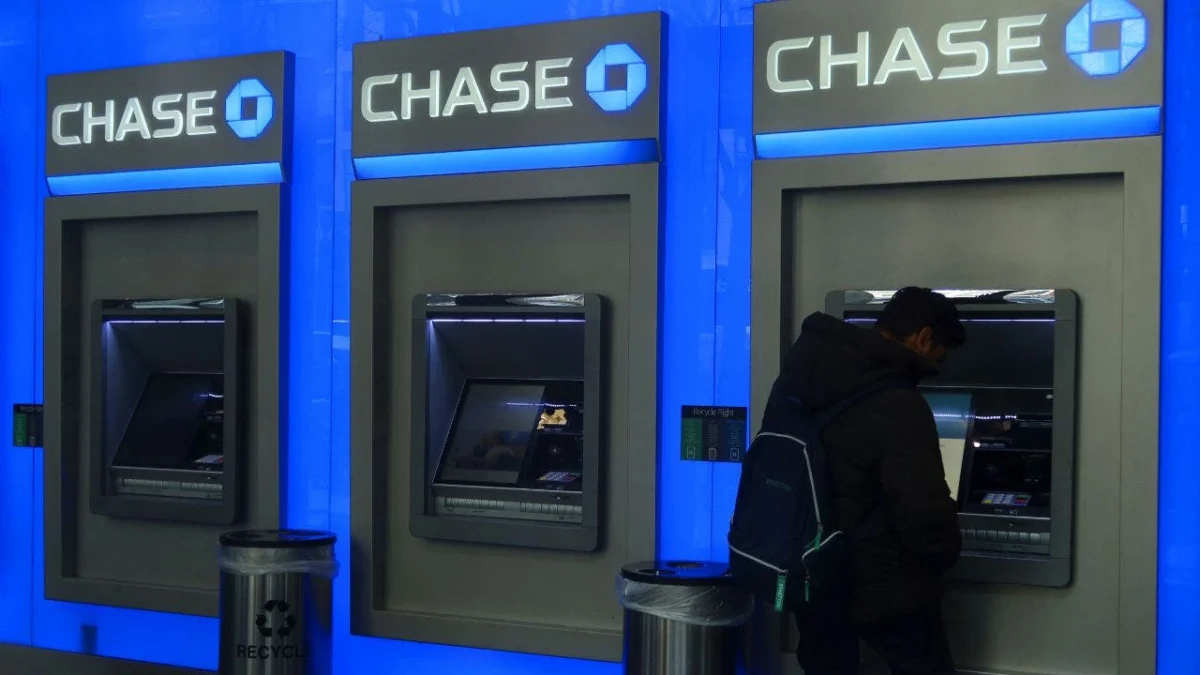
One such victim, Jennifer Lichthardt, a Chase customer, recounted a harrowing experience where she lost approximately $40,000. The initial call she received displayed the exact phone number listed on the back of her Chase debit card. The caller, posing as a Chase fraud department representative, alleged that internal Chase employees were compromising customer accounts. To add a layer of perceived legitimacy, the scammers claimed to represent both Chase and the FBI, even providing a fake agent number.
Lichthardt detailed how the scammers demonstrated an alarming level of knowledge about her finances, accurately reciting her account number and the precise balance down to the penny. This detailed information, combined with the fabricated threat of internal fraud, led her to believe the situation was dire. Under duress and the guise of protecting her funds, she was persuaded to move nearly $40,000 from her existing Chase account into a newly created, supposedly "secured" Chase account at a local branch. Furthermore, she was convinced to transfer additional thousands to a separate online bank.
Tragically, the funds transferred to the "secured" accounts were subsequently lost. Lichthardt only realized she had been scammed the following morning and reported the incident. She described the profound emotional and financial violation she experienced. A representative from Chase stated that the funds were withdrawn from the scammer's account on the same day they were deposited into the compromised accounts, underscoring the speed at which these criminal operations function.
Chase issued a strong advisory to consumers, urging them to "ignore phone, text, or internet requests to move money or gain access to their computer or bank accounts." The bank emphasized that legitimate financial institutions and companies do not solicit such actions, whereas scammers actively do. This warning is crucial for preventing future victims from falling prey to similar schemes.
The Federal Trade Commission (FTC) echoed this sentiment with a direct warning: any request to move money to "protect it" is a scam. The FTC's guidance is unequivocal: "Never transfer or send money, cryptocurrency, or gold to someone you don’t know in response to an unexpected call or message." This clear directive aims to equip consumers with the knowledge to identify and reject fraudulent requests.
Another victim, Susie Allgood, a Huntington Bank customer, fell prey to a similar scam involving Zelle. The caller, impersonating a Zelle representative working in conjunction with Huntington Bank, informed her that she needed to upgrade her Zelle account to a business account to continue receiving and sending money. Believing the caller due to his possession of her routing number and his claim of affiliation with both Zelle and her bank, Allgood was convinced to send $5,000 via Zelle to the scammer's account, ostensibly to keep her money "safe."
Allgood acknowledged her role in sending the money but highlighted the manipulative tactics used by the scammer, who had access to her phone number and the last four digits of her bank account. She expressed that each case requires individual consideration, given the complex psychological manipulation involved. Both Lichthardt and Allgood reported their experiences to local law enforcement and the FBI, though neither had received a refund from their respective banks at the time of reporting, according to ABC 7.
Generally, banks do provide coverage for certain types of unauthorized fraud, such as identity theft or debit card information breaches. However, a fundamental principle of banking security is that a bank will never contact a customer and instruct them to send money to another account for safekeeping. This is a critical distinction that consumers must understand.
Experts and the FBI suggest that criminals acquire customer banking details through various illicit channels, including the dark web or by sifting through discarded personal information (dumpster diving). Once they possess some account data, they can sometimes exploit automated banking systems to retrieve information like a customer's current account balance or recent transaction history. This information is then used to bolster the credibility of their spoofed calls.
Robert Richardson, a special agent with the FBI's Chicago Field Office, explained the psychological impact of these scams. "When somebody is calling pretending to be the FBI, the victim then thinks they are in trouble," he told ABC 7. "They are already frazzled, and when they are making these decisions, the criminal then starts to rush them more. The more they are rushed, the more decision-making they make last-minute." This element of urgency and fear is a key component in the scammers' success, overwhelming the victim's rational decision-making processes.


