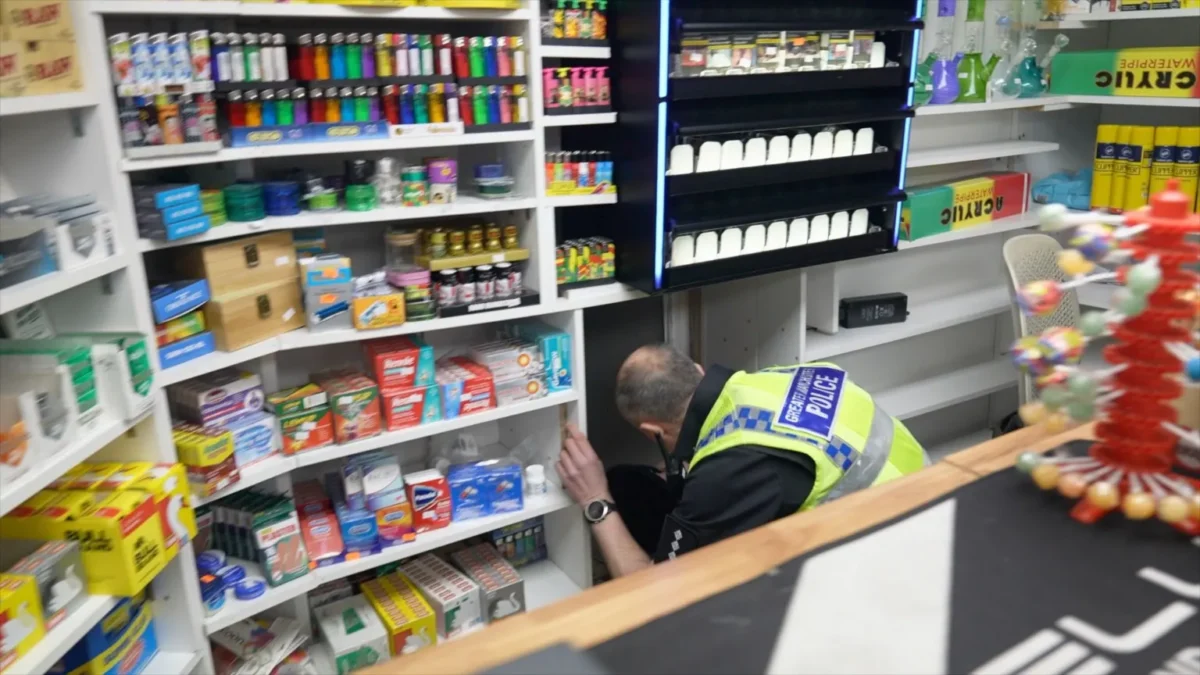
A new £30 million High Street organised crime unit is set to be established by the government, prompted by a year-long investigative series by BBC News that exposed widespread criminal activity hidden behind legitimate-looking shop fronts. The unit will focus on tackling gangs who use businesses such as mini-marts, vape shops, and barbers as a cover for illicit operations.
Over a 12-month period, BBC News investigations uncovered a disturbing array of crimes, including drug trafficking, child sexual exploitation, money laundering, immigration offenses, and the use of ghost directors. These activities were linked to shop fronts involved in the sale of illegal cigarettes and unregulated vapes. The newly announced law enforcement initiative will be managed by the National Crime Agency (NCA) across the United Kingdom for the next three years, and will include additional funding for trading standards.
The Chartered Trading Standards Institute (CTSI) has indicated that resource reductions for its members under previous administrations may have contributed to serious and organised crime establishing a foothold on Britain's High Streets. In response, the government has committed to reviewing and strengthening law enforcement powers. It is also consulting on extending the duration of closure orders, a measure the CTSI believes is crucial for effectively shutting down criminal enterprises for longer periods.
Under the government's new plan, shops identified as fronts for criminal activity will face raids, closures, and the seizure of illicit cash. A significant portion of the funding, £20 million, will be allocated to the NCA. Additionally, 75 new police officers will be deployed to three identified hotspot regions: Greater Manchester, the West Midlands, Essex, and Kent. Trading standards will receive £6 million in funding, while the remaining £3.75 million will be distributed among immigration enforcement, HM Revenue and Customs (HMRC), and the operational costs of the new unit.
The NCA estimates that approximately £1 billion in criminal proceeds is laundered annually through High Street stores in the UK. This illicit cash flow is generated through businesses involved in the sale of counterfeit goods, tax evasion, illegal employment, and the supply of illegal drugs. Home Secretary Shabana Mahmood stated that the government is launching a nationwide crackdown to dismantle these fronts, confiscate illicit funds, and remove organised crime from High Streets, with the aim of imprisoning those responsible.
Initial proposals for the High Street organised crime unit were presented in the 2025 Autumn Budget, but the government has now provided further details on its implementation. The BBC's extensive undercover work, which revealed the extent of organised crime's infiltration of High Streets, has led to an urgent investigation by the Home Office, numerous arrests nationwide, and commitments to legislative changes.
In April 2025, the BBC collaborated with the NCA in executing raids on barbers, mini-marts, and vape shops. These actions were a direct response to escalating intelligence suggesting that some of these establishments were being utilized for money laundering and facilitating illegal employment. The investigations highlighted the severity of the problem, with authorities warning of an ongoing "war" against organised crime that is difficult to win, noting that profits from counterfeit tobacco now rival those from heroin and cocaine, contributing to a black market valued at up to £6 billion annually.
Former Immigration Minister Seema Malhotra described the BBC's findings as a "national scandal," and former Home Secretary Yvette Cooper labelled the situation a "disgrace." In July, a comprehensive review of Freedom of Information requests revealed for the first time that an estimated 3,700 illegal shops had been operating across the UK.
Further BBC investigations in November of the previous year exposed instances of asylum seekers trading High Street mini-marts for cash, criminal kingpins evading £60,000 in illegal working fines, and the operation of a Kurdish organised crime gang across High Streets throughout Britain. In reaction to these revelations, Home Secretary Shabana Mahmood initiated an urgent inquiry involving the NCA, Immigration Enforcement, HMRC, and various police forces.
Mahmood asserted that the evidence presented by the BBC demonstrated systemic failures and identified a contributing factor to the small boat crisis. This year, in March, a senior council employee reported to West Midlands authorities that children as young as 11 were allegedly being sexually abused in High Street mini-marts. Subsequent undercover reports last month exposed the sale of cocaine, cannabis, laughing gas, and prescription medications in such establishments. One street in the West Midlands was described as "lawless" by an anonymous law enforcement source.
Prime Minister Sir Keir Starmer affirmed the government's commitment to combating such criminal activities, promising enhanced powers and an increased police presence. The NCA reported that over the past 18 months, 950 individuals have been arrested and more than £10 million worth of goods have been seized. The new unit is expected to bolster the NCA's capacity to target and disrupt high-harm offenders.
Sal Melki, deputy director of illicit finance at the NCA, commented that this criminal activity not only compromises community safety and prosperity but also undermines legitimate businesses, deprives public services of tax revenue, and fuels related offenses such as drug trafficking, the trade in illicit goods, human trafficking, and organised immigration crime.
Lord Bichard, chairman of National Trading Standards, stated that the unit would facilitate a coordinated national response while simultaneously strengthening local enforcement capabilities. John Herriman, chief executive of the CTSI, informed the BBC that trading standards resources have experienced a reduction of approximately 50% between 2011 and 2023. He expressed a prevailing sentiment that the situation on High Streets has been deteriorating for several years, describing this as highly demoralising.
Herriman further noted that the allocated funding represents the initial phase of a counter-offensive. Currently, courts can impose closure orders of up to three months. The CTSI advocates for new legislation to extend this limit to 12 months, with the possibility of a complete ban for the most egregious offenders.
In response to the government's announcement, the Conservative party contended that Labour had inflicted more damage on High Streets than 75 officers could rectify. Chris Philp MP, Shadow Home Secretary, criticized the government for reducing police numbers and implementing "anti-business legislation," asserting that crime and anti-social behaviour are at unacceptably high levels. He added that a Conservative government would prioritize deploying additional police officers to the streets.


