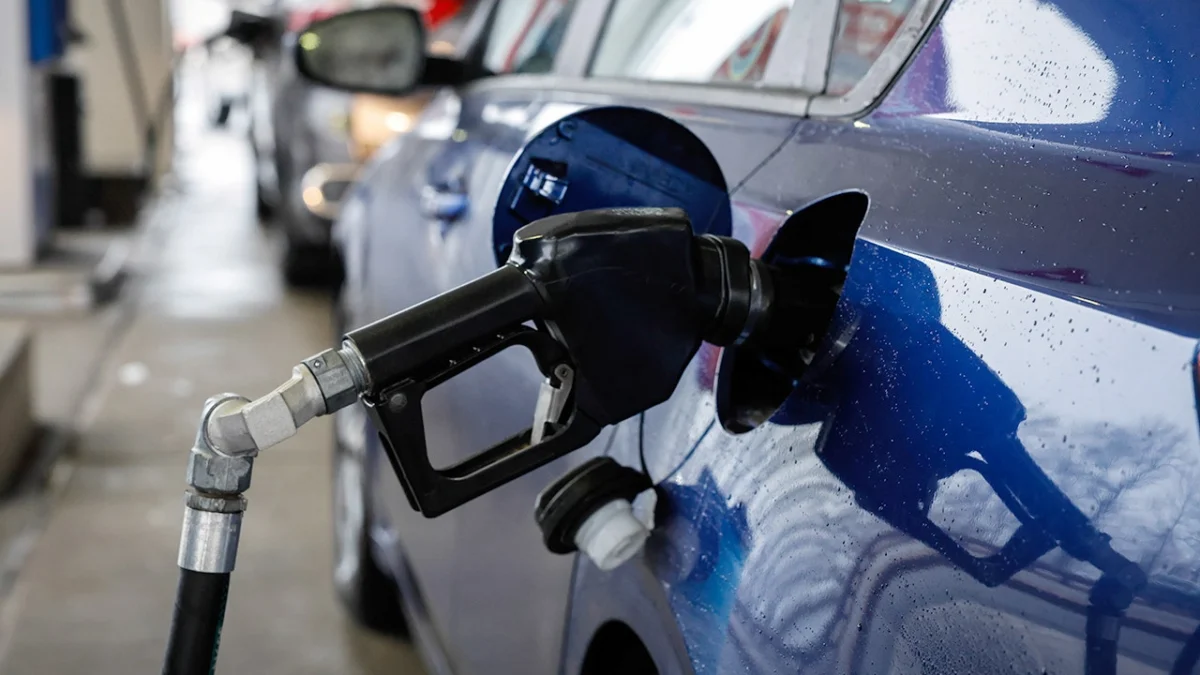
The national average price for regular gasoline has surged approximately 33 cents in the past week, reaching $4.392 as of Friday, according to AAA. This marks a significant increase from the $4.059 average recorded just seven days prior and a substantial jump from the $3.187 average seen a year ago. While the current price is considerably higher than last year, it has not yet reached the record high of $5.016 set on June 14, 2022.
The escalating fuel costs are occurring amidst the ongoing, unresolved conflict with Iran. The U.S. has been enforcing a naval blockade on Iranian ports, a measure that has contributed to elevated oil prices on the international market. Brent Crude futures were trading above $111 a barrel, and West Texas Intermediate U.S. futures surpassed $105 per barrel in early trading on Friday, as reported by Barron's.
In a statement to Fox News Digital, White House spokesperson Taylor Rogers asserted, "The President brought oil and gas prices down to multi-year lows at record speed, and as traffic in the Strait of Hormuz normalizes, these energy prices will plummet once again. President Trump has always been clear that these are short-term, temporary disruptions."
U.S. Central Command Commander Adm. Brad Cooper declared in a statement issued on Wednesday that the blockade is highly effective. "Right now there are 41 tankers with 69 million barrels of oil that the Iranian regime can't sell. That's an estimated $6 billion-plus from which Iran’s leadership cannot financially benefit. The blockade is highly effective and U.S. forces remain fully committed to total enforcement," Cooper stated.
Lawmakers have voiced concerns about the impact of rising gas prices on American households and businesses. U.S. Sen. Amy Klobuchar, D-Minn., who is running for governor, declared in a Thursday post on X, "Minnesotans are paying the price for this administration’s war with Iran as gas prices rise and squeeze families, small businesses, and farmers across our state."
Similarly, Democratic Sen. Mark Kelly of Arizona declared in a Thursday post on X, "The Trump Administration's war in Iran is driving up gas prices and sending summer travel costs through the roof. I’m focused on lowering costs and putting money back in Americans’ pockets so that taking your family on a road trip doesn’t break the bank."
Adding to the debate, Sen. Dick Durbin, D-Ill., declared in a Thursday post on X, "Gas prices just hit a wartime high, inflation is up, & Americans are feeling the pinch of higher prices. But Senate Republicans for the SIXTH time blocked a resolution requiring Congress to approve further military action against Iran. Their silence is an endorsement of the President’s questionable strategy."
The "Senate Republicans" X account fired back at Durbin's comments, declaring, "Under Biden and Democrats, gas prices were above $5 per gallon and inflation was over 9% — much higher than today. Senator Durbin didn’t care about inflation then, and he doesn’t now. He’s just looking for any excuse to side with the terrorist Iranian regime over our military."
The economic implications of these energy price fluctuations are significant. Higher gasoline prices directly impact consumer spending, as households have less disposable income for other goods and services. This can lead to reduced demand in various sectors, potentially slowing overall economic growth. For businesses, particularly those reliant on transportation and logistics, increased fuel costs translate to higher operating expenses, which can be passed on to consumers or absorbed, impacting profit margins.
The strategic blockade of Iranian oil exports, while aimed at pressuring the regime, has had a discernible effect on global oil supply dynamics. The reduction of Iranian oil from the market, even if partially offset by increased production elsewhere or strategic reserves, contributes to a tighter supply-demand balance. This imbalance is a primary driver of the current elevated oil prices, which in turn influence gasoline costs at the pump.
Furthermore, the geopolitical uncertainty surrounding the conflict with Iran adds a risk premium to oil prices. Investors and traders factor in the potential for further escalation or disruptions, leading to increased volatility in energy markets. This heightened risk perception can exacerbate price swings and make long-term planning more challenging for businesses and policymakers alike.
The connection between energy prices and broader inflation trends is well-established. Energy costs are a significant component of the Consumer Price Index (CPI), and sharp increases in gasoline and other fuel prices can contribute to a general rise in the cost of living. This can put pressure on central banks to consider monetary policy adjustments, although the effectiveness of such measures in addressing supply-driven inflation is often debated.
The current situation underscores the relationship between international relations, energy markets, and domestic economic conditions. The effectiveness of the blockade in achieving its intended political objectives is being weighed against its immediate economic consequences for consumers and businesses, both domestically and internationally.
As the conflict with Iran continues and oil prices remain elevated, the national average gas price is likely to remain a closely watched economic indicator. The trajectory of these prices will depend on a variety of factors, including the duration and intensity of the geopolitical conflict, global oil production levels, and the effectiveness of any policy responses aimed at stabilizing energy markets.


