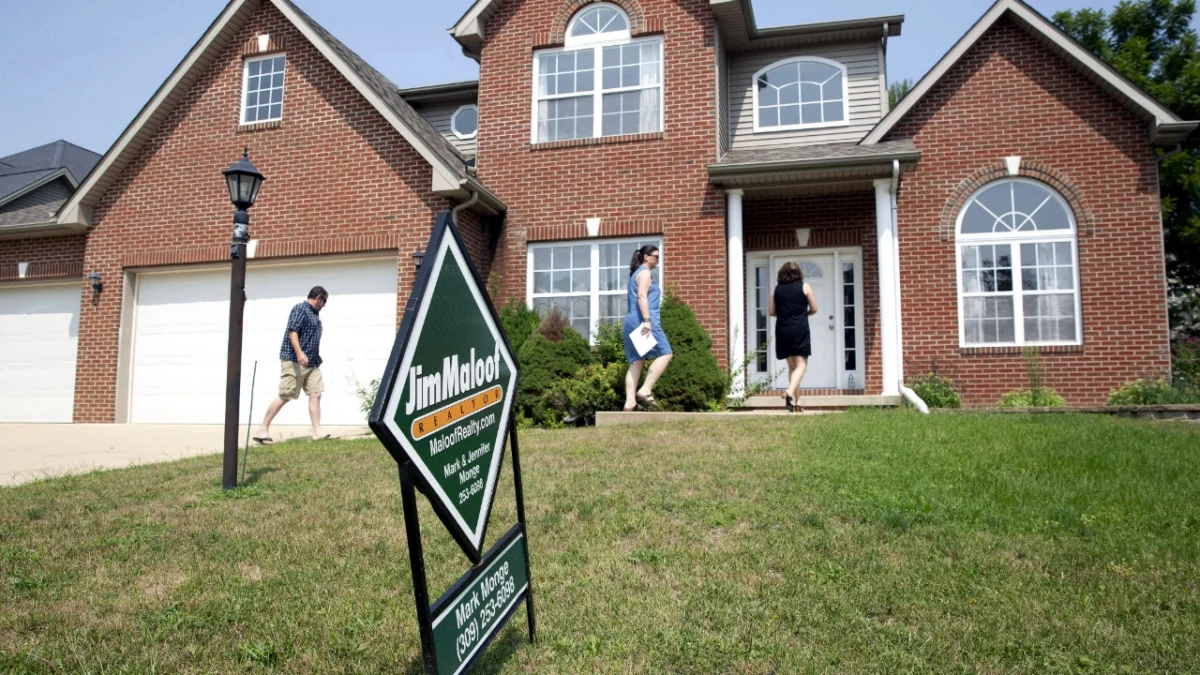
Mortgage rates experienced a slight increase this week, according to the latest Primary Mortgage Market Survey released by Freddie Mac on Thursday. The average rate for a 30-year fixed mortgage climbed to 6.3%, a modest rise from the 6.23% recorded the previous week. This figure remains lower than the 6.76% average seen at the same point last year.
The benchmark 15-year fixed mortgage rate also saw an uptick, moving to 5.64% from 5.58% a week prior. Last year, the average rate for a 15-year fixed mortgage stood at 5.92%.
These shifts in mortgage rates are influenced by a confluence of factors, notably the Federal Reserve's monetary policy and prevailing geopolitical tensions. While mortgage rates do not directly mirror the Federal Reserve's benchmark federal funds rate, they tend to closely follow the yield on the 10-year Treasury note. As of Thursday afternoon, the 10-year Treasury yield was trading around 4.37%.
This latest data on mortgage rates comes in the wake of the Federal Reserve's announcement on Wednesday, where the central bank opted to maintain its benchmark federal funds rate within the target range of 3.5% to 3.75%. This decision was widely anticipated by market participants.
Despite the Federal Reserve's decision to hold rates steady, some economists point to internal dissent among voting members as a potential source of future uncertainty regarding monetary policy direction. Realtor.com economist Jiayi Xu noted that while the Fed's decision was expected, the differing views among policymakers could signal a less predictable path forward.
However, Xu suggested that geopolitical events are poised to exert a more significant influence on mortgage rate movements in the immediate future. The ongoing international developments are likely to be a primary driver for the housing finance market.
Specifically, the impasse in U.S.-Iran peace talks this week contributed to an increase in the 10-year Treasury bond yield, pushing it above 4.3% and subsequently past the 4.4% mark. This rise in Treasury yields occurred after the Federal Reserve's rate decision and amid growing concerns about the broader uncertainty stemming from Middle East tensions.
Sam Khater, Freddie Mac's chief economist, observed that the recent modest decline in mortgage rates in preceding weeks had spurred an acceleration in purchase demand. He reported that purchase applications have risen by more than 20% compared to the same period last year. Khater attributed this sustained purchase demand to a combination of slightly more favorable rates and an improved inventory of homes available for sale compared to recent years.
This uptick in demand, even with rates still elevated compared to historical averages, suggests a resilient housing market. Buyers appear to be responding to the increased availability of properties, a welcome change from the scarcity experienced in the immediate post-pandemic period.
The interplay between fluctuating mortgage rates and the persistent demand highlights the dynamic nature of the current real estate landscape. While higher borrowing costs present a challenge, the increased supply of homes is providing a crucial counterbalance for prospective buyers.
Geopolitical risk, as highlighted by the developments in the Middle East, is increasingly being recognized as a significant factor influencing not only global markets but also domestic economic indicators such as mortgage rates. The interconnectedness of global events and their impact on financial markets continues to be a key consideration for policymakers and investors alike.
The market will be closely watching how these geopolitical developments unfold and how they continue to shape the trajectory of Treasury yields and, consequently, mortgage rates in the coming weeks and months. The Federal Reserve's future policy adjustments will also remain a focal point, though current indications suggest a period of stability for the federal funds rate.


