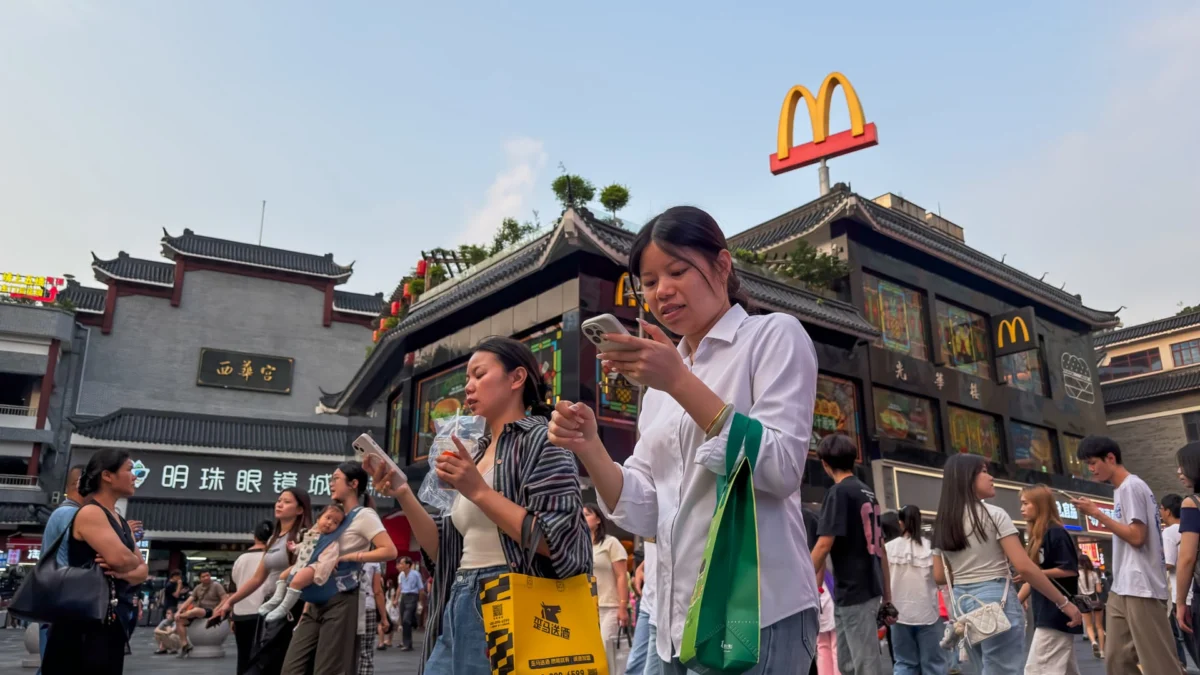
While many international consumer brands are scaling back their operations in China, McDonald's is pursuing an aggressive expansion strategy, aiming to significantly increase its store count across the mainland. The fast-food giant plans to operate 10,000 locations in mainland China by the close of 2028, a substantial increase from its current footprint of over 7,700 stores at the end of 2025. This growth trajectory positions China as a critical market for McDonald's, with the country already holding the second-largest number of McDonald's stores globally, surpassed only by the United States. The expansion is a significant driver of the company's overall unit growth, with half of all new McDonald's stores opened last year located in mainland China. This segment, referred to by the company as its international developmental licensed markets, reported a 3.4% rise in same-store sales during the first quarter. A notable aspect of McDonald's China business is its ownership structure, where Chinese investor Trustar, a private equity arm of Citic Capital, holds a majority stake of 52%. This partnership underscores the company's commitment to integrating within the local market.
The enduring appeal of McDonald's in China appears to be a blend of nostalgia and a keen understanding of evolving consumer preferences. For many Chinese consumers who experienced Western fast food for the first time decades ago, McDonald's holds a special place in their memories. The opening of the country's first McDonald's in 1990 coincided with China's increasing openness to the world and its burgeoning wealth, making the golden arches a symbol of modernity and aspiration. This sense of nostalgia was recently amplified when McDonald's reintroduced its classic strawberry and vanilla milkshakes. Initially discontinued in China in 2014, the shakes returned for a limited period last summer, generating significant viral buzz. This year, the company announced the permanent return of these shakes, available in vanilla and strawberry flavors, at 44 select stores across 15 cities, including Beijing, starting in May. The enthusiastic response, with customers like Zhu Ming driving considerable distances to relive childhood memories, highlights the emotional connection many consumers have with the brand.
Beyond sentimental value, McDonald's is adeptly navigating the current economic climate by emphasizing affordability and value, a strategy that resonates strongly with Chinese consumers. In an era where homegrown brands have significantly improved in quality and often offer lower price points, many foreign companies have faced challenges. However, McDonald's has managed to maintain its reputation for international standards in food quality and consistency while simultaneously competing effectively on price. The company offers a "poor man's meal" equivalent, such as the one-plus-one combo, which provides a burger with a drink or dessert for as little as 14 yuan, approximately $2.06. This value proposition is crucial in a market where consumers are increasingly discerning about where they spend their money.
The McDonald's menu in China is a carefully curated mix of globally recognized staples like the Big Mac and innovative, locally inspired additions. These local offerings, which have included items such as honey barbecue chicken bones and dragon fruit McFlurries, cater to the Chinese consumer's desire for novelty and new experiences. This dynamic menu strategy ensures that the brand remains relevant and exciting, even as it offers familiar favorites. The combination of accessible pricing, consistent quality, and a menu that balances international appeal with local tastes allows McDonald's to stand out. Tracy Dai, director of operations at Shanghai-based branding consultancy China Skinny, notes that Chinese consumers prioritize "value" over just pricing. She explains that while McDonald's might be slightly more expensive than some local competitors, the perceived value derived from the overall experience, taste, and quality justifies the cost for many customers. This holistic approach to value perception is a key factor in McDonald's sustained success and its ambitious expansion plans in the Chinese market.


