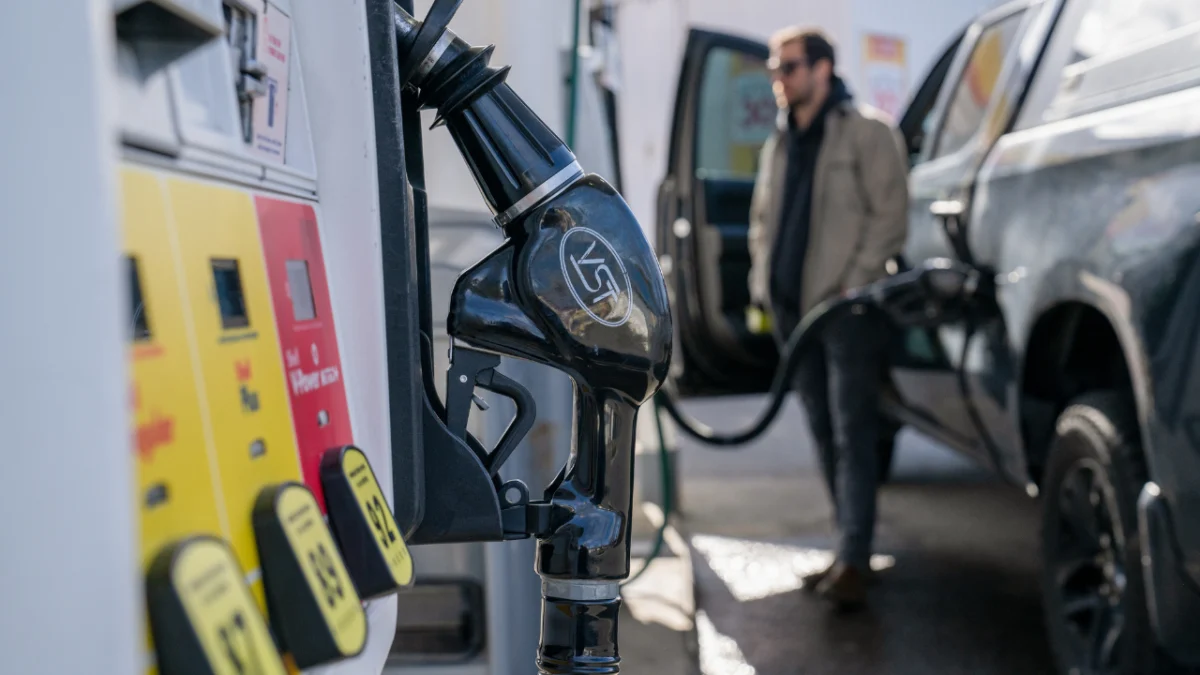
Household budgets across the United States are experiencing significant strain due to elevated gas prices, prompting consumers to increasingly rely on credit cards and buy now, pay later (BNPL) services to manage their finances. A recent report from the Bank of America Institute highlights that lower-income households are disproportionately affected, with the proportion of their income dedicated to gasoline expenses rising notably.
According to the report, which analyzes aggregated and anonymized internal Bank of America customer deposit data, lower-income households saw their spending on gas climb to 4.2% of their income in March. This marks an increase from 3.9% in the same month last year and represents the highest percentage for March since 2022. In contrast, the average household across all income brackets spent approximately 3.1% of their income on gas in March, up from 2.8% a year prior.
The impact of rising fuel costs is particularly acute for a segment of the population. The data revealed that roughly 10% of consumers in lower-income brackets allocated more than 10% of their household income to gas purchases in March. This contrasts sharply with only 6% of higher-income households facing similar expenditure levels. The surge in gas prices is directly linked to geopolitical tensions, specifically the conflict involving Iran, which has disrupted oil shipments from the Middle East and pushed oil prices above $100 a barrel.
David Tinsley, a senior economist at the Bank of America Institute, explained the disparity in impact. "Lower-income households spend more as a share of their income on gas just because they have less room for discretionary spending than middle- and higher-income households," Tinsley stated. "Those two things together mean that the rising gasoline prices we've seen really squeezes lower income households the most."
The surge in oil prices, driven by the Iran conflict, has led to a significant increase in gasoline costs, with national averages surpassing $4.50 per gallon. This situation echoes past periods of financial pressure on consumers, such as the aftermath of the 2008 financial crisis and the period following Russia's invasion of Ukraine in 2022, both of which saw substantial spikes in fuel prices. However, Tinsley cautioned that while the current situation is undoubtedly challenging for consumers, the proportion of income spent on gas has not reached the peaks seen during those previous crises.
"The rise in gasoline as a share of income right now needs to be kept in some perspective. There were also much bigger rises and higher peaks in terms of gas as a share of income and a share of spending just after the financial crisis and also just after COVID," Tinsley elaborated. "So this is obviously a painful rise for people, no doubt, but it's not as large as those other incidents."
While higher wages have provided some relief for American households, the benefits are not evenly distributed. Tinsley noted that higher-income households have experienced wage growth exceeding 5% year-over-year. However, lower- and middle-income households have seen more modest gains, with wage growth at just 1% for lower-income households and 2% for middle-income households through March.
This disparity in wage growth, coupled with rising expenses, has led consumers to explore alternative financial strategies. Tinsley pointed out that consumers have some "wiggle room" through borrowing. He observed that consumers are not currently stretched to their credit card limits, with their overall credit card utilization remaining at levels similar to those seen just before the pandemic. This suggests a capacity for increased borrowing on credit cards.
Furthermore, the use of buy now, pay later services has become more prevalent, particularly among lower- and middle-income consumers seeking to manage their budgets. Tinsley acknowledged that BNPL options can help smooth out spending over a few months. However, he also highlighted a potential downside: individuals who frequently use BNPL services often have less available credit on their credit cards, indicating that BNPL may not always be a substitute for broader credit access.
"The other thing they could do is use buy now, pay later more," Tinsley said. "The downside of that is, at the end of the day, buy now, pay later only smooths your spending over a couple of months, so it's not going to make that big a difference to the overall story. As it turns out, the people that tend to use buy now, pay later tend to have less borrowing space on their credit cards."
Despite the pressures from inflation and rising gas prices, a positive development highlighted by the Bank of America Institute's data is the increase in household savings. Across all income levels, consumers now hold approximately 10% more in savings deposits compared to the pre-pandemic era. This boost in savings is largely attributed to tax refunds.
"Refunds are running, give or take, around 10% higher and although people are spending some of that, they're also banking some of it and that can sort of help them weather some of this gas shock for a time," Tinsley concluded. This increased savings buffer may provide some temporary relief as households navigate the current economic challenges posed by higher energy costs.


