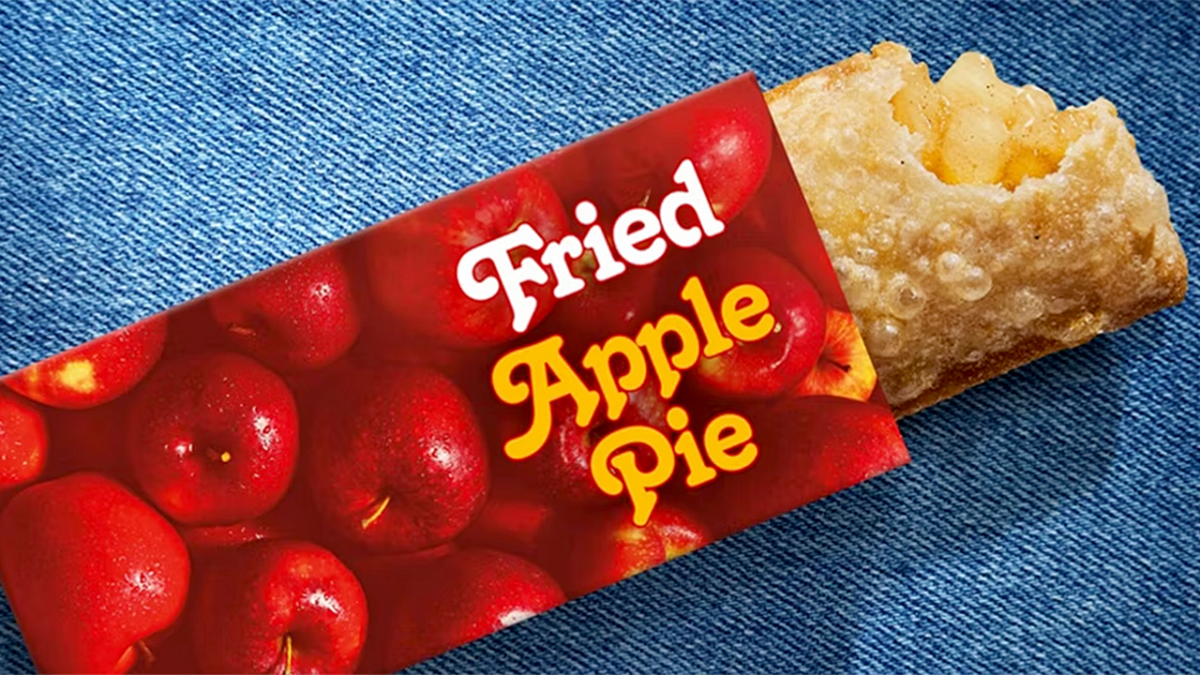
McDonald’s announced on Tuesday that it is bringing back its fried apple pie to celebrate America’s 250th birthday. The fried apple pies will be available at participating U.S. restaurants for a limited time starting June 23, marking their first broad U.S. rollout in more than 30 years. "Summer tends to move fast – but the moments worth remembering don’t. And with America’s 250th birthday around the corner, we’re bringing back a fan-favorite and bona fide national treasure made for slowing down and savoring the season: the Fried Apple Pie," the company said in a press release.
The all-day menu item features a filling made with 100% American-grown apples, wrapped in the same golden crunch and flaky fried crust fans remember. The item originated as a family recipe in the 1960s, when East Tennessee Owner/Operator Litton Cochran created a fried apple hand pie. Eric Cochran, another McDonald’s Owner/Operator, said, “There are certain things that just take you back – and the Fried Apple Pie is one of them. It’s something that people love and remember from growing up.”
McDonald’s noted that the dessert was replaced in 1992 with a baked pie in most of the U.S., a change prompted by growing consumer awareness about fat and cholesterol consumption. The same year, the U.S. Department of Agriculture published its food guide pyramid. Despite the nationwide shift, fried apple pies continued to be sold in Hawaii and in other regions around the world, including the United Kingdom, Mexico, Greece, Australia and China.
In addition to the dessert return, McDonald’s is installing a 35-foot Fried Apple Pie on Route 66 in Joliet, Illinois, near the company’s Chicago headquarters. The giant pie will be on display through July 4, with a kickoff event planned to debut McDonald’s Largest Fried Apple Pie in Chicagoland. The event will feature live music, Coca-Cola, and complimentary Arch Cards.
McDonald’s has leveraged nostalgia as a marketing signal for a summer push, tying a classic menu item to a national milestone and a modern emphasis on regional sourcing of ingredients. The move underscores how long-running brand staples can re-emerge to capture consumer attention during key national moments.


