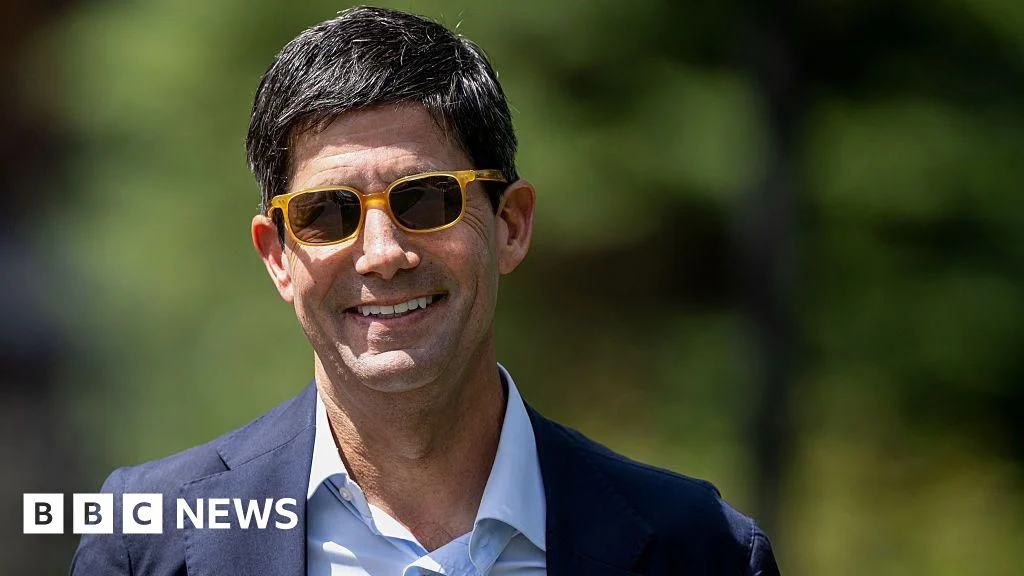
The U.S. Senate has confirmed Kevin Warsh as the next Federal Reserve chair, marking a significant shift in leadership at the nation's central bank. The vote, which concluded on Wednesday, saw 54 senators in favor of his confirmation and 45 against, largely adhering to party lines. Warsh is set to succeed Jerome Powell, whose tenure was characterized by frequent disagreements with President Donald Trump concerning interest rate policies. Powell's term concludes on Friday.
The confirmation of Warsh represents the narrowest margin of victory for a Federal Reserve chair nominee since the Senate's confirmation process was established in 1977. Only one Democrat, Senator John Fetterman of Pennsylvania, cast a vote in support of Warsh's appointment. This outcome underscores the increasingly partisan nature of confirmations for key executive branch positions.
Warsh is stepping into a role that presents considerable challenges, particularly given President Trump's explicit expectation that the Fed will lower interest rates. This directive comes at a time when global events, specifically the escalating conflict between the U.S. and Israel in Iran, are contributing to a rise in the cost of living for American consumers. Typically, the Federal Reserve would consider holding or increasing interest rates to curb inflation when prices are on an upward trajectory.
Recent economic data highlights the complexity of the situation. Inflation figures released on Tuesday indicated an annual rate of 3.8% in April, the highest since May 2023. This surge is largely attributed to escalating energy costs, exacerbated by the closure of the Strait of Hormuz, which has led to a sharp increase in oil prices. Beyond energy, consumers are also facing rising costs for food, housing, and airfare.
Economists widely anticipate that the Federal Reserve will maintain current interest rates until at least next year, with some even suggesting the possibility of a rate hike. This outlook contrasts with President Trump's stated desire for lower rates, which he believes would stimulate the U.S. economy. The pressure on Warsh to align with the president's wishes could mirror the contentious relationship his predecessor, Jerome Powell, had with the White House.
President Trump frequently criticized Powell, labeling him as incompetent and the worst Fed chair in history for not lowering rates more aggressively. During his confirmation hearing before the Senate Banking Committee, Warsh pledged to uphold the central bank's independence, stating he would not serve as President Trump's "sock puppet." However, ranking Democrat on the committee, Senator Elizabeth Warren, expressed concerns, warning that Warsh is "uniquely ill-suited" for the position and may have been appointed to fulfill the president's agenda.
Prior to his nomination as chair, Warsh was confirmed by the Senate on Tuesday to serve as a Fed governor, a necessary step for the chair position. He previously held a governor position at the Federal Reserve from 2006 to 2011. He will replace Stephen Miran, a current Fed governor known for his strong advocacy for interest rate reductions.
Carl Tobias, the Williams Chair in Law at the University of Richmond, described Warsh's upcoming tenure as a "Mission Impossible." Tobias noted that Warsh faces a difficult environment with inflation accelerating while the president is vociferously demanding lower interest rates, and the Fed board itself is sharply divided. The near party-line vote in the Senate, with Fetterman being the sole Democrat to support Warsh, exemplifies the increasing politicization of the confirmation process for critical executive branch nominees, including federal judges and U.S. attorneys.
Warsh's nomination now proceeds to President Trump for final approval, completing the formal appointment process for the new Federal Reserve chair. The confirmation process and the subsequent challenges Warsh will face highlight the intersection of monetary policy, political pressure, and economic conditions.


