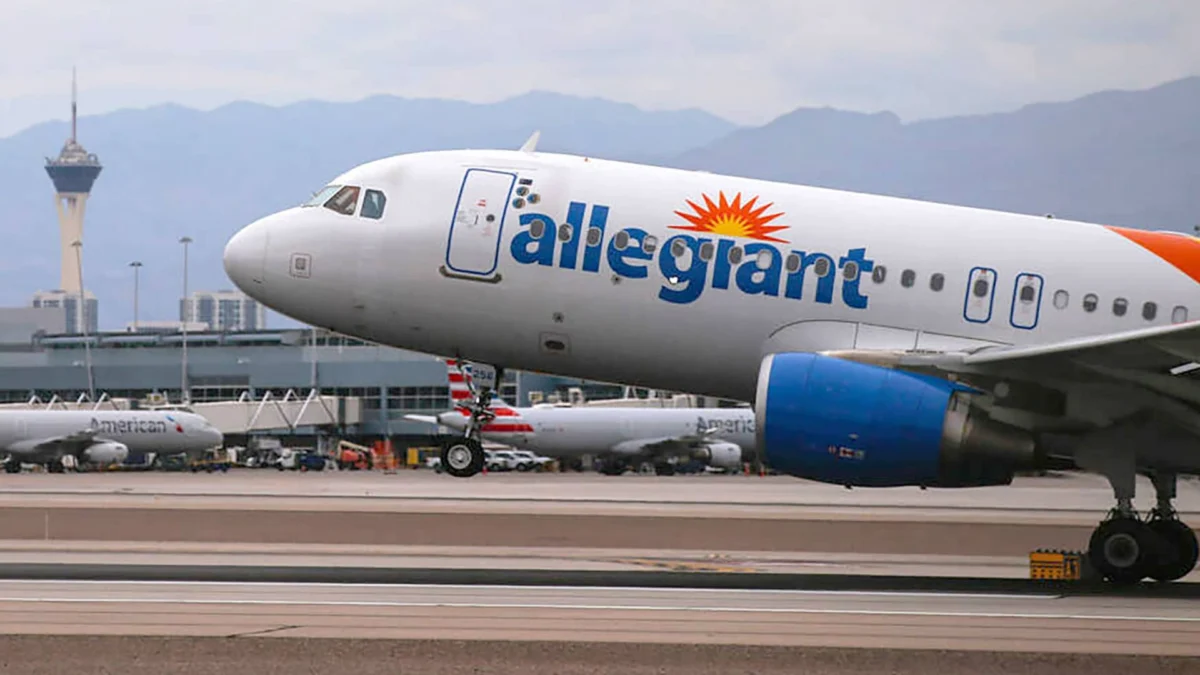
Allegiant Travel Co. finalized its acquisition of Sun Country Airlines on Wednesday, a move that combines two carriers focused on a distinct low-cost operational strategy. Greg Anderson, the chief executive of Allegiant, who will now lead the merged entity, asserted that the company’s business model is inherently designed to protect profit margins rather than aggressively pursue growth.
"Our model was built to protect margins and not chase growth," Anderson stated in an interview with CNBC. The agreement, initially announced in January, was valued at $1.5 billion in cash and stock, inclusive of debt. The acquisition brings together Allegiant Air, based in Las Vegas, and Minneapolis-based Sun Country Airlines.
For the time being, both airlines will maintain their separate brand identities and booking platforms. The combined airline is expected to serve approximately 175 cities, offering more than 650 routes. Anderson emphasized that the company will continue to exercise a highly selective approach to capacity expansion, a strategy he believes has shielded the airlines from challenges encountered by some other low-cost carriers.
Allegiant's operational plan involves strategically increasing service during peak travel periods, such as summer holidays and spring break. Conversely, the airline intends to reduce capacity on less busy days, like Tuesdays and Wednesdays, particularly during off-peak weeks. This approach aims to maximize pricing power by selling more seats when demand is higher.
"For example, we'll pull capacity back and really park a lot of fleet on a Tuesday in September," Anderson explained, illustrating the company’s method of adjusting operations based on demand fluctuations. This flexibility allows the airline to optimize resource allocation and revenue generation.
Both Allegiant and Sun Country have historically targeted cost-conscious travelers, often connecting smaller, underserved cities with popular vacation destinations. Sun Country also operates a significant cargo service for Amazon, adding another revenue stream to the combined company's portfolio.
Despite a substantial increase in jet fuel costs, Anderson reported that demand remains robust, even among the carrier's more budget-sensitive leisure customers. The airline industry as a whole is grappling with billions of dollars in additional expenses due to soaring jet fuel prices, which have approximately doubled since February. Jet fuel is a major operating expense for airlines, typically ranking second only to labor costs.
In response to rising fuel expenses, airlines have been increasing fares to pass these costs onto consumers. The Association of Value Airlines, which includes both Allegiant and Sun Country as members, recently requested $2.5 billion from the Trump administration to help offset high fuel charges. However, Transportation Secretary Sean Duffy has indicated that such government intervention may not be necessary.
Allegiant reported a first-quarter profit of $42.5 million, marking a 32% increase compared to the same period last year. Raymond James airline analyst Savanthi Syth commented on these results, noting, "It shows you some low-cost models can work."
The completion of the Allegiant-Sun Country deal occurs shortly after the abrupt shutdown of Spirit Airlines, a once rapidly expanding budget carrier. Spirit's collapse represented the most significant U.S. airline failure in a generation.
While Allegiant has not yet released specific financial projections for the combined company, it indicated in late April that it anticipates a 6.5% reduction in capacity for the second quarter compared to the previous year. Furthermore, the company expects third-quarter capacity to remain flat or slightly decrease year-over-year.
Smaller airlines focusing on budget and leisure travel often find themselves overshadowed by larger competitors such as Delta Air Lines, American Airlines, United Airlines, and Southwest Airlines. These major carriers collectively hold approximately 80% of the domestic market share in the United States, according to federal data.


