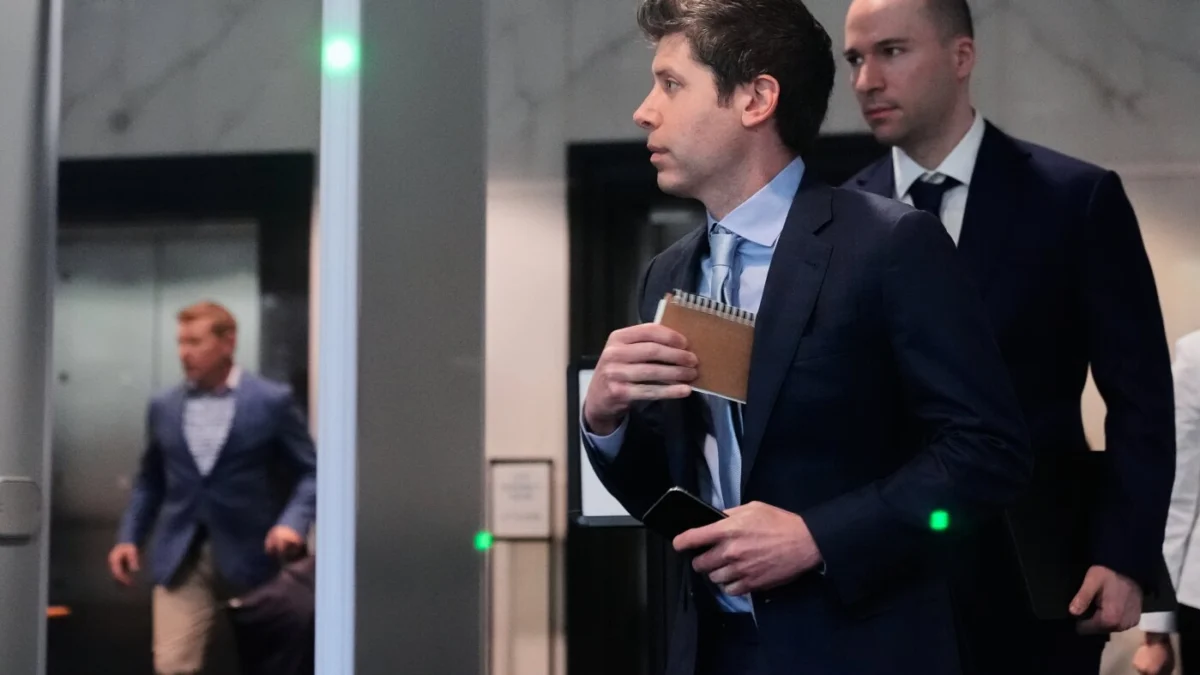
A California jury has dismissed all claims in a lawsuit filed by Elon Musk against OpenAI CEO Sam Altman. The nine-member advisory jury reached a unanimous decision in less than two hours, determining that Musk waited too long to file his case, exceeding the statute of limitations. U.S. District Court Judge Yvonne Gonzalez Rogers agreed with the jury's finding and officially tossed out the lawsuit.
"I've always said I would accept the jury's verdict," Judge Gonzalez Rogers stated following the decision. "I think there's a substantial amount of evidence to support the jury's finding." This verdict brings a swift conclusion to a three-week trial that explored the foundational ambitions and subsequent disputes between two prominent figures in the artificial intelligence landscape.
Musk had accused Altman and OpenAI president Greg Brockman of breaching their duty to OpenAI's original nonprofit mission and unjustly enriching themselves. The core of Musk's argument centered on the claim that Altman and his colleagues had effectively "stolen a charity" by creating a for-profit entity that became the primary focus of the company, thereby abandoning its founding principles.
OpenAI was initially established in 2015 as a nonprofit organization with the stated goal of developing advanced artificial intelligence for the benefit of all humanity. This mission was rooted in a collective concern among its founders regarding the potential negative ramifications of AI development being concentrated in the hands of a single individual or a profit-driven corporation.
However, by 2017, the founders recognized the necessity of establishing a for-profit arm to secure the substantial funding and attract the necessary research talent required to remain competitive in the rapidly evolving AI field. Musk, who was an early supporter and funder of OpenAI, providing $38 million over several years, reportedly desired more control over the company's direction. Disagreements over governance and strategy led to his departure from the board in 2018.
During the trial, Musk's legal team argued that Altman and his associates treated the nonprofit structure as a mere "shell" following the establishment of the for-profit subsidiary in 2019. They contended that employees and intellectual property were systematically transferred to the for-profit entity. The argument was further amplified by the significant $10 billion deal OpenAI made with Microsoft in 2023, which Musk's attorneys claimed signaled an abandonment of the company's commitment to open sourcing and safety in favor of enriching investors and insiders.
OpenAI's defense team countered these assertions, arguing that Musk himself had supported the creation of a for-profit subsidiary with the explicit aim of attracting major investments. They suggested that Musk's dissatisfaction stemmed not from a deviation from the original mission, but from the company's success without his direct involvement. Furthermore, OpenAI's lawyers pointed to the launch of Musk's own for-profit AI company, xAI, a year and a half prior to filing the lawsuit, positing the legal action as an attempt to hinder a competitor.
Musk's lawsuit also named Microsoft as a defendant, alleging the tech giant aided OpenAI through investments totaling $13 billion between 2019 and 2023. This claim, however, was also dismissed by the court.
Attorneys for OpenAI's defendants, including Sarah Eddy, argued in their closing statements that the funds Musk provided came without any specific stipulations, asserting that he "does not have a charitable trust to enforce." This argument aimed to undermine Musk's standing to sue based on a breach of charitable trust.
The jury's decision to dismiss the case based on the statute of limitations means they did not need to rule on the merits of Musk's allegations regarding a breach of charitable trust. However, their verdict implies they believed Musk was aware of the actions he contested as breaches of trust for more than three years before initiating his lawsuit.
Had the jury ruled in Musk's favor and the judge concurred, OpenAI and Microsoft could have faced a demand to "disgorge" up to $150 billion in damages to OpenAI's nonprofit foundation. Musk had also sought the removal of Altman and Brockman from their leadership positions and the dissolution of the for-profit entity.
The verdict was delivered after a brief deliberation period, with the jury beginning their discussions at 8:30 am Pacific time and handing a note to Judge Gonzalez Rogers at 10:23 am, signaling their conclusion. The trial had been ongoing for three weeks, during which significant details about the founding and evolution of OpenAI were presented.
The legal battle highlighted the intense competition and differing philosophies within the AI sector, particularly concerning the balance between open development, safety, and commercialization. The outcome underscores the legal complexities surrounding the governance and mission adherence of rapidly growing technology companies.
This case has drawn considerable attention due to the high profiles of the individuals involved and the substantial financial stakes. The dismissal of the claims based on procedural grounds, rather than a substantive ruling on the alleged mission drift, leaves the broader questions about AI governance and corporate responsibility open for future debate and legal challenges.
While the jury's decision focused on the timeliness of the lawsuit, the trial itself provided a public airing of the internal conflicts that can arise within ambitious technology ventures. The differing visions for OpenAI's future, between Musk's desire for a more controlled, perhaps non-profit-centric approach, and Altman's drive for rapid growth and significant investment, were laid bare.
The swiftness of the jury's deliberation suggests they found the statute of limitations argument compelling. This legal technicality effectively preempted a deeper examination of the complex allegations concerning OpenAI's adherence to its founding mission and the financial arrangements that have propelled its growth. The case's resolution, therefore, rests on a legal procedural point rather than a judgment on the substance of Musk's claims.


