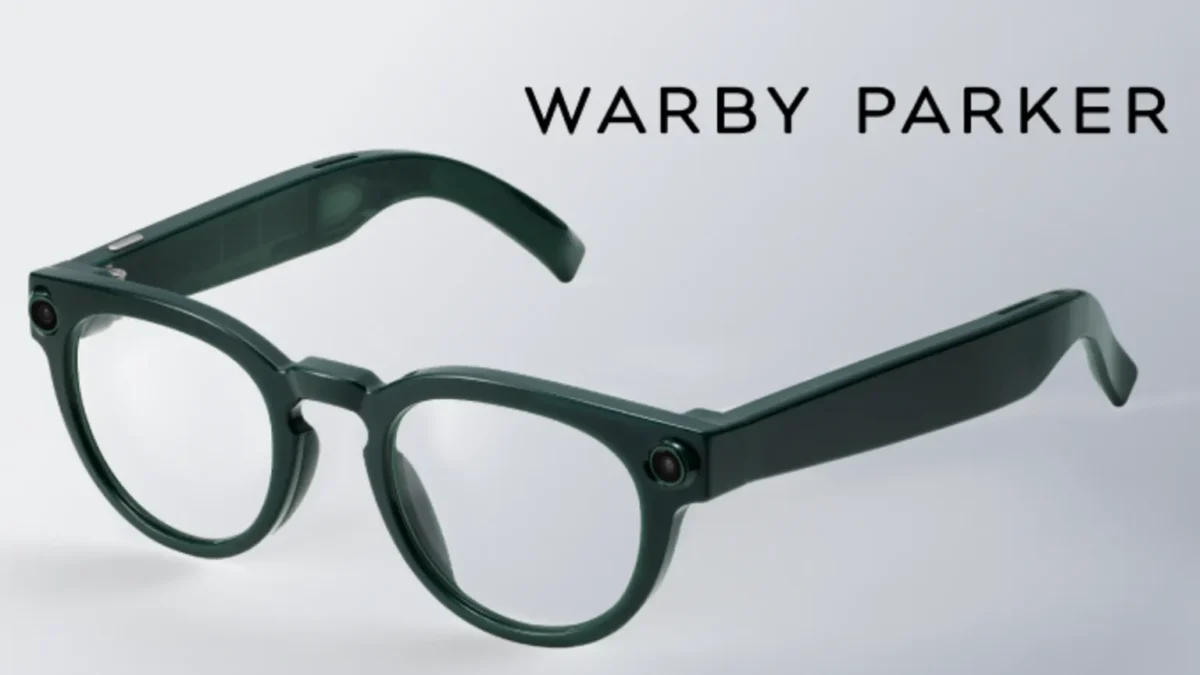
More than a decade after the initial launch and subsequent withdrawal of Google Glass, Google is venturing back into the smart glasses market. The company revealed its latest iteration of smart eyewear at its annual developer conference, with plans to release the glasses for sale in the autumn. These new glasses are designed to integrate with Google's artificial intelligence product, Gemini, featuring a small camera embedded in the frames and discreet speakers built into the arms.
Google's executive, Shahram Izadi, explained during the event that the smart glasses are intended to provide users with "all-day help" from Gemini, delivered audibly and privately. Unlike the original Google Glass, the initial release will focus on audio interaction rather than a visual display. However, Google is developing a version with an in-lens display that will present text and information directly to the wearer, with more details expected later this year. Developers are already exploring applications for these future display-equipped glasses.
The first models will be available in styles designed in collaboration with Warby Parker and Gentle Monster. The glasses are engineered to be compatible with both Android and Apple's iOS devices, ensuring broad accessibility for users across different mobile ecosystems. Izadi emphasized that the goal is to keep users "hands free and heads up" while accessing information and assistance.
Google Glass, first introduced in 2013, was discontinued in 2015 following significant backlash concerning its high price point and pervasive privacy concerns. The re-emergence of smart glasses from Google comes at a time when competitors are also active in the space. Meta has already seen considerable success with its Ray-Ban branded smart glasses, selling seven million pairs. However, Meta's products have also faced similar privacy criticisms, with reports of individuals being filmed without their knowledge.
Snap is anticipated to launch an updated version of its smart glasses this year, and Apple is also reportedly developing its own entry into the market. This competitive landscape highlights a growing trend towards wearable technology as the next major platform following the smartphone.
Industry observers see Google's return to the smart glasses arena as a significant development. Christine Tsai, an investor at 500 Global, views it as beneficial for both consumers and early-stage startups that can build new applications on the platform. "It's good for consumers. And it's good for early stage start ups, where we tend to invest, because they're a platform where people can build more capabilities," Tsai stated. She added that smart glasses are emerging as the "next modality" beyond the smartphone.
Developers like Anil Shah, who is creating an events management app called tixfix.ai, believe smart glasses have the potential to seamlessly integrate existing Google services such as Google Maps and Google Voice. Shah expressed interest in developing integrations for the new Google smart glasses, enabling users to easily discover local events through voice commands, thereby enhancing user experience by eliminating the need to open a separate app.


