General Motors is expanding its push into energy storage and data-center infrastructure by promoting new battery chemistries and expanding vehicle-to-grid capabilities for its electric-vehicle customers. The automaker said it will develop next-generation sodium-ion batteries that its battery lead described as potentially reshaping grid-scale energy storage, while also pursuing sodium-ion cells for customers after 2028. In parallel, GM is continuing work on reusing large EV batteries for energy storage systems with partners such as Redwood Materials and pursuing lower-cost lithium iron phosphate (LFP) cells through a joint venture with LG Energy Solution.
GM notes that sodium-ion technology could operate with less cooling and reduced system complexity, a feature that could lower both upfront and operating costs in large storage deployments. The company believes such advantages could help address rising energy costs amid an AI-driven boom that many expect will fuel a wave of new data-center builds. GM executives also highlighted that the emerging chemistry could outperform mature chemistries like LFP over time, providing a differentiator in a market shaped by cost pressure, energy demand growth, and geopolitical risk.
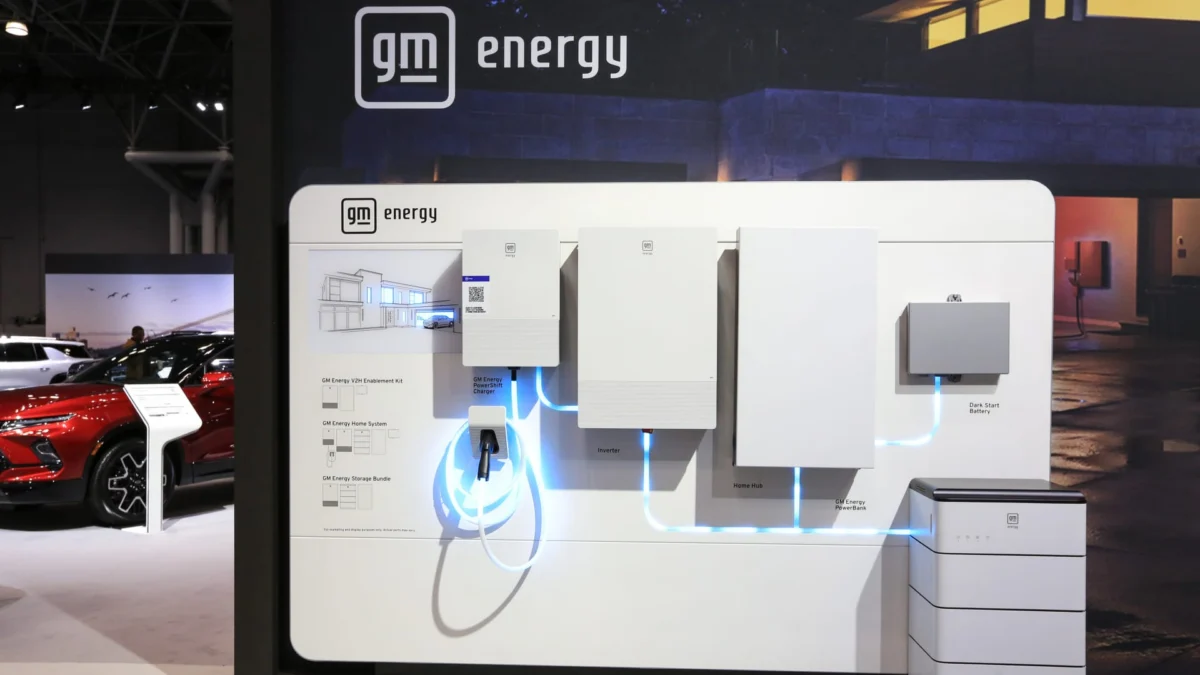
A key part of GM’s strategy is expanding its vehicle-to-grid offerings. The automaker said it is seeking partnerships with utility companies nationwide to enable EVs to feed power back to the grid during peak hours and to power homes through energy storage systems. GM has already begun pilots with utility partners in California and Michigan as it moves to scale V2G services for customers.
In addition to its sodium-ion efforts, GM announced an Energy Pass to streamline public charging for its EV owners and said all-electric vehicles built for the 2027 model year onward will use a North American Charging Standard port. The company’s Ultium Cells joint venture currently has about 90 gigawatt-hours of capacity at its Ohio and Tennessee plants. Earlier this year, Ultium Cells announced plans to invest $70 million to begin producing LFP batteries for energy storage at the Tennessee site.
The announcements come as GM’s battery team underscores that sodium-ion technology could expand the range of conditions in which energy storage systems operate and help lower total cost of ownership for large-scale deployments. GM executives say the new cells will help the company meet growing demand for reliable, cost-competitive storage options as AI and data-center capacity expansion accelerate.
Looking ahead, GM expects its tie-up with Peak Energy, a Denver-based startup founded in 2023, to yield sodium-ion cells for customer use after 2028. Peak Energy’s leadership includes former Tesla, Lockheed Martin, and Northvolt personnel, according to its website. A GM spokesman declined to comment on partnership details or costs.
As households see electricity prices rise—Residential electricity prices in the U.S. have climbed nearly 48% since January 2020, and March 2026 prices stood at 18.83 cents per kilowatt-hour, with forecasts calling for about 19 cents in March 2027—GM argues its energy-storage-centric approach could help mitigate costs for EV owners and bolster the economics of grid-scale storage.
Overall, GM’s strategy combines battery chemistry diversification with expanded V2G services and battery reuse for storage, aiming to position the company at the center of a data-center and energy-storage expansion while managing energy costs for its EV customers.


