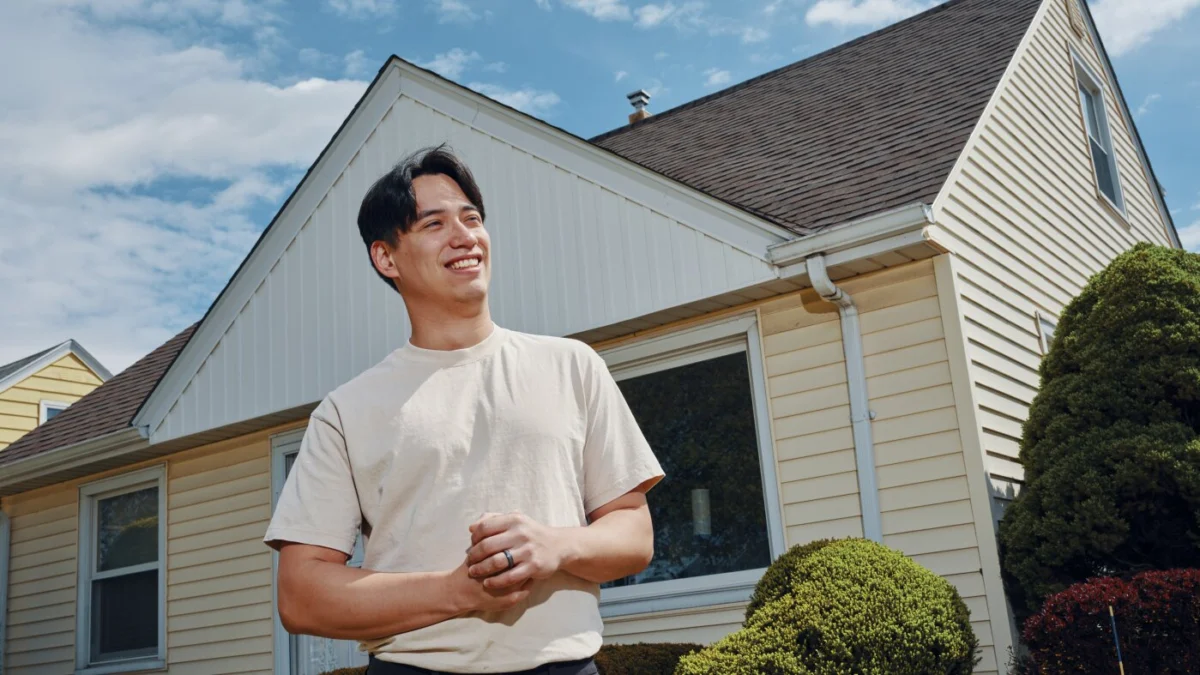
A growing segment of Generation Z is successfully navigating the challenging housing market to achieve homeownership, outpacing millennials at the same age. These younger buyers, often in their 20s, are increasingly purchasing homes despite historically high prices and a scarcity of starter homes, demonstrating a unique approach to financial planning and a greater propensity for single homeownership.
Francisco Vazquez, a 27-year-old from Milwaukee, Wisconsin, recently purchased a three-bedroom home with a basement, garage, and yard for $220,000. This price point is nearly half the national median home price, highlighting the importance of seeking out more affordable markets. Vazquez's journey to homeownership involved a significant career shift and an aggressive savings strategy. After majoring in conservation science and working in fields like wildlife rescue and at a zoo, he found the pay insufficient to support his aspirations of homeownership. He transitioned to managing a fast-food restaurant, a role that offered better compensation and opportunities for advancement. He has since been promoted twice.
Vazquez, who is newly married, purchased the home as a single buyer, reflecting a broader trend among Gen Z. The National Association of Realtors (NAR) reports that the share of single Gen Z buyers is double that of millennials at the same age. This demographic is also less likely to receive financial assistance from parents compared to previous generations. While 16% of Gen Z buyers reported receiving a gift or loan from parents, this is lower than for young millennials and significantly less than the 25% of all buyers across all age groups who utilize parental assistance.
To achieve his goal, Vazquez implemented a rigorous savings plan. For two years, he saved aggressively, dedicating approximately 70% of his paycheck to investments in a broad index stock. He noted that his then-girlfriend, now wife, helped him balance his intense saving with enjoying their youth. Despite these efforts, he managed to accumulate $72,000 in savings in just over two years. Vazquez secured a 15-year fixed-rate mortgage with a substantial down payment, a move that aligns with his long-term goal of early retirement and increased personal freedom.
The broader economic landscape presents significant hurdles for aspiring homeowners. A persistent housing shortage has driven prices to record highs, making affordability a major concern for both renters and owners. The cost of homes has escalated at a pace far exceeding wage growth, and the availability of starter homes has dwindled in many areas. Much of the new construction is focused on higher-end properties, further limiting options for first-time buyers.
Despite these challenges, Gen Z buyers are making inroads. Last year, Gen Z represented 4% of all homebuyers, an increase from 3% the previous year, according to NAR. The association defines Gen Z buyers as individuals aged 18-26, though some definitions extend this range slightly. The average household income for Gen Z homebuyers stands at $76,000. These young buyers are also noted for their financial acumen, particularly in leveraging government down-payment assistance programs at higher rates than other generations. Furthermore, they appear more cautious about accumulating student loan debt, a factor that significantly hindered millennials' entry into homeownership.
Smaller, more affordable cities are becoming hubs for Gen Z homeownership. Pittsburgh, for instance, is a city where younger individuals are increasingly purchasing homes at prices well below the national median. Joanna Belechak, a 25-year-old from Pittsburgh, recently bought a townhouse. She credits her ability to save by living at home during college and then rent-free for 18 months in a townhouse owned by her parents after graduation. Her parents also contributed to her down payment. As the sole mortgage holder, Belechak manages all aspects of homeownership, a responsibility she finds empowering despite the occasional need to dip into savings for unexpected expenses.
Belechak's experience contrasts sharply with that of her friends who rent in more expensive urban centers like New York, Boston, or Chicago, where homeownership often seems like an unattainable dream. While some friends in slightly more feasible markets like Raleigh, North Carolina, are exploring homeownership, the prohibitive costs in major metropolitan areas remain a significant barrier. Belechak acknowledges that even in Pittsburgh, the market was competitive when she purchased her home, and she expresses concern about the current economic climate, citing high living costs and perceived job insecurity, which might deter her from attempting to buy a home today.
One notable demographic trend among Gen Z buyers is the significant share of single women. Strikingly, 35% of buyers in their 20s were single women, representing the highest proportion across all generations. This figure is particularly noteworthy given historical barriers to women owning property. While women gained the legal right to own houses in 1974, many young women today still face societal perceptions that make them doubt their ability to purchase a home independently. Professionals like Sue Meitner, president of Centennial Lending Group in Pennsylvania, actively encourage these women to pursue homeownership by increasing their income through raises or side hustles, emphasizing a "maybe later" approach rather than an outright "no."
Experts suggest that the delayed timelines for marriage and partnerships, potentially influenced by events like the COVID-19 pandemic, may contribute to the rise in single homeownership among young adults. This shift allows individuals to prioritize their own housing goals independently.
Another financial strategy observed among Gen Z is a greater inclination to tap into 401(k) accounts for savings, a practice facilitated by their tendency to begin saving for retirement earlier than previous generations. This proactive approach to long-term financial planning appears to be a key enabler of their ability to meet down payment requirements and secure mortgages.
The trend of increasing Gen Z homeownership, though still a small fraction of the overall market, signifies a generational shift in how young adults approach financial goals and navigate economic obstacles. Their strategies, including career changes, aggressive savings, leveraging affordable markets, and a willingness to pursue single homeownership, offer a glimpse into the evolving landscape of real estate acquisition for younger generations.
While many millennials faced significant hurdles due to student loan debt, Gen Z appears to be more cautious about this financial burden. This reticence regarding student loans, coupled with earlier retirement savings, positions them more favorably for homeownership compared to their immediate predecessors. The ability to secure financing and make substantial down payments, as demonstrated by individuals like Vazquez and Belechak, underscores a determined effort to overcome market adversities.
The National Association of Realtors highlights that Gen Z buyers are actively utilizing available resources, including government assistance programs, which further bolsters their purchasing power. This proactive engagement with financial tools and support systems is crucial in an environment where starter homes are scarce and new construction often targets a higher price bracket.
The increasing number of young homeowners, particularly single women, challenges traditional notions of homeownership timelines and demographics. It reflects a growing sense of financial independence and a proactive stance towards wealth building, even in the face of economic headwinds. The success stories of individuals like Vazquez and Belechak, while representing a minority, offer valuable insights into the strategies and mindset required for younger generations to achieve the dream of homeownership in the current market.


