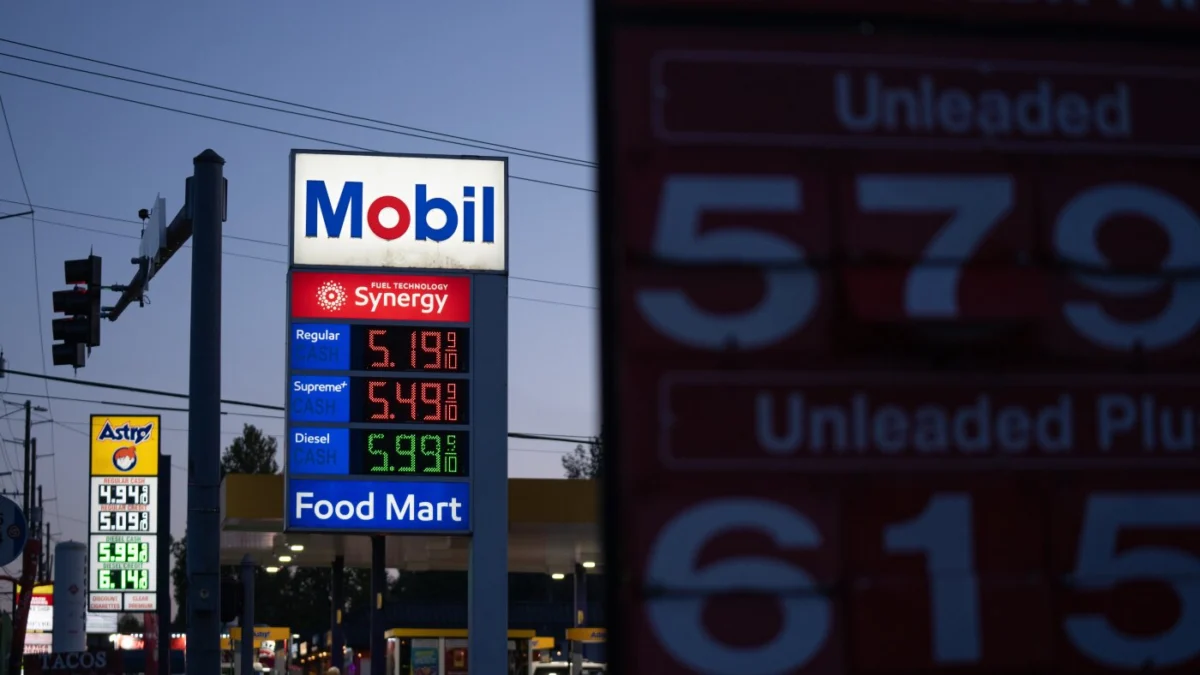
Gasoline prices across the United States have seen a significant increase, climbing by more than 30 cents per gallon in the past week alone. This upward trend is expected to continue as the Strait of Hormuz, a critical chokepoint for global oil and natural gas trade, remains closed due to ongoing conflict in Iran. The average price for regular gasoline reached $4.446 as of Sunday, a notable jump from $4.099 just seven days prior, according to data from AAA.
This surge places current gas prices at their highest point since late July 2022. For context, the average price of gasoline in the U.S. stood at $2.98 on February 26, two days before the conflict in Iran commenced. A year ago, the average price was $3.171, as reported by AAA.
President Trump has publicly stated his expectation that gas prices will "drop like a rock" once the conflict in Iran concludes. However, experts caution that even after the war ends and the Strait of Hormuz reopens, fuel costs may not immediately return to previous levels. The duration of the strait's closure is a key factor influencing future price movements.
Kevin Book, co-founder of ClearView Energy Partners, a research firm, explained that when oil inventories are low and supply routes are disrupted, consumers should anticipate continued price increases. This situation is likely to persist until consumer demand significantly contracts. Book suggested that the peak of prices related to this crisis could be weeks or even months away, depending on how long the Strait of Hormuz remains inaccessible.
Book further elaborated that a return to normal gas prices could take several months. This timeframe accounts for the potential delays in clearing ships from the Strait of Hormuz, repairing any damaged infrastructure, and rebuilding depleted oil inventories. He also predicted that any rapid decline in gas prices would likely stem from negative economic factors rather than positive market developments.
"It would probably be recession, undercutting demand, knocking the knees out from under the market," Book stated, indicating that a sharp drop in prices might signal a broader economic downturn that suppresses demand.
In an effort to mitigate the impact of rising fuel costs, the Department of Energy released 17.5 million barrels of crude oil from the U.S. Strategic Petroleum Reserve between March 20 and April 24. This action was intended to help stabilize fuel prices affected by the conflict.
Additionally, seven countries within the OPEC+ group announced on Sunday their agreement to increase oil production by 188,000 barrels per day, commencing in June. This collective decision is aimed at promoting "market stability" in response to the current global energy market conditions.
The rise in gasoline prices is occurring concurrently with a weakening U.S. dollar, which is impacting American consumers' purchasing power. Analysis from Morgan Stanley indicates that the U.S. dollar depreciated by approximately 10% from early January 2025 to the end of April 2026. The first half of 2025 saw the most significant dollar losses since 1973.
A diminished dollar value can make international travel more expensive for Americans and increase the cost of imported goods. Conversely, financial analysts note that a weaker dollar could potentially benefit American exporters by making their products more competitive in international markets.


