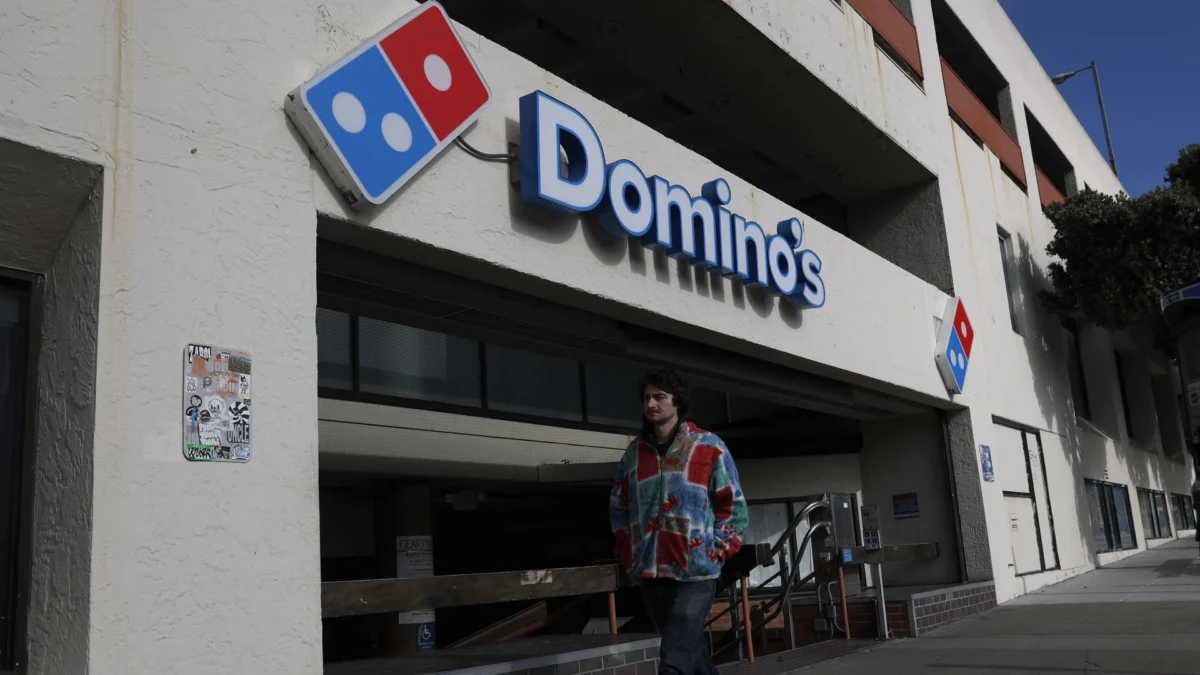
Restaurant chains from Domino's Pizza to Applebee's are reporting that sales softened in March as gas prices climbed, contributing to a new record low in consumer sentiment. The U.S. war with Iran has led to an average national gas price of more than $4.50 per gallon, prompting consumers to seek savings in other areas. A survey of drivers conducted by Numerator found that 43% of respondents have cut back on dining out and takeout since gas prices started climbing.
John Peyton, CEO of Dine Brands, which owns Applebee's and IHOP, told CNBC that March and April were softer than January and February, particularly for value-oriented consumers who are staying home more often or opting for lower-cost alternatives. He noted that when gas prices exceed $3.50 per gallon, it affects this demographic, posing an ongoing risk if fuel costs remain elevated.
To attract budget-conscious consumers, Applebee's is accelerating its rollout of its All-You-Can-Eat special. Starting Monday, diners can have unlimited shrimp, boneless wings, riblets, and fries for $15.99. This promotion aims to capture customers sensitive to rising costs.
Across the broader restaurant industry, traffic fell 2.3% in March compared with the year-ago period, according to data from Black Box Intelligence. This indicates a general slowdown in consumer visits to restaurants.
However, not all chains experienced the same downturn. Chipotle reported surprise same-store sales growth for its first quarter. CFO Adam Rymer stated on the company's earnings conference call in late April that while there was a slight softening in trends around the time the Iran conflict began in March, sales have since accelerated. This suggests some companies are more resilient to economic pressures.
Shake Shack CEO Rob Lynch reported relatively consistent sales during the first quarter. He noted a slight softening in the latter half of March but described the impact as not significant. Similarly, Bloomin' Brands, the parent company of Outback Steakhouse, along with Wendy's and Sweetgreen, all reported that their sales sequentially improved in March compared with earlier in the quarter. These improvements were largely attributed to a reprieve from severe winter storms that had previously hampered consumer activity.
Despite these monthly improvements, all three companies—Bloomin' Brands, Wendy's, and Sweetgreen—saw traffic shrink during the first three months of the year. This highlights that while short-term factors like seasonal weather can provide a boost, underlying economic pressures continue to affect overall customer volume.
The increase in gas prices is disproportionately affecting low-income consumers, who were already facing pressure from higher costs for essentials like rent and groceries. McDonald's CEO Chris Kempczinski acknowledged this, stating on the company's earnings conference call that elevated gas prices are a core issue that will continue to disproportionately impact this consumer segment. McDonald's reported same-store sales growth of 3.7% in the first quarter, boosted by U.S. diners spending more at its restaurants. The fast-food giant employs a barbell approach, offering value-focused options for budget-constrained customers and full-priced promotions for those with higher incomes.
Some CEOs view the increase in gas prices as an opportunity to gain market share as the overall pie of restaurant spending shrinks. Kevin Hochman, CEO of Chili's owner Brinker International, said in an interview that their market share has accelerated, indicating that the casual-dining industry is shrinking or slowing down. He attributed this trend to geopolitical events and the subsequent rise in gas prices. For several days in late April, Chili's observed customers trading down, such as ordering fewer alcoholic beverages or skipping appetizers and desserts.
Despite these observed shifts, Hochman remains optimistic that Chili's will continue to win over customers with its approach to value, believing that stronger players in the market will emerge even stronger during this period of economic uncertainty.
Restaurant Brands International CEO Josh Kobza agrees with the sentiment that strong players will get stronger. He noted that overall quick-service restaurant (QSR) performance did not show a sequential deceleration in the first quarter. Kobza highlighted the significant dispersion in outcomes across different QSR concepts, with some performing exceptionally well while others struggle.
He used Burger King's U.S. performance as an example. The burger chain, owned by RBI, reported domestic same-store sales growth of 5.8%, outpacing rivals McDonald's and Wendy's same-store sales during the quarter. Kobza suggested that RBI's results were more influenced by effective operational execution and strategic initiatives rather than broad macroeconomic factors.
The divergence in performance among restaurant chains underscores the varied impact of macroeconomic pressures. While elevated gas prices and general economic concerns are creating headwinds for many, particularly those catering to lower-income demographics, brands with strong value propositions, effective marketing, or resilient customer bases are demonstrating an ability to navigate these challenges. The ongoing volatility in energy prices and consumer sentiment suggests that the restaurant industry will continue to adapt its strategies to meet evolving consumer demands and economic realities.
As the first quarter unfolded, the restaurant sector witnessed a notable bifurcation in performance. While some chains grappled with declining traffic and sales softening, others managed to post gains, highlighting the varied impact of macroeconomic pressures. The rise in fuel costs, coupled with broader inflationary concerns, has compelled consumers to make difficult choices regarding their discretionary spending. This has led to a noticeable shift in dining habits, with many opting for more economical choices or reducing the frequency of eating out altogether.
The strategic responses from restaurant companies vary, reflecting their understanding of their target demographics and competitive positioning. For instance, chains like Applebee's are leaning into value-oriented promotions to capture price-sensitive customers. In contrast, others, like McDonald's, are employing a diversified approach, catering to both ends of the spending spectrum. This adaptability is crucial in a market where consumer behavior is highly sensitive to economic fluctuations, particularly those directly impacting household budgets, such as the cost of gasoline.


