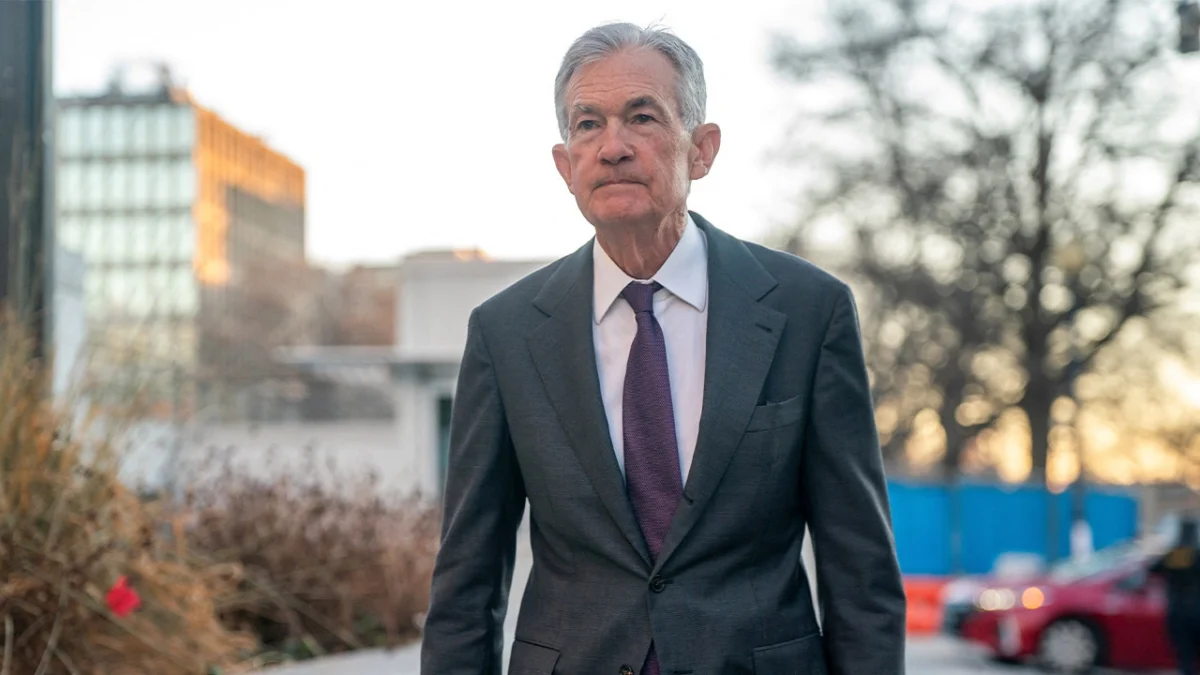
The Federal Reserve is poised to announce its latest interest rate decision on Wednesday, with Federal Reserve Chair Jerome Powell set to preside over what may be his final news conference in that capacity. Powell's tenure as chairman is scheduled to conclude next month, marking a significant shift in leadership at the central bank. The Federal Open Market Committee (FOMC), the body responsible for setting interest rates, is widely anticipated to keep the benchmark federal funds rate unchanged within its current target range of 3.5% to 3.75%. This decision comes against a backdrop of persistent inflation concerns, which have remained elevated above the Federal Reserve's 2% target and have seen an uptick since the onset of geopolitical conflicts.
Jerome Powell's term as Fed chair officially concludes on May 15. However, his position as a member of the Fed's Board of Governors extends until January 31, 2028. The FOMC's subsequent scheduled meeting after this week's gathering is slated for mid-June, which falls after Powell's chairmanship term has ended. While Powell had previously indicated a willingness to continue serving as Fed chair on an interim basis pending the confirmation of his successor, this may no longer be necessary. A clear path for the confirmation of former Federal Reserve Governor Kevin Warsh has emerged following the closure of a contentious investigation into Powell, potentially enabling Warsh to assume the chairmanship by the June meeting.
Previously, uncertainty had clouded the timing of a successor's confirmation, particularly whether it would precede the Fed's June meeting. This was due to an investigation by the Trump administration's Justice Department into Powell's testimony concerning the central bank's extensive renovation project. This probe had drawn significant opposition from a key senator. Senator Thom Tillis, a Republican from North Carolina and a member of the Senate Banking Committee, which oversees nominations for the Fed, had pledged to obstruct Warsh's confirmation. Tillis cited concerns that the administration was pursuing what he termed a "bogus" investigation that threatened to undermine the Federal Reserve's independence in setting monetary policy.
U.S. Attorney for the District of Columbia, Jeanine Pirro, announced on Friday that her office would be closing its investigation into Powell's testimony before the Senate regarding the Fed's renovations. The central bank had attributed cost overruns in these renovations to factors such as escalating material costs, asbestos abatement, and other unexpected or higher-than-anticipated expenses. Pirro stated that the Fed's inspector general, Michael Horowitz, would assume responsibility for the ongoing investigation. Senator Tillis subsequently commented that the DOJ's probe represented a "serious threat to the Fed's independence" and that its conclusion was a prerequisite for him to support Kevin Warsh's confirmation. He characterized the inspector general's review as a "necessary and appropriate measure" that he trusts will be "conducted thoroughly and professionally."
With the Senate confirmation process for Warsh now appearing more streamlined, attention is likely to turn to Powell's intentions regarding his future role at the Federal Reserve. While many past chairs have departed the institution upon the conclusion of their terms, Powell has not definitively stated whether he will step down from the Board of Governors. He has previously expressed a desire to remain on the board until the investigation into his testimony was fully resolved with transparency and finality. In his remarks following the March FOMC meeting, Powell stated, "On the question of whether I will then continue to serve as governor after my term ends, and after the investigation is over, I have not made that decision yet, and I will make that decision based on what I think is best for the institution and for the people we serve."
EY-Parthenon Chief Economist Gregory Daco suggested that even with the DOJ investigation concluded, Powell is "more likely than not to remain on the board." Daco attributed this likelihood to a desire for "institutional continuity, not politics." He posited that Warsh's perspectives on inflation trends and the potential disinflationary impact of a productivity surge driven by artificial intelligence, coupled with his views on the Federal Reserve system's operational framework, might encourage Powell to stay. Such a decision could serve to "help preserve institutional continuity, anchor the existing communication approach, and provide a stabilizing counterweight during the transition."
Daco further elaborated on the implications of the investigation's closure. He noted that while the dropping of the DOJ probe reduces immediate pressure, it does not entirely eliminate governance questions. The ongoing review by the Inspector General ensures that these issues remain active. Daco also pointed out that Powell's continued presence on the Board would not prevent the DOJ from potentially reopening its investigation should new information come to light. Therefore, the current situation, characterized by a cleared path for Warsh's confirmation, a probable transition around June, and a strong possibility of Powell remaining on the board, suggests a degree of continuity in the Federal Reserve's policy framework, even as leadership undergoes a change.
The Federal Reserve's upcoming policy announcement will be closely watched not only for its interest rate decision but also for any signals regarding the future direction of monetary policy under new leadership. The persistence of inflation above the Fed's target remains a primary concern, influencing the committee's deliberations. Market participants will be analyzing Powell's final remarks for any insights into the economic outlook and the Fed's strategy for managing inflation. Simultaneously, the confirmation of Kevin Warsh as the next Fed chair will introduce a new set of perspectives and priorities to the helm of the central bank, potentially shaping its approach to monetary policy in the months and years ahead. The interplay between continuity and change at the Federal Reserve will be a key theme to monitor as the economic landscape continues to evolve.


