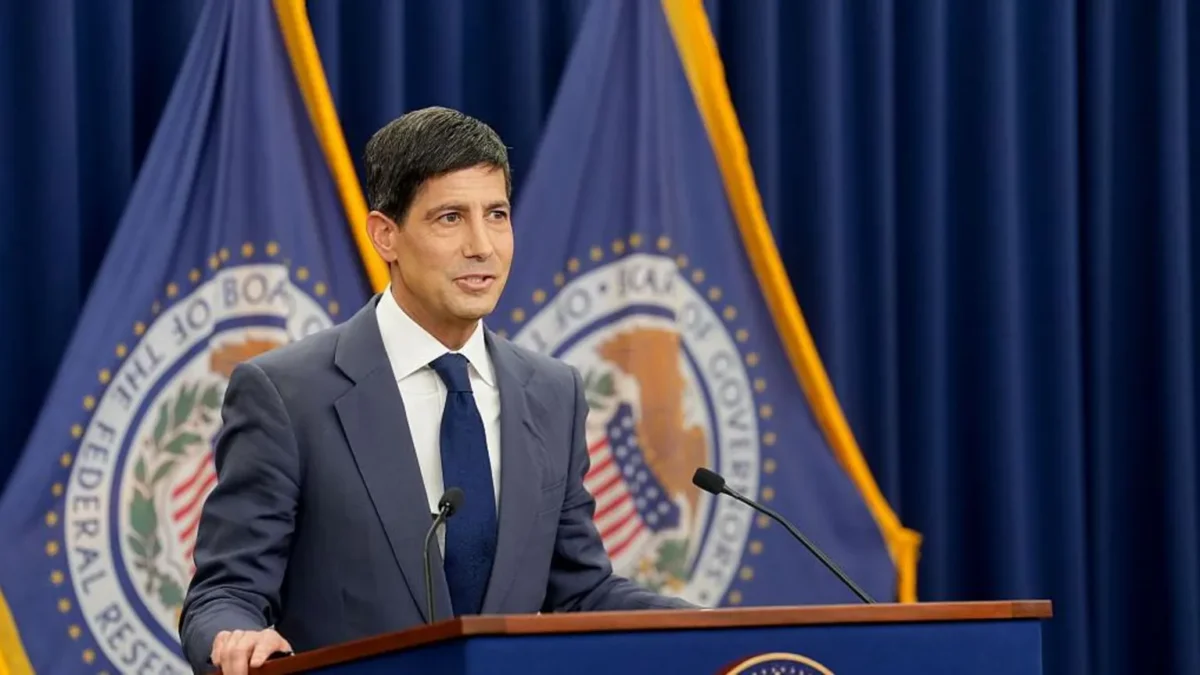
The Federal Reserve left the target range for the federal funds rate at 3.5% to 3.75% after Kevin Warsh’s first meeting as chair of the central bank. Governors were divided over whether to keep policy unchanged or raise rates in an environment where inflation remains above target and political and geopolitical tensions in the Middle East weigh on the outlook. President Donald Trump had pressed Warsh’s predecessor, Jerome Powell, to cut rates and signaled expectations for rate relief under Warsh’s leadership; those calls coincided with an inflation reading that remains above the 2% goal. With inflation running at about 3.8% and uncertainty surrounding a possible accord to end the Iran-related conflict, the rate-setting committee opted for a steady stance.
In a statement backed by all 12 members of the Federal Open Market Committee, officials said economic activity is expanding at a solid pace even as uncertainty from the Middle East factors into the outlook. The committee noted that productivity growth and business investment have remained solid and job gains have kept pace with the labor force, with unemployment changing little. The communication style of the Fed also shifted under Warsh, moving toward a more concise public message and away from language that suggested a future rate-cut bias. The update released alongside the decision stated that the Committee will focus on delivering price stability.
The central bank’s statement also carried a change from its prior language by removing hints that it could lower rates in the future. The dot-plot accompanying the decision showed a split among the 18 participants: nine projected a possible rate increase this year, while eight anticipated no change; one member expected a cut. Warsh did not offer his own dot-plot projection but encouraged colleagues to proceed with the framework update.
Analysts highlighted the dot-plot as a key indicator of where policymakers see policy directions in the near term. Pantheon Macroeconomics’ Samuel Tombs described the release as pointing to potential rate hikes before year-end. In remarks after the decision, Trump commented that the move was “alright… whatever,” while also praising Warsh’s leadership.
Inflation, measured year over year, stood around 3.8% in April, a level that has contributed to the decision to maintain current policy. The decision comes as trading partners and geopolitical developments in the region continue to influence price dynamics, including energy costs. The Fed signaled a continued emphasis on price stability and signaled a willingness to adjust policy as data evolve.
Looking ahead, Warsh signaled a drive to reform the Fed’s practices, including overhauls to communications, balance-sheet management, data usage, the productivity-jobs link, and the inflation framework, aiming for a leaner, more transparent approach. The Fed’s leadership transition and the evolving policy framework will be watched closely by markets as investors assess how inflation trends and regional tensions interact with the path for policy.


