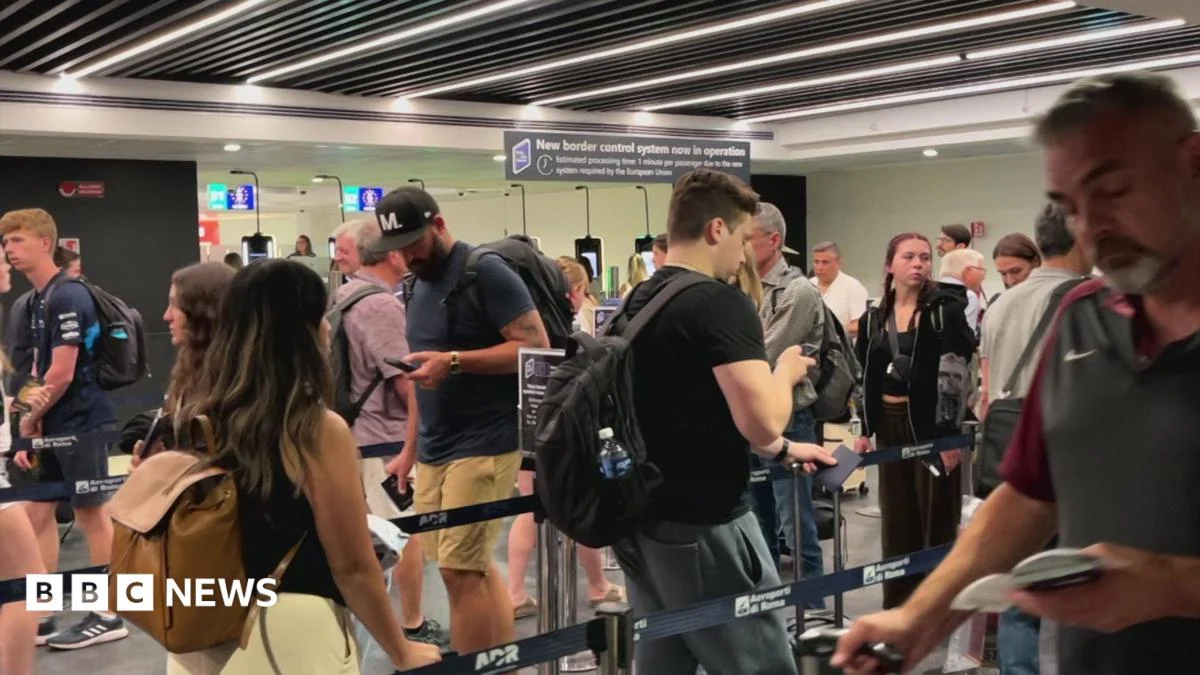
The European Union’s new Entry Exit System (EES) has markedly increased the time travelers spend passing through passport control, with Rome’s main airport reporting a sharp rise in wait times for UK nationals and other non-EU visitors. The delays come as airlines warn travelers to anticipate longer queues this summer, and as border officials in Portugal’s Faro airport describe bug-related glitches in the system that can extend waits before passengers clear immigration.
The EES requires non-EU citizens entering the Schengen area—an area comprising 29 European countries—to register fingerprints and a photograph upon arrival, with checks also performed when travelers depart. The system’s architecture relies heavily on automated kiosks, along with border officers who handle cases such as children under 12 who cannot use kiosks. Since its phased rollout began in October, several airports have experienced hours-long queues at passport control, and some passengers have reported missing flights as a result.
Ryanair has been among the loudest critics, warning passengers to allow extra time for journeys and to be prepared for extended waits at passport control. In Rome, witnesses described queues that stretched for hours, with families and solo travelers alike recounting multi-hour experiences from stepping off the plane to leaving the border zone. One traveler from Yorkshire recalled a two-hour queue, while a U.S. visitor noted a roughly one-hour delay that caused them to miss a pre-arranged car pickup. Other accounts from travelers arriving in Barcelona, or transiting through different hubs, described substantial delays as well.
Airport officials have acknowledged progress with the integration of EES with e-gates, but differences remain. Rome’s Chief Aviation Officer, Ivan Bassato, said the move to connect with e-gates represented a meaningful improvement, yet conceded that the process does not yet match the former system’s quality. He warned that the current complexity continues to push UK national clearance times from about seven minutes to roughly 20 minutes, and stressed the need to fix bottlenecks urgently and reduce duplication in the process. He also emphasized the goal of broader use of pre-registration apps across more member states, noting that only Sweden and Portugal currently participate.
Portugal’s border authorities reported similar strains. Faro’s Superintendent Pedro Oliveira described EES-related delays in some instances, noting that what used to be a 10-minute queue could now exceed 30 minutes. He attributed the longer waits to the dependency on IT systems, saying issues can arise when servers in one country affect processing elsewhere. He added that the automated kiosks typically remain the quickest route, though children under 16 are processed by border police staff when needed. In recent days, officials have explained that system bugs have caused occasional slowdowns, but stated that incidents are becoming less frequent as readiness improves and more border personnel are brought online.
The European Commission has said disruption is limited in most EU airports and pledged ongoing support to member states as the system is implemented. Still, travelers have faced notable friction, with some reporting missed flights as queues lengthen or shift unpredictably. The EES rollout, designed to enhance security and streamline entry for non-EU travelers, remains a work in progress as airports adjust to the new technology and processes.


