Elon Musk became the world’s first trillionaire on Friday, following the record-breaking stock market debut of his space company SpaceX. With an estimated net worth of about $1.11 trillion, Musk now sits well above peers such as Google co-founders Larry Page and Sergey Brin, Amazon founder Jeff Bezos, and Bernard Arnault of LVMH. Musk’s rise stretches back to the late 1990s, when he first made waves in tech, and his fortune surged in 2020 as the values of Tesla and SpaceX climbed.
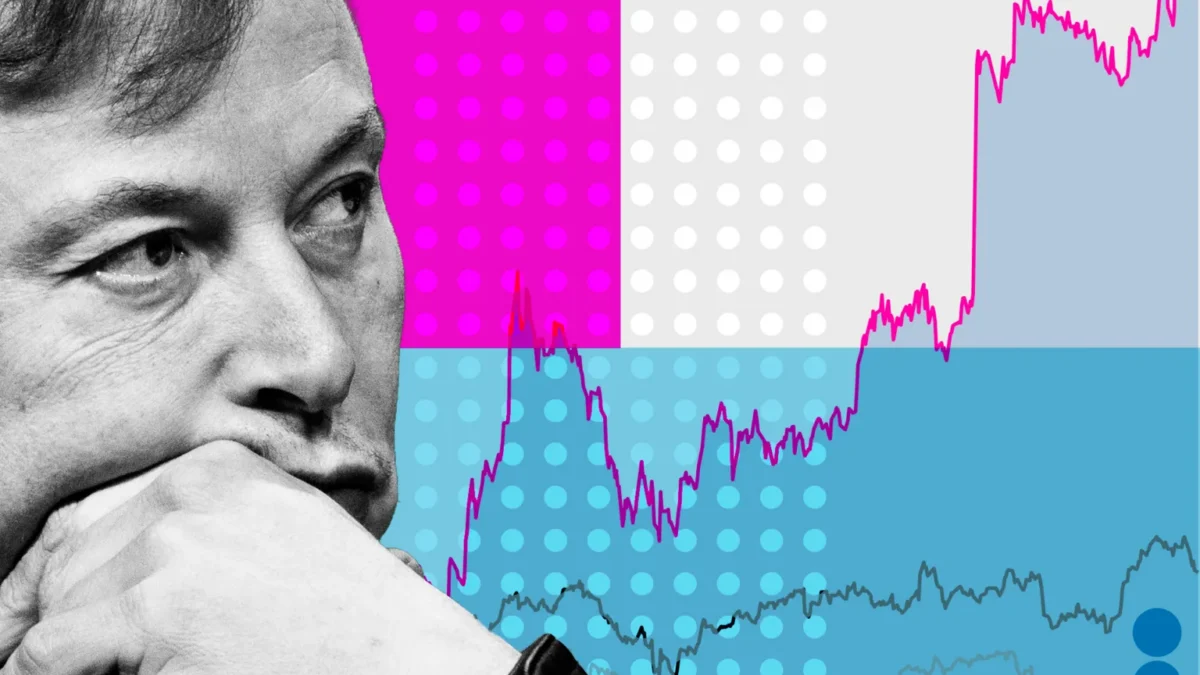
By January 2021, Musk had already become the world’s richest person, briefly overtaking Bezos. The wealth trajectory has been jagged: a dip in 2022 amid a US tech-stock downturn, and another sharp fall in early 2025 as investor concerns about his role in the Trump administration coincided with a slide in Tesla’s share price. Yet, the charted path shows how he has repeatedly recovered, consolidating a fortune that dwarfs many contemporaries and echoes the shifting balance of wealth toward technology tycoons over the past decade.
The wealth is largely tied to stock holdings in Tesla and SpaceX. Musk owns about 12% of Tesla, a company valued at roughly $1.5 trillion, and a 42% stake in SpaceX, which is valued at more than $2 trillion. A sizable portion of his assets remains in shares pledged as collateral for personal loans. Beyond these two giants, he also holds lesser stakes in The Boring Company and Neuralink, among others. This emphasis on stock and collateral means his liquidity is limited, with cash accounting for a small fraction of his net worth, as he noted in February.
The long-term chart tracing his net worth over the past six years shows a jagged mountain range, shaped by Tesla’s stock swings, SpaceX’s rising value, and political as well as investor sentiment surrounding his public profile during the Trump years. Since the upward spikes, Musk has often rebounded to reclaim leading positions atop global wealth rankings, now standing nearly four times richer than his nearest rival and more than five times wealthier than Meta’s Mark Zuckerberg. The chart also juxtaposes his wealth with government budgets and luxury assets to illustrate how the vast majority is concentrated in a small number of holdings rather than cash.
Analysts note that Musk’s ascent is inseparable from the techno-industrial complexes of electric vehicles and space exploration, where asset values can swing rapidly with market mood. The phenomenon underscores how a few technology-driven companies have become central to the profile of global wealth rather than traditional finance or manufacturing powerhouses. This shift mirrors broader changes in the economy as intangible assets, brand value, and scale economies increasingly dominate the top ranks of wealth.
As SpaceX’s debut elevates its profile and Musk’s fortunes in tandem, observers will watch how market sentiment sustains or reshapes the billionaire’s position in coming years, particularly as company valuations reflect ongoing capital raises, government contracts, and technological milestones in aerospace and beyond.


