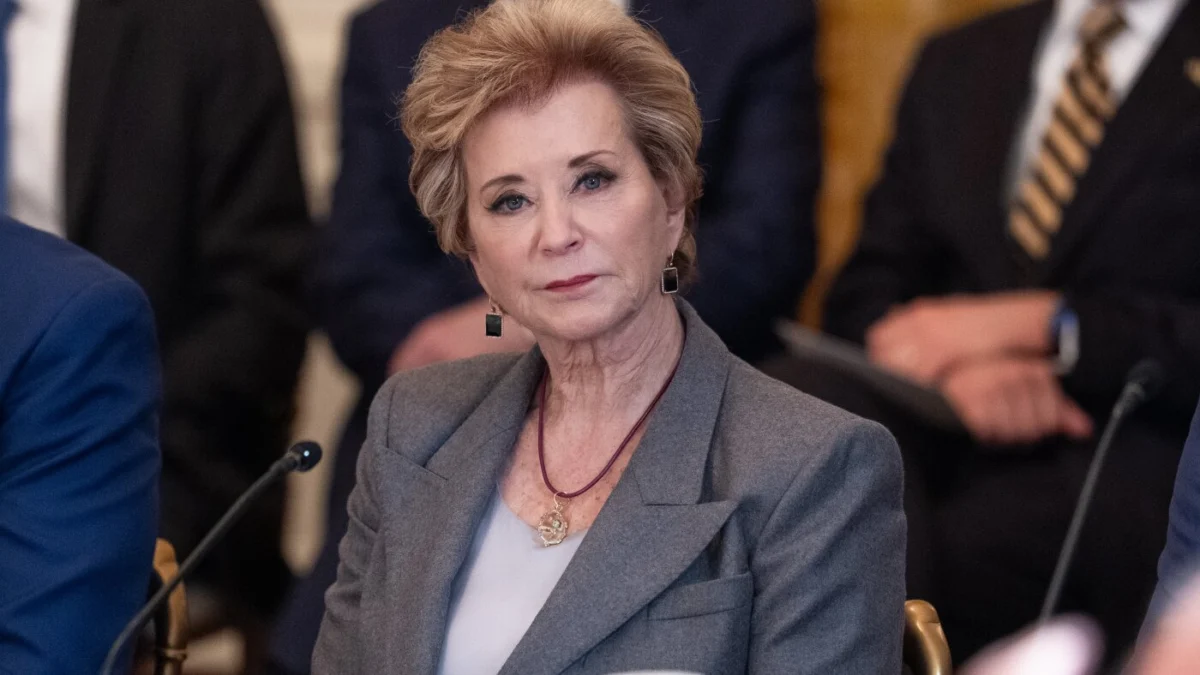
Education Secretary Linda McMahon faced a barrage of questions from senators Tuesday, defending her department's proposed budget and ongoing structural changes during her first Capitol Hill appearance this year. The hearing, intended to review the White House's education spending proposal for fiscal year 2027, provided a platform for both Republicans and Democrats to assess Secretary McMahon's tenure and the direction of the Education Department.
While some Republican lawmakers, such as Senator John Kennedy of Louisiana, expressed support for McMahon's initiatives, particularly her emphasis on expanding school choice, many Democrats voiced significant concerns. A central point of contention was the proposed reduction in funding for TRIO programs, a suite of federal initiatives designed to assist disadvantaged students in accessing and completing higher education. The proposed cuts to TRIO, which has historically enjoyed bipartisan backing, renewed scrutiny of the administration's commitment to supporting low-income and first-generation college students.
Senator Patty Murray of Washington highlighted a perceived fragmentation of services, questioning Secretary McMahon on why parents now need to navigate multiple federal agencies for educational support that was previously consolidated within the Education Department. McMahon countered that the consolidation or relocation of federal education programs would not diminish the quality of service or funding received by parents and students. She asserted that regardless of which agency houses specific programs, the treatment and financial support would remain consistent.
Regarding federal spending for special education, the administration's budget proposal includes an increase of $539 million for the Individuals with Disabilities Education Act (IDEA), bringing the total to $16 billion. This increase aims to ensure that students with disabilities continue to receive a "free appropriate public education." Secretary McMahon stated that shifting oversight and enforcement responsibilities for IDEA to other federal agencies, such as the Departments of Labor and Health and Human Services, would not compromise essential federal programs. However, this proposed shift has drawn criticism from special education advocates who fear it could reframe disabilities as primarily health issues rather than educational ones.
Advocates argue that moving special education functions to the Department of Health and Human Services could inadvertently deprioritize the educational aspect of a child's needs, potentially leading to a focus on health concerns over ensuring a high-quality, equitable learning experience. Secretary McMahon, however, maintained that the department is still finalizing decisions on where these programs might reside but assured the committee that students would receive the same level of support and attention regardless of the administrative placement. She emphasized that the goal is to ensure continuity of care and educational access.
Another significant area of discussion was the Office for Civil Rights (OCR), which handles a wide array of discrimination complaints from students, including those based on race, sex, and national origin, with a substantial portion of its investigations historically involving students with disabilities. The proposed budget includes a substantial cut of 35% to OCR funding. Senator Chris Murphy of Connecticut expressed dismay over this proposed reduction, citing the case of a student with autism who experienced restraint and seclusion at school. Murphy noted that OCR had been investigating this case until the office's local field site was closed following McMahon's confirmation.
Adding to the concerns about OCR's capacity, it was revealed that in March 2025, the department terminated more than half of the office's legal and support staff, a move the department then described as enhancing "efficiency" and "accountability." Seven of the twelve regional OCR offices were also shuttered. During the hearing, Secretary McMahon deflected direct responsibility for the staff reductions and the subsequent decline in disability discrimination investigations, characterizing the situation as "hindsight." Despite these challenges, McMahon pledged that her department was actively working to recruit additional lawyers to address a significant backlog of pending cases.
As the hearing neared its conclusion, Senator Tammy Baldwin of Wisconsin reiterated that the proposed budget still contained a $49 million reduction for OCR. Secretary McMahon indicated a willingness to reconsider this specific budgetary figure, suggesting potential flexibility on that particular cut. This openness to adjustment offered a sliver of reassurance to those concerned about the office's diminished capacity to address civil rights violations.
The future of TRIO programs also remained a focal point, with nearly every Democratic committee member and several Republicans raising questions about their proposed funding. TRIO programs, established to support low-income and first-generation students in their pursuit of higher education, have been instrumental in bridging educational gaps for over 800,000 students annually. Despite TRIO's long-standing bipartisan support and its perceived strong return on investment, Secretary McMahon argued that the program's own metrics indicate it has not been successful. She suggested that the administration might consider reforming TRIO, potentially shifting its focus from college readiness to workforce training opportunities.
This proposed shift was met with resistance from several senators. Senator Jeff Merkley of Oregon, while expressing support for career and technical education, argued against repurposing TRIO. He stated that existing programs already cater to workforce development and that efforts should be concentrated on enhancing successful initiatives rather than converting a program with a distinct and effective mission. The administration's budget proposal, however, did maintain current funding levels for Title I, a program that provides additional resources to schools serving a high concentration of students from low-income families. McMahon emphasized that this funding would remain stable, ensuring no reduction in support for these schools.
Furthermore, the budget proposes a significant increase of $10 billion for federal Pell Grants, which assist students with substantial financial need in covering college-related expenses. While some members, including Committee Chair Shelley Capito of West Virginia, lauded this increase, others felt it did not adequately address the escalating costs of higher education or the financial burdens faced by many students.
Student loans also emerged as a critical issue, with senators probing Secretary McMahon about the management of the federal government's $1.7 trillion student loan portfolio and the challenges faced by tens of thousands of borrowers struggling with repayment. Many borrowers are experiencing uncertainty as the Education Department transitions oversight responsibilities to the Treasury Department. Senator Merkley highlighted the plight of approximately 88,000 borrowers awaiting qualification for the Public Service Loan Forgiveness (PSLF) buyback program, a process the department estimates should take 45 days but which constituents report often takes nine months to a year for a substantive response.
McMahon acknowledged the delays in processing PSLF applications and the broader issues affecting student loan borrowers. She recognized the need for sustainable, long-term solutions to address these systemic problems but did not outline specific remedies during the hearing. The situation is further complicated by the recent invalidation of a previous, more lenient repayment plan utilized by many borrowers. A new plan is slated for release in July, but McMahon conceded that the path to this point has been fraught with difficulties, acknowledging that the process can be confusing for borrowers but expressing confidence in the progress being made.