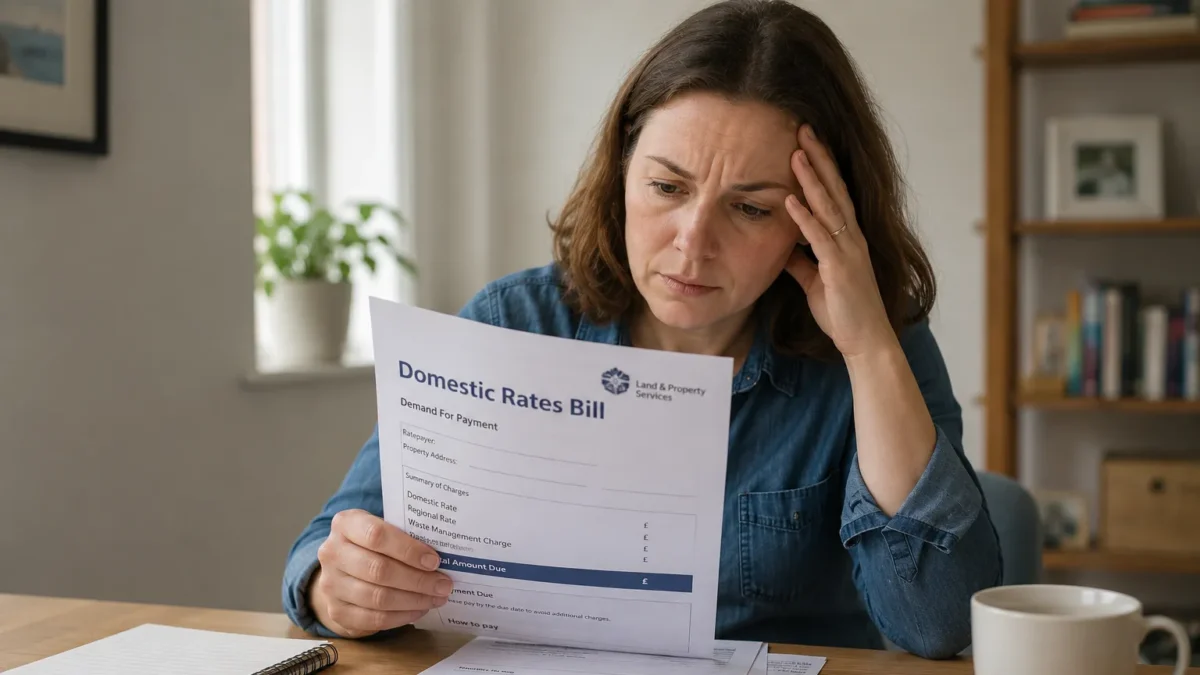
Debt accumulated from domestic rates bills in Northern Ireland has surpassed £1 million, marking a significant increase of over 50% in the past year, according to figures released by the charity Advice NI. This escalating debt burden is placing considerable financial pressure on households, with the organization's debt advice service reporting this milestone figure for the first time.
Domestic rates, alongside business rates, are crucial for funding public services at both the Stormont and local council levels. These payments also contribute to projects related to events, tourism, and waste management. The average rates bill in Northern Ireland has now reached £1,239. This figure reflects a 5% rise in the regional rate, which applies to all households, coupled with increases in the district rate set independently by each council area.
Advice NI's data reveals a stark upward trend in rates debt. For the 2025/26 period, the charity assisted users with a total of £1,066,170 in rates debt, a substantial increase from £705,558 recorded in the 2024/25 period. Sinéad Campbell, Head of Money, Debt, and Quality at Advice NI, attributes this surge to stagnant wage growth and the persistent rise in the cost of living, which are collectively pushing more individuals into financial distress.
Campbell noted that many individuals delay seeking assistance for their mounting debts, often waiting up to two years. She anticipates a further sharp rise in reported rates debt as the cost of living crisis continues to impact household finances. "Our research tells us that more people are having difficulty balancing the cost of running their home alongside other essential outgoings," Campbell stated. She emphasized the critical need for individuals to recognize that rates bills should be considered a priority debt. Failure to meet these payments can result in severe financial and legal repercussions, including court orders for wage or benefit deductions, and in some instances, insolvency proceedings that could jeopardize home ownership.
The issue of rates debt is part of a broader financial strain experienced by consumers. Advice NI reported that its clients' average total debt now stands at £12,145. Last year alone, the charity provided support to 3,500 individuals who collectively faced a total debt of £42.5 million.
A domestic rates bill is composed of three main components. The first is based on the property's value, with higher-value homes generally incurring higher rates, subject to a cap. The second is the Northern Ireland-wide regional rate, determined by Stormont. This rate saw a 5% increase this year, following a similar 5% rise the previous year, adding approximately £30 to the average bill and contributing to funding for services such as schools, hospitals, housing, and roads.
The final element of the rates bill is the district rate, which varies by local council area. This portion funds essential council services, including leisure centers, regional tourism initiatives, and waste collection. This year, Ards and North Down council saw the highest percentage increase in its district rate at 4.5%, followed by Belfast City Council and Derry City and Strabane, both at 4.48%. Fermanagh and Omagh district recorded the lowest increase at 1.96%. Despite these increases, domestic rates bills in Northern Ireland remain considerably lower than in the rest of the UK, partly due to the absence of separate water charges.


