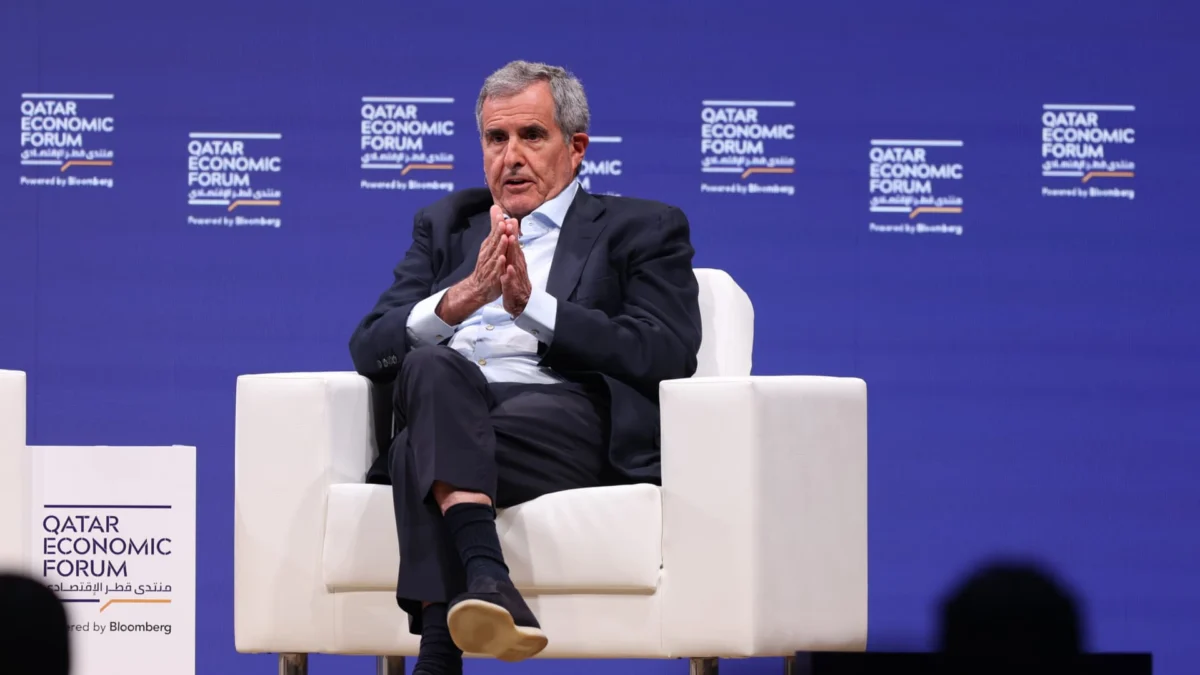
Hollywood is being forced to rethink its playbook as producers point to the unlikely box-office hit of Backrooms and its implications for the industry. Peter Chernin, the longtime executive and cofinancier of Backrooms, argues that studios must embrace risk, including supporting lower-budget fare, to capture younger audiences and spark renewed creativity. He warns against simply chasing deals with YouTube creators as a shortcut to success, saying the rush to sign such agreements is a “big mistake.”
Chernin’s career spans Fox leadership from 1996 to 2009, where he oversaw titles like Titanic and Avatar, to founding The Chernin Group in 2010, a private equity firm that backed several creator-economy ventures. In 2022, he helped establish North Road, a global content studio, and his production company’s Chernin Entertainment division coproduced Backrooms with A24. The film’s modest $10 million budget has resonated with younger moviegoers who are familiar with director Kane Parsons’s YouTube work, helping propel it to standout success in a crowded market.
In its first weekend, Backrooms drew an audience in which 86% of ticket buyers were under 35, according to a Comscore Movies and Screen Engine PostTrak survey. The film reached $100 million in domestic box office within six days, becoming the highest-grossing domestic release for A24. The phenomenon of Backrooms, along with another low-budget hit Obsession—produced with a budget of $750,000 and grossing over $100 million domestically—has industry insiders rethinking strategy as box-office performance remains below pre-pandemic levels.
Chernin notes that the market’s fatigue with sequels and big-budget franchises is real, arguing that audiences crave authenticity and originality. “Hollywood has been guilty of being a little bit cynical and essentially creating a brand-management sort of manufacturing process, consistently feeding audiences a diet of sequels,” he said. He also stressed that the industry should look for fresh intellectual property and voices, not merely follow a bandwagon.
Analysts familiar with the space emphasize that the new dynamic favors lower-budget, concept-driven films. Roth analyst Eric Handler says younger viewers still want the communal cinema experience but are drawn to ideas that feel different and affordable. “You don’t need to make a $250 million movie to get me interested,” he remarked, highlighting a shift in how studios evaluate risky bets. He expects studios to broaden the content slate beyond conventional franchises.
For Chernin, the success of Backrooms represents a proof of concept: taking risks at the right price point can yield outsized returns when linked to authentic IP and emerging creators. “Risk is ultimately the lifeblood of success,” he said, signaling a possible recalibration for how Hollywood allocates budgets and chooses projects. The conversation around how to replicate these results is ongoing, but the underlying message is clear: the industry may need to rethink the economics of risk, budget, and creative sourcing to sustain growth in a market increasingly driven by younger audiences and alternative distribution models.


