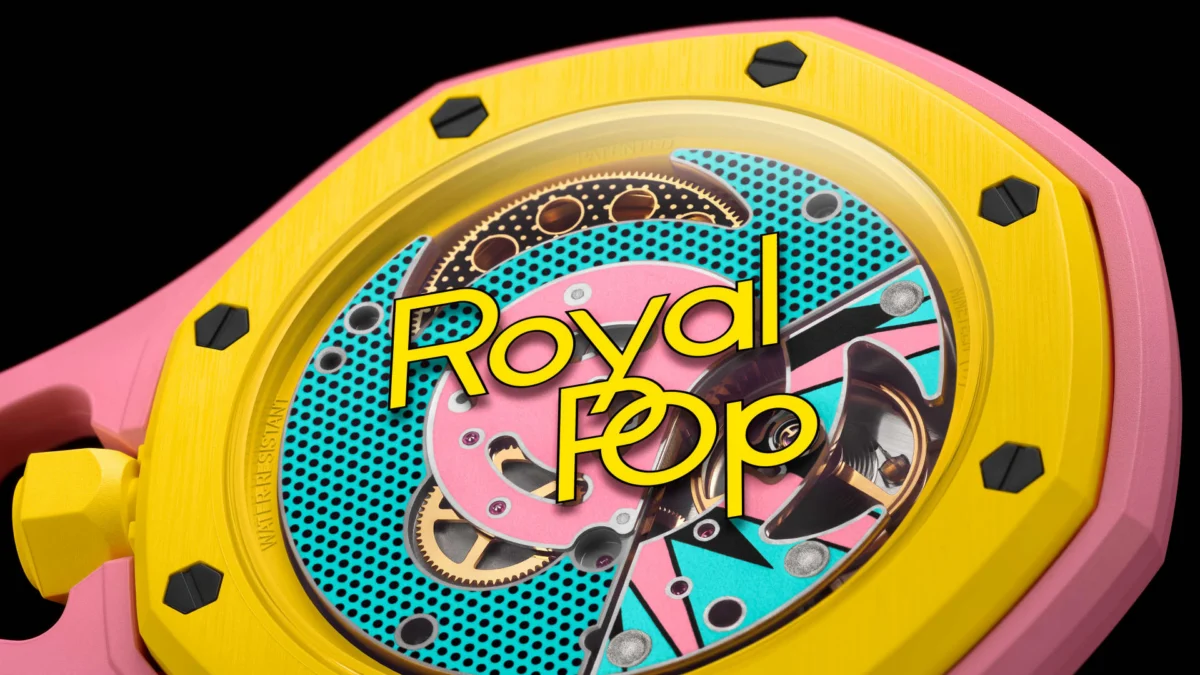
Luxury watchmaker Audemars Piguet's recent collaboration with Swatch, which introduced the Royal Pop collection, initially sparked fears among some collectors regarding brand dilution and potential negative impacts on sales. However, weeks after the collection's launch, prices for Audemars Piguet watches have held steady on the secondary market, according to data from WatchCharts.
The announcement of the partnership drew sharp criticism from segments of the horology community. Rapper DDG expressed an intent to divest his $180,000 Audemars Piguet watch if the collaboration were to expand excessively and diminish the brand's prestige. Self-appointed watch enthusiasts warned that one of the "Holy Trinity" of watch brands, renowned for its innovative complications and designs, had seemingly "gone plastic" with the brightly colored, lanyard-worn Royal Pop watches.
Despite these predictions of a collapse in Audemars Piguet's brand value and exclusivity, experts indicate that the luxury brand's core equity remains intact. Hamza Masood, head of partnerships at WatchCharts, which meticulously tracks secondary values for all major AP models, affirmed, "There has been no discernible impact on AP prices from the launch."
Masood further explained that while it is still early, the Royal Pop collection is strategically designed as part of Audemars Piguet's longer-term vision to attract the next generation of collectors. Unlike AP's signature Royal Oak watches, which typically retail for over $50,000 and often come with multiyear waiting lists, the Royal Pop line aims to make the brand more accessible to younger buyers and a broader female demographic. Masood emphasized, "Fundamentally, everybody recognizes that this does not really eat into AP equity in any real, meaningful way." He added that the product is not intended to dilute the Royal Oak collector experience, as it is not even designed as a traditional wristwatch.
Luxury Watch Market Dynamics
The broader luxury watch market has experienced significant volatility. Following a speculative bubble during the pandemic, the market saw a sharp decline in 2022 and is only now beginning to stabilize. WatchCharts' AP Index, which monitors the top 30 models from Audemars Piguet, shows a decline of approximately 40% from its 2022 peak. Similarly, Rolex and Patek Philippe, the other two members of the "Big Three" luxury watchmakers, have also seen their secondary market values fall from their respective peaks.
In the first quarter of the current year, Audemars Piguet's secondary prices recorded a 2% increase. This compares to a 1.7% rise for Rolex and a 3% increase for Patek Philippe during the same period, according to WatchCharts. Masood noted that "AP has [so far] not seen the same level of market recovery as the other two members of the Big Three." Furthermore, AP's inventory appears to be aging more than that of its competitors, potentially indicating a larger imbalance between supply and demand.
Despite these market challenges, Masood highlighted a unique benefit of the Royal Pop collaboration: it generated significant cultural buzz across social media and digital news platforms, something money alone rarely achieves. This surge in attention is expected to cultivate interest among teenagers and young adults in their twenties, who may eventually become future buyers of high-end Royal Oak timepieces.
Audemars Piguet, a family-owned company, produces around 50,000 watches annually, a stark contrast to Rolex's output of over a million watches per year. This difference in scale means AP's strategic investments are often measured in decades rather than shorter financial periods. Masood concluded that the company's calculated risk involves a potential trade-off: "all this collector teeth-gnashing may represent a loss of horological credibility, but in exchange, they're purchasing cultural credibility in front of a wider audience." He believes this strategy will ultimately lead to "purchasing more [cachet] in the long term."


