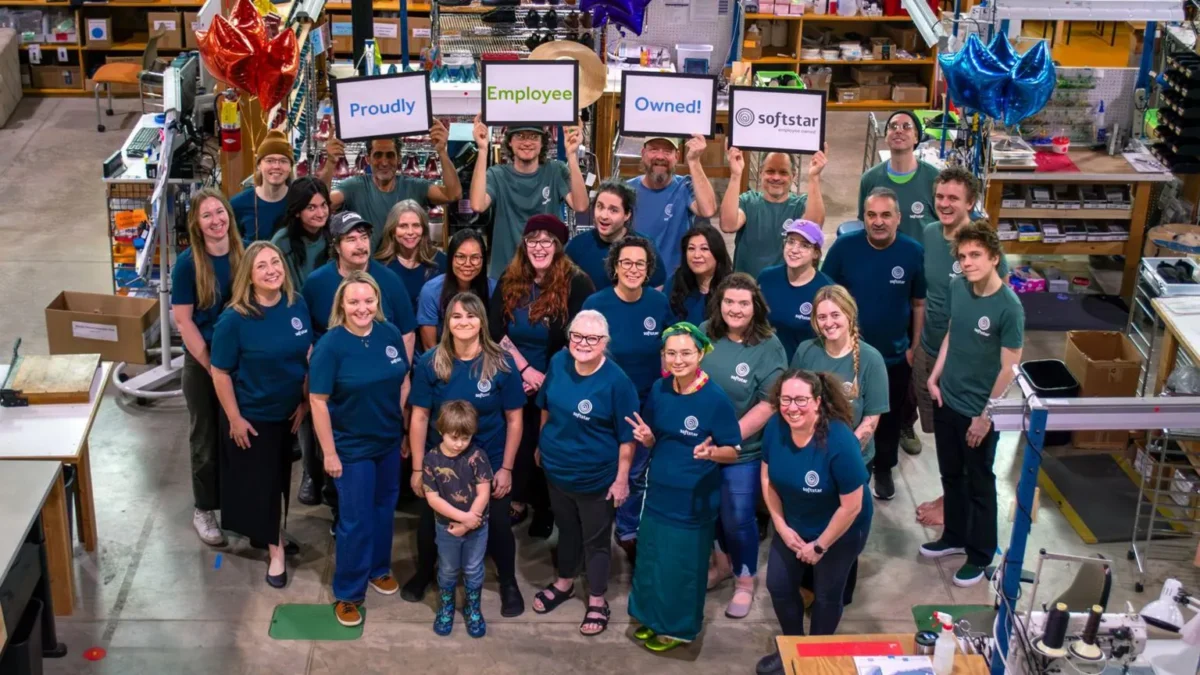
As more U.S. business owners approach retirement, a growing share are transferring ownership to their employees rather than selling to outside buyers. The shift was visible in January at Softstar Shoes in Oregon, where the 30-strong workforce became the new owners after former sole owner and chief executive Tricia Salcido decided to retire. Salcido remains with the company for several years as chief financial officer, and colleagues are already contributing ideas on how to run the business, signaling a change in how ownership is managed.
Salcido’s decision is part of a broader pattern affecting succession planning in small and family-owned firms. She notes that staff engagement has increased as workers become part owners, while also acknowledging that outside buyers—sometimes private equity firms focused on cost-cutting—might relocate production or change long-standing practices. Proponents of employee ownership argue it helps preserve local jobs and maintain U.S. production in sectors at risk of offshoring. Salcido says the decision was driven not just by finances but by a commitment to sustaining a business with local roots and a shared mission.
Industry observers point to a growing interest in employee ownership as a viable exit path for aging business owners. A 2025 study estimated that up to 600 U.S. firms are sold to workers each year, with financing options for these deals rising 78% to $865 million in the previous year from $500 million in 2024. Advocates argue that employee ownership can be associated with increased productivity and higher wages, while also aligning workers’ interests with the company’s success. The demographic shift underway adds urgency: McKinsey estimates that about six million baby boomer owners of small and medium-sized U.S. companies will retire between now and 2035.
Ownership transfers can take several forms. At Softstar Shoes, the transfer was completed through an Employee Ownership Trust (EOT), in which a trust holds ownership on behalf of staff and pays the former owner through future profit shares. This arrangement means Salcido will receive payments over time, contingent on the business remaining successful. She notes, “I carry the risk, in that if anything happens, I don’t get paid.” Staff also stand to benefit from a share of annual profits under this structure. In other cases, firms use an Employee Stock Ownership Plan (ESOP), where employees receive shares that vest and can be cashed in upon departure. Another path is worker co-operatives, where workers purchase a stake in the business. Stockwell Elastomerics in Philadelphia chose ESOP transfer, with a 10-year payment horizon cited by its founder.
ESOPs are among the most common routes for transitioning to worker ownership in the U.S., though they come with long-term complexity and liquidity considerations. Data from 2023 show there were 6,609 companies under ESOP ownership, employing 10.9 million people and holding more than $2 trillion in assets. Critics warn that the process can be lengthy and resource-intensive, requiring sustained revenue and profitability for payouts. Advocates argue employee ownership can foster a more stable, inclusive workplace and help protect jobs, particularly in manufacturing and craft sectors.
Government policy has started to respond. Washington has shown political will to facilitate these transitions, with the Department of Labor launching an Employee Ownership Initiative to promote and advise on such transfers. Bipartisan support in Congress is described as a factor that could make selling to staff easier and more realistic for owners contemplating retirement. Observers say this momentum may lead to more successful employee-ownership conversions in the coming years, helping firms weather succession without ceding control to external buyers and ensuring that local communities retain jobs and heritage.
For owners like Salcido, the road ahead involves patience and trust. “I carry the risk, in that if anything happens, I don’t get paid,” she says, acknowledging the waiting period and the possibility of a failed transition weigh on the decision. Yet she remains hopeful in the staff’s ability to sustain the business and deliver on commitments. As more owners consider retirement strategies, the balance between risk and reward, ownership structure, and policy support will continue to shape the landscape of U.S. small-business succession.


