Hourly workers across various sectors are facing significant instability in their work schedules and earnings due to the increasing adoption of sophisticated software by employers. This technology, designed to optimize labor costs and enhance productivity, has led to fragmented workdays, reduced hours, and diminished pay for many. Yves Valerus, a Haitian Creole-English interpreter based in Brooklyn, experienced this shift firsthand. For approximately 18 months, she maintained a stable, full-time position with a consistent weekly schedule, a fixed hourly wage, and benefits.
Her role involved facilitating communication for individuals in critical settings such as hospitals and courtrooms. However, in 2025, her work hours were drastically reduced and became unpredictable following a business downturn at her employer, LanguageLine Solutions, and the implementation of new scheduling software. By the close of that year, her income had decreased by nearly 20% compared to the previous year.
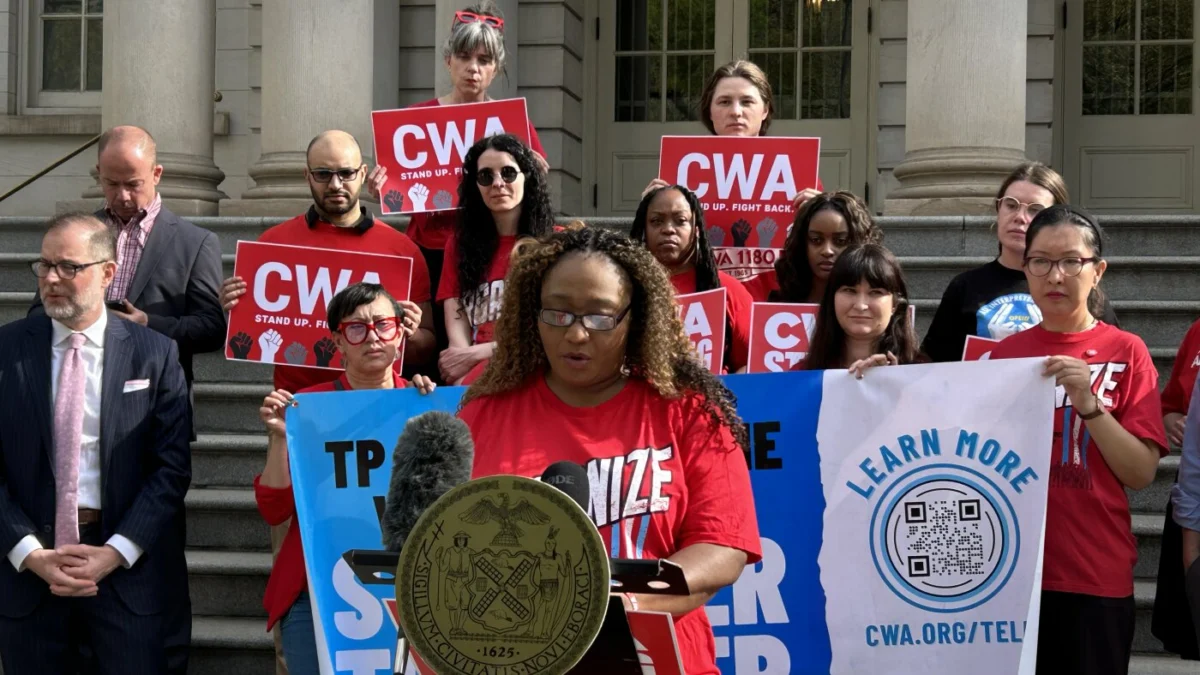
As a single mother supporting three children, Valerus was compelled to make difficult financial adjustments, including prioritizing her internet service over other utilities due to her remote work requirements and working extra hours to save on food expenses. She noted, “I would go an extra three miles to get something on sale that I really need when I have a market right down the block from my house.” In response to these challenges, Valerus and her colleagues have initiated efforts to unionize with the Communications Workers of America.
Among their grievances, the company has indicated it is exploring the use of artificial intelligence for basic interpretation tasks. Valerus and her fellow interpreters represent a growing number of workers experiencing the impact of algorithmic scheduling, a trend that has become more prevalent over the past decade. Employers are increasingly deploying technology to manage hourly workforces, aiming to cut labor expenses and boost output. This algorithmic management extends beyond scheduling, as employers integrate generative AI into the workplace.
Labor organizers are drawing parallels between their experiences with scheduling software and the potential repercussions for workers if they lack a voice in the implementation of new technologies. Daniel Schneider, a project lead at Harvard University’s SHIFT project, which studies the conditions of hourly work, observed that Valerus’s story encapsulates the broad transformations affecting hourly employment in America.
LanguageLine Solutions, the company where Valerus works, serves prominent clients including the UK’s National Health Service and various New York City agencies. Its parent company, Teleperformance, a major call center operator, has previously faced accusations of employee surveillance and subsequently reached an agreement with a labor union federation regarding its monitoring practices. Many LanguageLine interpreters described their jobs as inherently demanding even before the recent changes.
Through phone and video calls, they assist individuals navigating complex life events, translating insurance policies one moment and facilitating court proceedings the next. Valerus shared instances where the emotional weight of her work, such as interpreting during childbirth emergencies or end-of-life decisions, left her tearful. “Sometimes the kids and mothers lose their lives during childbirth or they are on life support [and] they need to decide whether to give their organs.”
Previously, interpreters experienced one to two minutes of downtime between calls, a buffer that has now been reduced to a mandatory 15 seconds. Anna Mancino, a Polish-English interpreter who worked at LanguageLine for eight years, stated this compressed schedule is exhausting and detrimental to focus, leading to potential errors. “You start losing focus, start making mistakes.” For interpreters like Valerus who conduct video calls, the minimal break time also prevents them from standing or stretching, contributing to physical strain.
LanguageLine issued a statement asserting that it “absolutely and categorically do not want this for our interpreters” and highlighted the existence of a health and safety committee tasked with reviewing workplace issues.
Beyond intensifying work pace, algorithms are altering schedules in ways that impact worker autonomy. At LanguageLine, interpreters began experiencing what the company termed “mandatory involuntary time off,” designated by the pay code “AEX” on their schedules. These schedule modifications often occurred with minimal advance notice. Valerus described the abruptness: “On Thursday I would have a regular schedule, and then by the end of my shift, I have AEX for Friday.” On other occasions, she would return from a break only to find her workday concluded.
Such short notice made it exceedingly difficult for workers to secure alternative employment, arrange personal appointments, or utilize the unexpected time off productively. Crucially, when placed on AEX, interpreters do not receive any compensation. Tax documents provided by Valerus and reviewed by NPR indicate an 18% reduction in her income from LanguageLine between 2024 and 2025. Mancino’s income became so erratic that she resigned in 2025 shortly after the birth of her first child.
Adding to their financial precarity, the company’s code of conduct prohibited interpreters from working for other translation services, even as their hours were being cut. In its official statement, LanguageLine cited “headwinds facing our entire industry, including new policies instituted by the current administration,” and explained that schedule adjustments were necessary to accommodate “lower-than-expected volumes.” The company also mentioned it is piloting AI for “routine, repetitive tasks,” clarifying that this initiative is intended for market expansion rather than job reduction.
“Our interpreters rarely handle these today. For us, this will be market expansion,” the statement read.
While LanguageLine has previously adjusted interpreter hours, the fragmentation and unpredictability of schedules intensified significantly in 2025. Karolina Yermak, a Russian-English interpreter, characterized the situation as “absolutely ridiculous,” citing examples like having seven hours off followed by only a one-and-a-half-hour work window in the evening. She questioned the utility of such short, isolated work periods: “For instance, seven hours off…and then an hour and a half left in the evening for you to work.” On another occasion, she noted, “[for] one hour, one morning, I’m not working.
So what am I supposed to do with that hour?” This period of increased schedule disruption coincided with LanguageLine’s adoption of NiCE, a new workforce management software. NiCE promotes itself as offering “smarter scheduling, accurate forecasting, and real-time intraday optimization” powered by AI. A company blog post highlighted how such scheduling software can contribute to reduced labor costs. NiCE’s client roster includes major corporations such as American Airlines, Morgan Stanley, and Toyota, according to its website. The company did not respond to NPR’s request for an interview.
LanguageLine stated that NiCE is utilized for “forecast[ing] volume and determine[ing] schedules,” and it monitors “real-time occurrences” like weather events and travel disruptions. Although algorithmic scheduling tools like NiCE have become widespread in industries reliant on low-paid hourly labor, documented case studies detailing their direct impact on reducing worker wages remain scarce. Schneider, the Harvard researcher, emphasized the significance of having “before and after” data, calling it “super powerful.”
This type of scheduling technology, which aims to align worker hours precisely with fluctuating customer demand, had a notable impact on retail workers over a decade ago. This led to an investigation by the New York Attorney General into 13 major retailers in 2015. Public pressure subsequently resulted in the enactment of numerous state and local “Fair Workweek Laws” designed to establish minimum scheduling standards. However, Susan Lambert, a professor emeritus at the University of Chicago specializing in low-wage employment, pointed out that these laws typically cover only retail workers in most jurisdictions.
Over time, similar software has proliferated in other sectors, including restaurants and call centers. The extent to which these tools affect workers varies significantly between companies and industries, particularly depending on the presence of union representation. Virginia Doellgast, a professor at Cornell University who has researched unionized call centers, explained that unions typically negotiate with employers over scheduling practices and provide a crucial buffer against the adverse economic consequences for workers.
LanguageLine acknowledged that “schedules have been more unpredictable than normal” and indicated that it is working to calibrate the scheduling system to enhance staff stability. Schneider commented that software of this nature enables companies to transfer business-related uncertainties, which they previously absorbed, onto their employees, characterizing it as “a risk shift.”
In 2025, more than 200 LanguageLine interpreters signed a petition to protest the company’s reductions in their work hours. Efforts to unionize at LanguageLine have been ongoing since 2024, with workers advocating for improvements such as higher wages, paid breaks, and enhanced benefits. At a recent press conference organized by labor advocates at New York City Hall, Mark Levine, New York City’s Comptroller, urged LanguageLine to uphold workers’ rights to organize. “As comptroller, we are looking at all the contracts that LanguageLine has with New York City to make sure they are in compliance.
We’re not playing here,” Levine stated. Valerus is actively involved in the unionization drive while also seeking additional work to supplement her income and better support her family. “This is very stressful,” she admitted. The company’s implementation of algorithmic scheduling and potential use of AI for interpretation tasks highlight broader concerns about the future of work for hourly employees.
As technology advances, the balance of power between employers and workers, particularly in sectors with a high proportion of hourly wage earners, continues to be a critical area of focus for labor advocates and policymakers. The drive for unionization at LanguageLine is emblematic of a larger movement seeking to ensure that technological advancements serve to improve, rather than degrade, the working conditions and financial security of employees.
The company’s response, acknowledging schedule unpredictability and committing to calibration, suggests a potential avenue for dialogue, but the underlying tensions related to cost-cutting, productivity maximization, and worker well-being remain significant. The involvement of city officials like Comptroller Levine underscores the public and governmental interest in ensuring fair labor practices, especially when public funds are involved through city contracts.
This situation at LanguageLine serves as a case study for how algorithmic management tools can create new challenges for workers and how collective bargaining and regulatory oversight can play a role in mitigating negative impacts. The ongoing unionization efforts reflect a proactive stance by workers to shape the terms of their employment in an era of rapid technological change, emphasizing the enduring importance of human labor and fair compensation.


