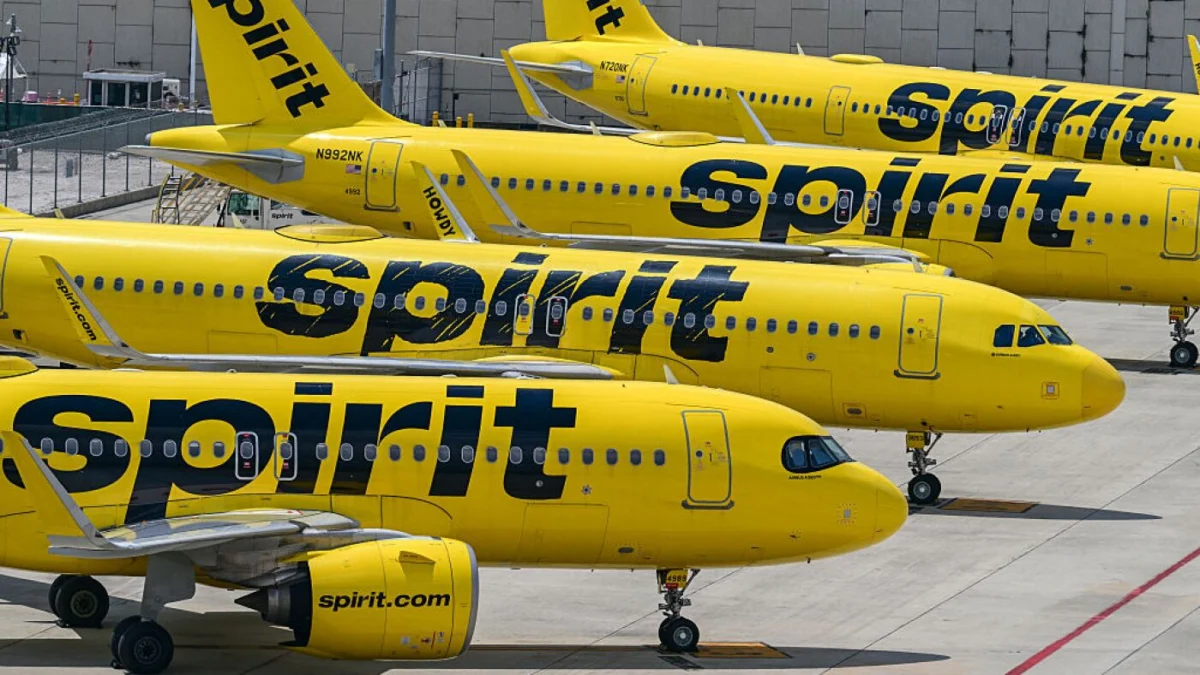
When Spirit Airlines stopped flying last weekend, it left more than 90 planes scattered across the country. Many of these aircraft will be returned to the companies that own them, while Spirit attempts to monetize its remaining assets. The airline's legal team has petitioned the court for authorization to begin an "orderly wind-down of operations." This process is complicated by the fact that Spirit Airlines does not own the majority of its aircraft.
According to court filings, Spirit leased more than 60 of its active planes, which represents nearly two-thirds of its entire fleet. The owners of these leased aircraft are now seeking their prompt return. Steve Giordano, the managing partner of Nomadic Aviation Group, a company that specializes in ferrying aircraft, confirmed that his organization is working with six of the companies that own Spirit's jets. He stated that the process of repossessing these planes is already underway, with many expected to be rerouted quickly.
Giordano elaborated on the potential destinations for the returned aircraft. "Some are already probably in the pipeline to be leased again. Some are going to have the engines removed, moved on to different airframes and those aircraft are going to get leased. Some are going to get parted out. Some, nobody knows," he said in an interview. Nomadic Aviation Group is actively involved in transporting these planes, often to storage facilities. For example, one Spirit jet was recently ferried without passengers to a storage facility in Goodyear, Arizona.
In addition to its leased fleet, Spirit Airlines also owns 28 planes from the Airbus A320 family, which it intends to sell. The airline is also looking to monetize other holdings, including a corporate office building in South Florida, maintenance facilities, and valuable airport infrastructure. These assets could be attractive to other airlines seeking to expand their operations or market presence.
Henry Harteveldt, an airline analyst at Atmosphere Research Group, highlighted the strategic importance of Spirit's airport assets. "Spirit has gates at some very important, very popular airports," he observed. These include international airports in Houston, Dallas, Las Vegas, and Los Angeles. Harteveldt anticipates that other airlines may compete to acquire Spirit's gates at these key locations, recognizing their significant strategic value.
Furthermore, Spirit holds coveted takeoff and landing slots at constrained airports such as LaGuardia Airport in New York and Newark Liberty International Airport in New Jersey. Ahmed Abdelghany, a professor of operations management at Embry-Riddle Aeronautical University, explained the high demand for such slots. "You can easily sell slots at those constrained airports, and many airlines will be in line to buy them," he commented, underscoring their marketability.
The immediate challenge for the companies repossessing Spirit's aircraft is the logistical hurdle of accessing them. The planes are currently situated at various airport gates or wherever they were when Spirit ceased operations, leading to what Giordano described as an "environment of mass confusion." The process of retrieving the aircraft involves navigating airport authorities and overcoming potential resistance from personnel who may not be fully aware of the liquidation proceedings.
Nomadic Aviation Group is deploying qualified pilots, some of whom were recently employed by Spirit, to ferry the grounded planes. These pilots, often dressed in casual attire rather than airline uniforms, sometimes face difficulties gaining access to the aircraft. Giordano recounted instances where airport authorities initially denied access, requiring significant effort to establish the legitimacy of the repossession.
A significant factor impacting the liquidation process is the current high cost of jet fuel. The price of jet fuel has surged approximately 70% since the conflict in Iran began in February, largely attributed to geopolitical events. This escalation in fuel costs, which contributed to Spirit's financial downfall, also diminishes the immediate appeal of acquiring Spirit's aircraft for potential buyers or lessors. The increased operational expenses make older or less fuel-efficient planes less attractive in the current market.
Harteveldt noted that this economic climate creates industry-wide uncertainty, potentially slowing down the sale or lease of Spirit's assets. "I think the airline will find buyers. It just may be a slower selling cycle than had this happened a few years ago or even just like, say, three months ago," he predicted. Consequently, many of Spirit's distinctive yellow planes may remain in storage, such as in the Arizona desert, for an extended period as the market adjusts to these new economic realities and the available aircraft are absorbed.
The liquidation of Spirit Airlines involves a multi-faceted approach to asset recovery. The company's owned aircraft, along with its real estate holdings and airport infrastructure, will be subject to sale. The leased aircraft will be returned to their respective owners, who will then decide on their future use, whether through re-leasing, repurposing components, or dismantling for parts. The process is expected to be lengthy and complex, influenced by market conditions and the specific nature of each asset.
Spirit's financial struggles, exacerbated by rising fuel costs and competitive pressures, ultimately led to its operational shutdown. The subsequent liquidation aims to recover value for creditors and stakeholders by systematically selling off the company's assets. The fate of each aircraft will depend on its ownership status, condition, and the prevailing market demand for aviation assets in a fluctuating economic environment. The grounded fleet represents a significant challenge and opportunity for the aviation industry as these planes are redistributed.


