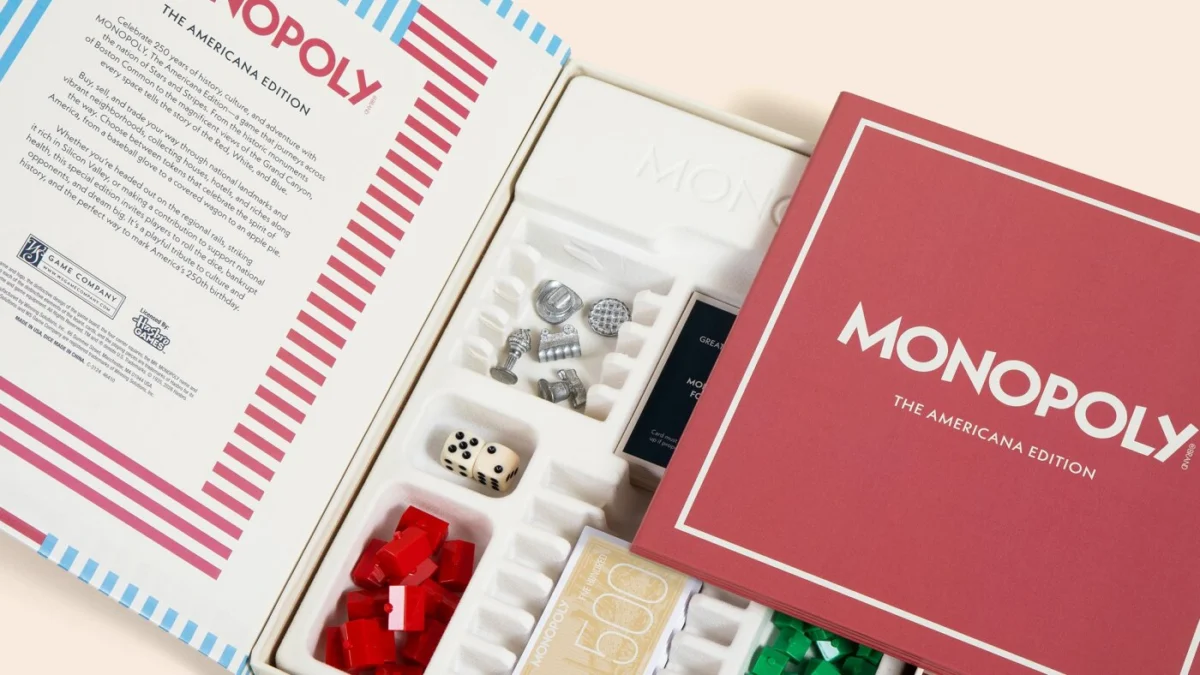
In an effort to sidestep tariffs on imported board games, WS Game Company explored producing a special edition Monopoly in the United States. The project illustrates the practical and logistical hurdles that can accompany “Made in the USA” ambitions, even for a project tied to a national celebration. The company, which typically sources many components from China, pursued a domestic production line to create a version of Monopoly aligned with the United States’ 250th birthday. Yet the journey exposed a series of constraints—from sourcing the right components to assembling a domestic supply chain—that eroded any straightforward cost advantages.
The most visibly challenging hurdle was finding makers able to produce key components in the U.S. The team searched for 10,000 dice, a batch that necessitated specialized machinery and capital investment. The reality, Silva says, is that such capabilities don’t materialize overnight, and “on a random Tuesday” they cannot be ready within a few months for a major launch. As a result, the company ended up importing dice while sourcing other parts domestically. A Hasbro legacy factory in Massachusetts was leveraged to print the Monopoly board, Pioneer Packaging produced the tray for the Monopoly money, and a small Indiana business manufactured custom metal game tokens in all-American shapes such as a cowboy hat, a covered wagon, and an apple pie. The process of assembling these separate domestic and foreign pieces stretched into more than a year and caused the firm to miss much of the peak selling season tied to the 250th anniversary.
Cost differences were stark. The domestic manufacture of the same game components cost at least twice as much as producing them in China, where most of WS Game Company’s high-end titles are assembled. Silva notes that when placing orders with Chinese suppliers, the company can rely on an integrated network able to handle multiple components under one roof. That convenience did not translate to a rapid, cost-effective U.S. production run. The domestic approach also required significant lead times and investment that simply did not fit the calendar for a quick market entry.
The broader industry context helps explain why a “Made in the USA” board game remains a rare fit for most toy makers. About four-fifths of U.S.-sold toys and games are produced in China, reflecting decades of supply-chain development that creates an ecosystem of specialized parts and assembled products. Analysts and industry executives acknowledge that reshoring or diversifying supply chains is possible for strategically sensitive items, but toys and games—characterized by low price points and modest profit margins—pose particular challenges for domestic production. The Toy Association notes that reshoring is not as easy as it sounds, given the depth of established Chinese‑based production networks.
Even with a potential tariff carve-out under consideration by a U.S.–China board of trade to allow up to $30 billion of Chinese products to enter tariff-free, competition for that relief includes many consumer goods, including footwear and apparel. For WS Game Company’s chief executive officer, Jonathan Silva, the decision to pursue Made in the USA reflects a bargaining between cost, speed, and national sentiment. He emphasizes that while some items and strategic products may warrant domestic production, many toys and games at current economics are not readily viable to shift away from China’s integrated manufacturing model.
As the company prepares for the upcoming holiday season, Silva is awaiting a shipment from China worth approximately $6 million, underscoring how much of the company’s plan remains tied to overseas manufacturing. He concedes he has little idea what the tariff bill—should it surface—might be, but he remains prepared to adapt as needed. The experience offers a practical snapshot of the realities behind “Made in the USA” ambitions in a global supply chain that remains deeply interwoven with Chinese manufacturing.


