EV battery recycling has a math problem. For many electric-vehicle batteries, the cost to recycle them can exceed the value recovered from the minerals inside, creating a disincentive to recycle and a growing pile of old batteries at salvage yards, manufacturers, and recyclers. That tension is at the heart of a Colorado law aimed at addressing the economics of recycling and the broader push to reduce reliance on imported minerals and lower the climate footprint of vehicle production.
The central dilemma is straightforward on paper but complex in practice. Batteries packed with valuable minerals such as nickel, cobalt, manganese, and lithium have long been viewed as a potential feedstock for a circular economy. In the best-case scenario, recovering those minerals could fund the economics of reusing batteries, remanufacturing components, or storing energy for the grid. But in the near term, many batteries do not pencil out for recyclers. In some instances, salvage yards and battery recyclers must pay to dispose of or ship batteries, creating a barrier to efficient reprocessing.
Industry observers describe the problem with terms like gate fees—the charges recyclers levy to accept scrap—and note that the economics shift depending on battery chemistry and the minerals inside. Analysts say that iron-phosphate (LFP) batteries, which are becoming more common due to their lower cost and longer lifespans, can be especially challenging to recycle profitably because their materials have lower market value relative to their packaging costs and shipping expenses. Frederick Bloomfield of Benchmark Mineral Intelligence explains that gate fees for LFP batteries can run roughly $1.50 to $2 per kilogram, often translating into hundreds of dollars in upfront costs for salvage yards because a typical LFP battery weighs a lot and has to be shipped as hazardous material. By contrast, more expensive batteries containing nickel and cobalt may fetch higher scrap values, or even attract buyers willing to pay for the material.
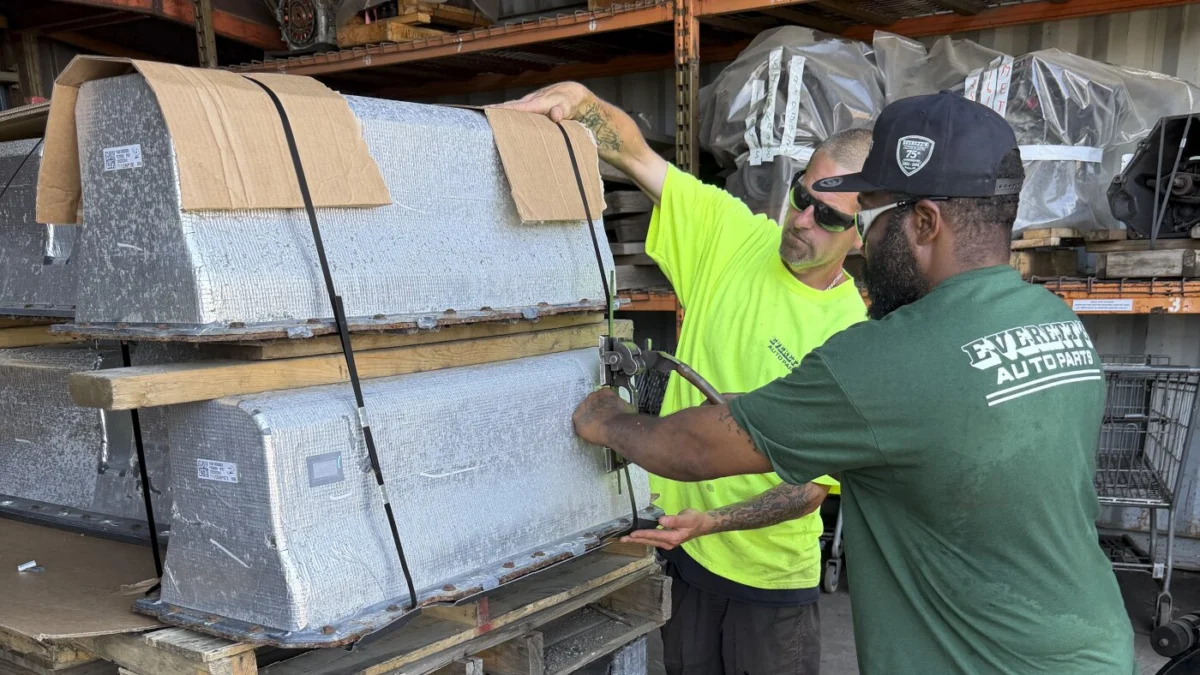
Several quotes from players in the market illustrate the tension. In Massachusetts, Everett Auto Parts gathers retired Chevy Volt batteries for recycling; their financial upside from these particular packs is limited, and the recycler accepts them at no cost in some cases, but not always. In another scenario, a large Tesla battery at Westover Salvage Yard could be worth up to about $2,000 if sold as a replacement, yet the salvage yard priced it at $1,200 because it had little immediate demand. When negotiations fail, the salvage yard may have to ship the battery to a recycler, which can involve costs that offset any potential recycling revenue. As one salvage operator put it, “This is a liability.”
Manufacturers and recyclers do see upside potential. At a General Motors event in San Francisco, executives highlighted new battery chemistries and the use of old EV batteries to support energy storage in the grid, signaling a broader push toward circularity. GM itself recycles a significant volume of scrap from its own cell manufacturing lines, and GM battery engineer Andy Oury notes that recycling previously represented a cost but has increasingly become a source of revenue for the company, as recyclers pay for scrap material. He also cautions that shipping costs can reduce net revenue, although economies of scale can help large automakers optimize logistics.
The economics are uneven, and the risk is not limited to the economics of processing alone. Scrapyards face structural challenges, such as having fewer high-value components to salvage from EVs compared with internal-combustion vehicles, according to Emil Nusbaum of the Automotive Recyclers Association. He explains that salvagers may be left with uncertain batteries, whose value depends on whether they can be repurposed, rejoined with another vehicle, or recycled profitably. If a battery cannot be salvaged for a reasonable price, it becomes a liability rather than an asset. In that context, some players worry about the risk of stranded batteries or batteries shipped offshore to places with less stringent environmental controls.
The supply chain also wrestles with broader shifts in battery chemistry. Increasing adoption of iron-phosphate chemistries reduces the immediate material value of some batteries, complicating recycling economics. Cirba Solutions chief executive David Klanecky notes that recycling an LFP battery may be economically unviable unless charges are shared across both the provider and the buyer of recovered materials. Benchmark Mineral Intelligence’s Bloomfield points out that the North American market currently faces gate fees for LFP batteries, with the per-kilogram charge translating into hundreds of dollars for a single battery, before considering transportation and processing costs.
And as demand grows, the math could worsen before it improves. The number of older batteries entering the recycling stream will rise as EV adoption increases and the fleet ages. Yet, the timeline for a robust, profitable recycling industry depends on continued innovation, scaling of recycling capacity, and the development of safe and economical ways to handle and transport batteries. Analysts and industry participants note that the transition from an emphasis on expensive minerals to cheaper chemistries may require new business models that spread costs and extract value across the chain, including repurposing batteries for energy storage or secondary uses before recycling.
The stakes extend beyond profit and loss. Recycling batteries matters for environmental protection, public health, and national strategy. The safe handling and disposal of batteries prevent hazardous material leaks and reduce the risk of fires at storage or disposal facilities. In addition, recycling helps conserve critical minerals and can support domestic supply chains away from geopolitical flashpoints. The evolving economics will influence where and how batteries are processed, the investment in recycling infrastructure, and the incentives available to salvage yards, recyclers, and automakers.
As policymakers weigh options, the Colorado bill under consideration would attempt to address the economics by clarifying responsibilities, standards, and potential incentives to improve the viability of recycling. Lawmakers intend to align the costs and benefits across manufacturers, recyclers, and end users, aiming to foster a more sustainable end-of-life pathway for EV batteries. Whether the proposal succeeds will depend on how well it harmonizes safety, environmental protections, and economic incentives across a fragmented system that includes dozens of small salvage operations and a handful of large, integrated recycling firms.
The evolving narrative around EV battery recycling is a reminder that the transition to electric vehicles comes with side effects that require careful policy design and resilient market mechanisms. The mathematics of recycling—how to balance the costs of collection, transport, and processing with the value of recovered minerals—will continue to shape decisions by salvage yards, battery manufacturers, and policymakers. The underlying goal remains clear: to keep valuable minerals in circulation, minimize environmental risk, and support a more sustainable, domestically grounded battery supply chain.


