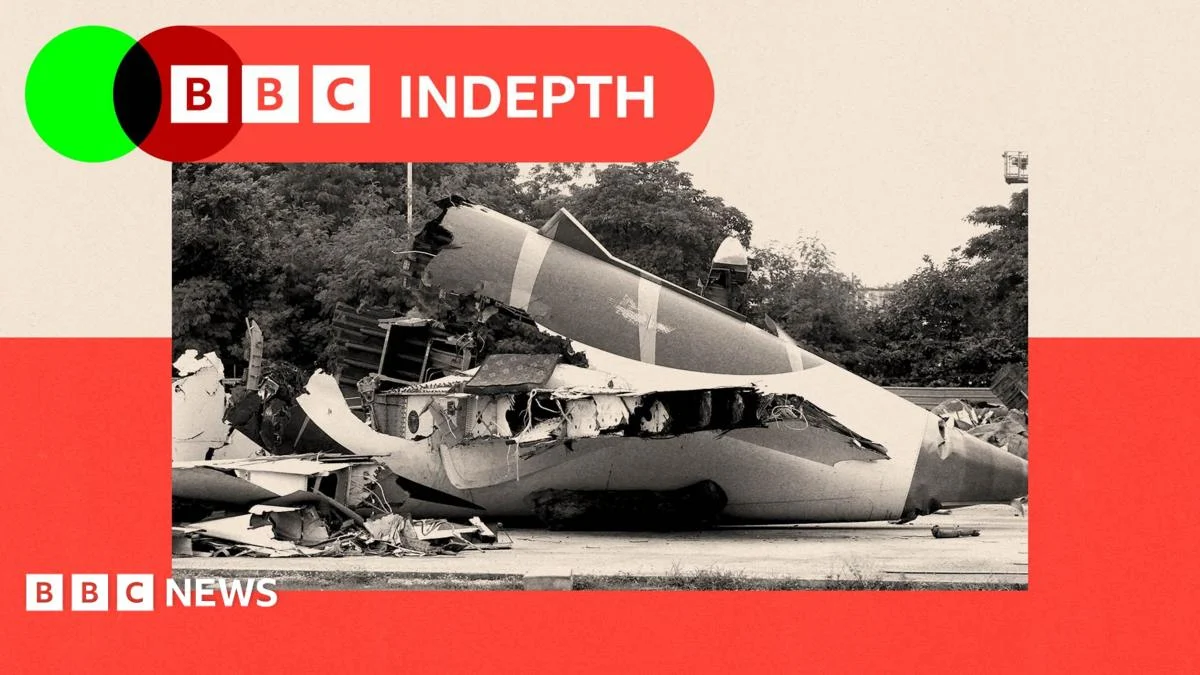
It was a hot, dry afternoon on 12 June last year when Air India Flight 171 departed from Sardar Vallabhbhai Patel Airport in Ahmedabad, Gujarat, bound for London. The nine-and-a-half-hour flight carried 230 passengers, including 169 Indian nationals and 53 Britons, with 10 cabin crew members onboard. On the flight deck were Captain Sumeet Sabharwal, a veteran with decades of experience, and first officer Clive Kunder. Just 32 seconds after take-off, the Boeing 787 Dreamliner crashed, killing all but one passenger aboard, while a further 19 people on the ground lost their lives. CCTV footage from the airport and a social media clip show the aircraft appearing to stall in climb, then gliding downward before vanishing behind buildings and trees as a large plume of flame erupted. Despite the dramatic scenes, what exactly caused the disaster remained unclear.
The responsibility for uncovering the causes falls to India’s Aircraft Accident Investigation Bureau (AAIB), part of the Civil Aviation Ministry. Under Annex 13 of the Convention on International Civil Aviation, the country where an accident occurs leads the official investigation, though accredited representatives from other nations and manufacturers may participate. In AI171’s case, the U.S. National Transportation Safety Board (NTSB) led international participation, with technical experts from Boeing (the manufacturer) and GE Aerospace (the engine supplier), alongside the Federal Aviation Administration. The annex makes clear that the objective of such investigations is prevention, not assigning blame or liability. Yet the stakes are high for Boeing’s reputation, Air India’s brand, and the families seeking answers.
The final conclusions of the investigation have not yet been published, but the process has already become a flashpoint about how major air-incident inquiries are conducted and whether authorities can resist political or industry pressure. The backlash intensified after a preliminary AAIB report, issued a month after the crash, did not draw conclusions or provide recommendations. Yet two passages in that 15-page document ignited controversy. It noted that the aircraft’s flight data recorder indicated the two fuel-cutoff switches — normally used to start engines before flight and shut them down after — moved from run to cutoff seconds after take-off, implying engines were deprived of fuel and thrust was diminished. It also cited a cockpit-voice recording in which one pilot asked why the other had cut off fuel, prompting debates about cockpit actions. The report did not provide a transcript or attributions, fueling sensational reporting and speculation globally.
Reaction from media and aviation observers was swift and polarized. Some outlets and safety professionals argued that the evidence did not implicate the aircraft or engines, while Indian safety advocates, pilots’ associations, and lawyers representing bereaved families argued the preliminary findings appeared biased or inconclusive, fueling fears of a cover-up or misattribution of responsibility. The AAIB urged restraint, condemning selective reporting and urging both public and media to avoid premature narratives that could undermine the investigative process. The Federation of Indian Pilots, representing thousands of pilots, described the preliminary report as irrevocably compromised.
Those affected pursued legal channels as well. Pushkar Raj Sabharwal, whose son died in the crash, joined with Sabharwal’s father to push for a judicial inquiry in India’s Supreme Court. Former UK air-accident investigator Tim Atkinson warned of a temptation to blame a dead pilot, suggesting it could absolve regulators and manufacturers and damage the integrity of the investigation. He also noted that there was no credible alternative explanation in this case, a view shared by many aviation professionals. The AI171 case is further fueled by competing theories: a major electrical fault causing the aircraft’s main flight computers to reboot after take-off, leading the safety system to cut fuel; and questions about the accuracy of the preliminary timeline and the RAT’s (Ram Air Turbine) deployment.
Supporters of the electrical-failure theory point to inconsistencies in the preliminary report and claims that engine relight attempts would have been impossible given the aircraft’s speed and available power sources. Investigative journalist Rachel Chitra has highlighted these inconsistencies and argues the data may reflect electronic commands to cut fuel rather than pilots’ actions. The RAT deployed within five seconds of the fuel-cutoff indication in the notes, but simulator tests reviewed by BBC suggest it would take 14–18 seconds to deploy, raising questions about timing and system involvement.
The aircraft involved, VT-ANB, entered service with Air India in 2014. Documents seen by BBC outline prior electrical faults, including a 2022 incident described as a power-panel burning event. Air India maintains that repairs followed Boeing-approved procedures and that the aircraft was returned to service in line with airworthiness requirements. The preliminary report also notes the aircraft had flown with a known fault in its central computer network, described as the vehicle’s central nervous system. Boeing has referred all questions to the Indian AAIB.
A key theory advanced by campaigners is that a major electrical failure caused the aircraft’s main flight computers to reboot seconds after take-off, creating a mismatch between the aircraft’s perceived state and actual flight conditions. In this scenario, a safety system detects dangerous thrust levels and orders a fuel cut-off, with the fuel-switch movements possibly reflecting an electronic command rather than a physical action. Proponents of this view include journalist Rachel Chitra and several families’ lawyers, who argue that the RAT’s early deployment supports a larger anomaly in the aircraft’s electrical architecture.
Boeing and Air India have faced questions about the plane’s maintenance history. The Foundation for Aviation Safety, a US-based group led by a former Boeing manager-turned-whistleblower, Ed Pierson, has cited a history of electrical problems on the aircraft family. Air India denies these claims, and documents indicate a 2022 power-panel problem followed by repairs under Boeing-approved procedures. The preliminary report notes that the aircraft was operated with a known fault in its network, often described as the “central nervous system” of the airplane.
Amid the debate, victims’ families’ lawyers have pressed for more transparency. Beasley Allen’s Mike Andrews, who represents families of 135 victims, has urged a deeper examination of the RAT’s deployment and the broader electrical-failure theory. Critics of the pilot-suicide narrative argue that the evidence remains incomplete and that timelines require cautious interpretation.
Under Annex 13, investigators are expected to publish a final report within 12 months if possible; otherwise, an interim update is due on the anniversary of the accident. In May, India’s civil aviation minister complicated the discourse by comments to reporters about the trajectory of the inquiry, underscoring how political and regulatory signals can influence public perception. The investigation continues to unfold, with no definitive public conclusion in sight and with ongoing scrutiny of how major air-disaster investigations are conducted and reported.
As the inquiry presses on, the broader market and public interest focus on the safety record of the 787 Dreamliner, the performance of Air India under Tata Group ownership, and the resilience of international cooperation in accident investigations. The story remains a focal point for aviation policy debates and how regulators balance transparency with technical complexity in the pursuit of safety and accountability.


