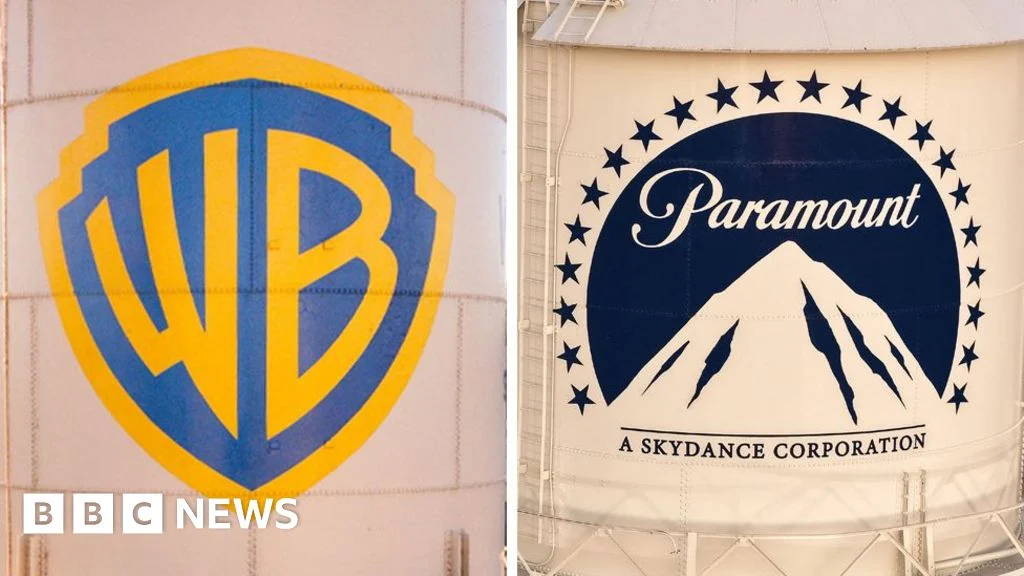
The proposed acquisition of Warner Bros. Discovery by a consortium led by Skydance Media, backed by private equity firm RedBird Capital Partners, has garnered approval from Warner Bros. shareholders. This significant development, valued at approximately $111 billion, could herald a substantial transformation across Hollywood's entertainment landscape, impacting streaming services, movie theaters, and the news media sector. While shareholder consent has been secured, the deal's finalization hinges on regulatory approval, a process that is expected to be closely scrutinized.
Paramount Global, which is part of the Skydance-led bid, intends to integrate its Paramount+ streaming platform with Warner Bros. Discovery's HBO Max. The objective is to forge a more formidable streaming service capable of competing with established giants like Netflix, Amazon Prime Video, and Disney+. Such a merger would offer consumers a consolidated subscription, granting access to a diverse library of content, spanning from contemporary hits to iconic classics such as "Casablanca," "Star Trek," "Friends," and "The Sopranos." The precise implications for subscription pricing remain uncertain. Analysts suggest that initial offers might provide cost savings for consumers currently subscribing to both services. However, the creation of a more compelling and comprehensive offering could eventually empower the merged entity to increase prices. Furthermore, reduced competition among streaming providers might collectively lead to higher subscription costs for consumers across the board.
Tom Harrington, a television analyst at Enders Analysis, commented on the potential for increased pricing power, stating, "There'd be just less competition. The ability there would be to charge a bit more." Conversely, Ben Barringer, head of technology research at Quilter Cheviot, believes that any price hikes would be constrained by Netflix's pricing strategy, which he identifies as the "price-setter in the market." The timeline for these potential changes is not immediate. Scott Wagner, head of the antitrust practice at Bilzin Sumberg, anticipates a swift regulatory review under the current U.S. administration, suggesting "full speed ahead" for approval. However, he also noted that state attorneys general might attempt to challenge the deal, citing concerns over consumer prices and potential harm to workers. California's attorney general has already pledged a "vigorous" investigation. Given these regulatory considerations and existing distribution agreements, substantial alterations to current viewer services are likely years away.
The potential acquisition offers a measure of relief to cinema operators and other stakeholders in Hollywood who had expressed concerns about a hypothetical takeover by Netflix. Such a scenario could have prompted one of the remaining major studios to abandon theatrical releases, prioritizing direct-to-streaming distribution. However, unlike Netflix, both Paramount and Warner Bros. Discovery still depend on box office revenue to supplement their film investments, according to Matt Britzman of Hargreaves Lansdown. This reliance suggests a reduced likelihood of films being exclusively fast-tracked to streaming platforms. While this shift may not reverse the long-term decline in cinema attendance, it could mitigate the disruption that filmmakers feared under a Netflix-dominated model.
Tom Harrington of Enders Analysis concurs that a Paramount-led acquisition represents a "better outcome" for cinemas compared to a Netflix scenario. Nevertheless, he cautions that industry consolidation often results in a reduction in the volume of films produced, a trend observed following Disney's acquisition of Fox. Paramount itself is already undergoing cost-cutting measures, particularly after its merger with David Ellison's film studio, Skydance, last year. Many analysts anticipate further reductions, especially considering the debt Paramount has incurred to finance the acquisition. "That will need to be paid off at some point," noted Ben Barringer of Quilter Cheviot. "Having more debt means you've got more burden, and that means you've got less to spend on content."
Should the deal proceed, it would place CNN, a prominent American news network, under the purview of the Ellison family, known for its cordial relationship with the White House. This prospect has already raised alarms among Democrats and media advocacy groups in the United States, who fear a potential shift towards more cautious coverage of the Trump administration. They point to changes implemented by David Ellison at CBS News, which he took over as part of the Paramount merger, including the appointment of an executive to address bias and workforce reductions. Furthermore, a new editor-in-chief known for opinion writing has been appointed, and there have been reported clashes with journalists over editorial independence.
Reports indicate that the Ellison family has already engaged in discussions regarding potential changes at CNN with President Donald Trump, who has been a vocal critic of the network. In December, Trump publicly called for CNN's sale, describing its leadership as either "corrupt or incompetent." Seth Stern, chief advocate at the Freedom of the Press Foundation, expressed reservations, stating, "I don't think CNN would become Fox News overnight," acknowledging the existing landscape of right-leaning news outlets. However, he added, "But coverage could be softened, critiques of the Trump administration could be reduced, hosts that are known for being particularly critical… could be fired." Rodney Benson, a media professor at New York University, described the deal as "concerning," arguing that it would further concentrate America's largest media companies in conservative hands. He highlighted that many of these owners, including the Ellison family, have non-news business interests reliant on government contracts or regulation, making them susceptible to external pressures. "This is not just an ideological shift, it's a threat to democracy and the rule of law," he asserted.
Professor Benson emphasized that a critical decision will be the identity of the next editor-in-chief, a choice that will significantly shape the network's future direction. "He is going to make this choice knowing that Donald Trump is watching," he predicted. The ultimate success of merging two legacy media entities grappling with financial challenges remains an open question. The primary competitive threat to streaming services, according to Harrington of Enders Analysis, is not other streamers but rather YouTube. A substantial portion of YouTube's trending content now resembles traditional television programming, including long-form interviews and game shows, positioning it as a direct rival to ad-supported television services. Concurrently, short-form video content has eroded audiences for traditional media. Harrington concluded, "Staying competitive is 'not just about being competitive with one another, it's being competitive with short-form video and that's sort of the direction you'll see them going towards."


