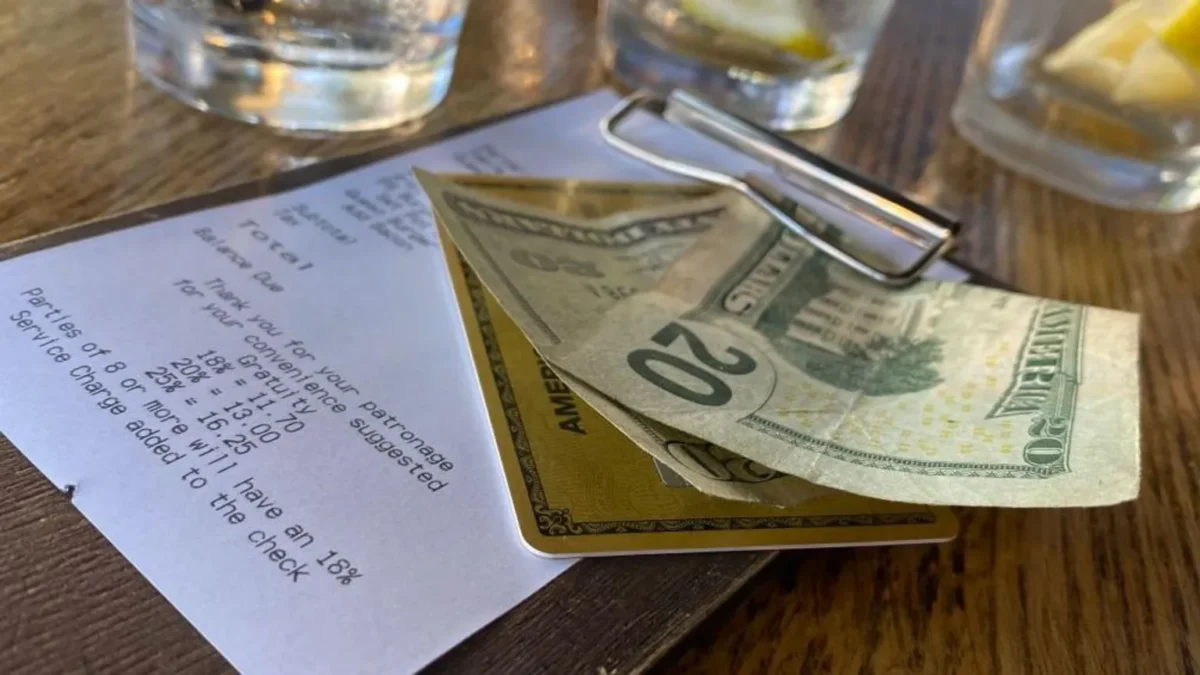
The Shifting Landscape of Gratuity
The practice of tipping, a deeply ingrained aspect of American consumer culture, is increasingly drawing attention and, in some cases, ire as it appears to be extending its reach beyond US borders. What was once a straightforward gesture of appreciation for service in the United States is now a complex and often contentious issue, with reports suggesting that the pressure to tip, and to tip generously, is influencing practices in countries like Iceland and Mexico, and even seeing subtle shifts in the United Kingdom.
Lillian Price, an animal care worker from Philadelphia, describes the current tipping situation in the US as "out of control." She expresses frustration with the expectation to tip for nearly every transaction, even for quick grab-and-go purchases. While Price maintains a policy of tipping 15% at table-service restaurants, she questions the necessity of tipping in other contexts, particularly when establishments seem to expect it as a matter of course. "When do we stop giving tips?" she asks, highlighting a growing sentiment of tipping fatigue.
Her 15% tipping rate, which might be considered ample in many parts of the US, can elicit a less-than-warm reception from service staff in major American cities. In metropolises such as New York, Boston, Los Angeles, and Chicago, a 20% gratuity is increasingly becoming the standard expectation. This escalating norm underscores the financial reliance of many service workers on tips, a system deeply embedded in US labor law.
The US Tipping System and Its Underpinnings
In the United States, the federal minimum wage for tipped employees, established by a law dating back to 1938, is significantly lower than the general minimum wage. Currently set at $7.25 per hour, the minimum wage for those who receive gratuities drops to a mere $2.13 per hour. This disparity means that tips are not merely supplementary but are considered a fundamental and expected component of income for millions of American service workers. While individual states have the autonomy to legislate higher wages for these employees, the federal framework solidifies the role of tips in their overall compensation.
This reliance on tips can lead to intense scrutiny of customer gratuities. Recent viral social media posts have highlighted instances of waitstaff expressing dissatisfaction with perceived insufficient tips. One widely shared post on the platform Thread, reported by Newsweek, featured a waitress leaving a note on a customer's bill stating, "learn to tip. It's not my job to serve you FOR FREE." This particular post garnered millions of views, indicating a broad public engagement with the topic. Another instance involved a New York City waitress complaining on X that a table of four, despite spending $3,000, left only a $200 tip, equating to approximately 6.7%.
The significance of tipping in the US is such that it became a talking point in the 2024 presidential election. Both Donald Trump and Kamala Harris publicly addressed the issue, pledging to reduce the tax burden on tipped workers. In July of the previous year, Trump signed legislation allowing qualified service staff to deduct up to $25,000 of their annual tip income from their federal taxes.
Kate Santos, a waitress at Sanger Hall in Queens, New York, emphasizes the critical role tips play in her livelihood. "Servers in New York make $11 (£8.18) an hour, so basically I make my salary off tips," she explains. "If people don't tip, it's a bad day for me." She reiterates that in New York, a minimum 20% tip is an unspoken rule, and anything less is often viewed negatively. Despite the potential for inconsistency, Santos finds the current system agreeable, noting that while slow periods like winter can be challenging, the summer months often compensate. She also cherishes the occasional large tip, recalling one instance where she received $100 on a $70 bill.
International Echoes of US Tipping Norms
Iceland, a nation where tipping was historically not customary, is now experiencing a noticeable shift, largely attributed to a surge in American tourism. In 2010, approximately 50,810 Americans visited Iceland. By the following year, this figure had dramatically increased to 660,114. According to a spokeswoman for Efling Union, Iceland's second-largest union, this influx of American visitors, who often expect to tip, has prompted some Icelandic restaurants to include gratuity prompts on payment terminals. This development, however, has reportedly caused irritation among Icelanders, who generally believe that employers should be responsible for paying their staff adequate wages. "Generally speaking, Icelanders themselves tend to become irritated when this happens, as they do not consider it reasonable to pay an additional surcharge on top of already high prices when, for example, buying a drink at a bar," the spokeswoman stated.
Similar sentiments are echoed in Mexico City, where local residents reportedly attribute the growing tipping culture to American tourists. In the United Kingdom, a subtle evolution is also underway. Lisa Harris, a food and drink consultant, observes a trend towards higher service charges in restaurants, with percentages gradually increasing from 12.5% to 15%. Harris suggests that this rise, particularly noticeable in higher-end establishments, may serve as a mechanism for restaurants to supplement staff compensation without directly increasing base wages. She points to the financial pressures on the UK hospitality industry, including VAT, rising minimum wages, national insurance contributions, and increased operational costs for food and utilities, as factors contributing to this approach.
Michael Lynn, a professor of consumer behavior and marketing at Cornell University, identifies digital payment systems as a key driver of the global increase in tipping prompts. As more transactions are conducted via card readers, these machines are increasingly programmed to solicit tips from customers. Data from SumUp, a manufacturer of card readers, indicates a significant rise in UK cafes and restaurants digitally asking customers for tips, with a 78% increase observed between 2022 and 2024.
This phenomenon highlights a broader economic and cultural dynamic where digital interfaces are reshaping traditional consumer behaviors and expectations, extending the influence of established practices like US tipping culture into new territories.


