US inflation accelerated in April, reaching its fastest rate since May 2023, driven by a significant surge in energy costs that is impacting consumers. The Bureau of Labor Statistics (BLS) reported that the consumer price index (CPI) rose by 3.8% over the twelve months ending in April, marking the highest level since inflation hit 4% three years ago. This represents an increase from the 3.3% recorded in March.
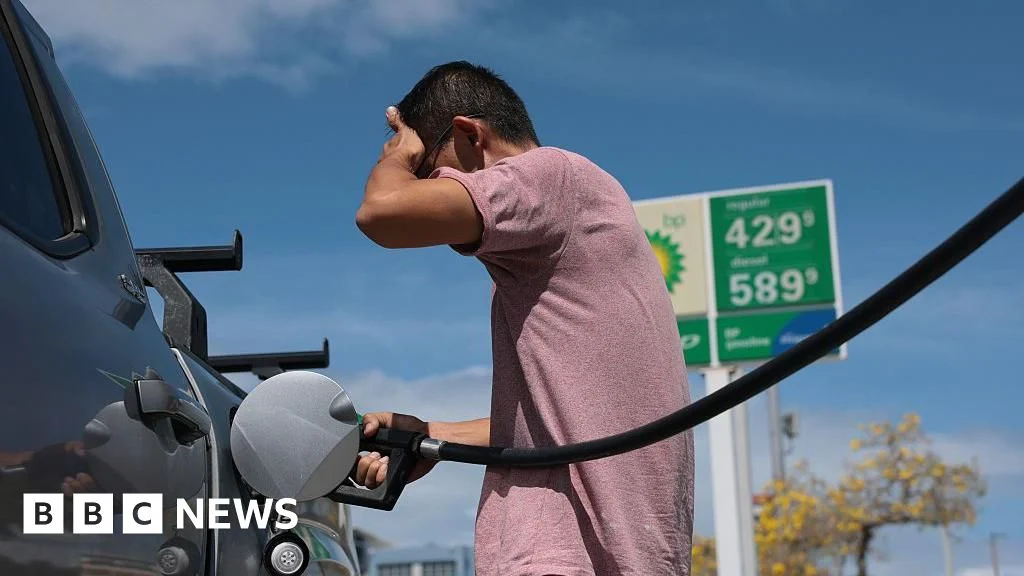
The BLS stated that nearly half of the overall inflation increase was attributable to surging energy costs. Housing and food costs also contributed to the rise. The conflict involving Iran and the resulting effective closure of the crucial Strait of Hormuz shipping lane have been cited as drivers of increased oil prices. This, in turn, has led to a surge in gasoline prices across the United States.
Data from the AAA motoring group indicates that the national average price for a gallon of unleaded gasoline has reached its highest point since July 2022, standing at $4.50. This rise in fuel costs directly affects household budgets and transportation expenses for American consumers.
The uptick in April's inflation figure makes it increasingly unlikely that the Federal Reserve will implement interest rate cuts this year. Isaac Stell, investment manager at the Wealth Club, commented that the inflation increase has left the possibility of interest rate hikes "firmly on the table." This development occurs days before Trump appointee Kevin Warsh is scheduled to assume the role of chair of the US central bank, succeeding Jerome Powell. Stell noted that the incoming chair would face "little room for manoeuvre" and might be compelled to adopt a more conservative policy stance.
President Donald Trump had previously clashed with Jerome Powell over the central bank's reluctance to lower interest rates, which Trump had hoped would stimulate the US economy. He has reportedly made it clear that he expects Warsh to advocate for rate cuts. The current inflationary trend also presents a challenge for President Donald Trump and the Republicans ahead of the November midterm elections, particularly as Trump's 2024 re-election campaign had heavily featured his plans to reduce inflation.
Beyond energy, airfares and clothing prices also saw increases in the year leading up to April. Conversely, the cost of new cars experienced a slight decrease during the same period.
Significantly, April's inflation data revealed a shift in the relationship between wage growth and price increases. For the first time in three years, Americans' average paychecks did not grow faster than the rate of inflation. While prices rose by 3.8% annually, average earnings increased by only 3.6%.
In response to the inflation news, US stock markets opened lower. The S&P 500 index fell by 0.6%, and the Dow Jones Industrial Average declined by 0.7%.


