More individuals in the United States are experiencing food insecurity now than at the peak of the COVID-19 pandemic, according to a recent survey conducted by the Federal Reserve Bank of New York. The findings indicate a worsening trend in hunger across the nation, affecting a greater number of families compared to the initial outbreak in 2020.
The survey, released in February, polled Americans on their experiences with skipping meals, relying on food donations, and utilizing federal assistance for groceries. The results paint a stark picture, showing that current levels of food insecurity are more pervasive than at any point in the last six years.
Amy Breitmann, who leads the Golden Harvest Food Bank in Augusta, Georgia, has observed a significant increase in demand for food assistance. She described distributions where families wait in lines stretching for miles, sometimes overnight, to receive aid. "We have some distributions where people are sitting in a two- to three-mile line the night before a distribution starts," Breitmann stated. "They're sleeping in their cars."
Nationwide, the New York Fed survey found that 10% of families reported missing meals due to a lack of food. Furthermore, nearly 16% of households indicated they are currently relying on food donations to meet their needs. These figures represent a substantial increase from 2020, when only 4% of households reported missing meals.
The situation is particularly acute for lower-income households. Among families earning less than $50,000 annually, food insecurity rates are approximately double the national average. Nearly 20% of these families are being forced to skip meals or go without adequate food. This contrasts sharply with 2020, when less than 7% of families in this income bracket reported similar struggles.
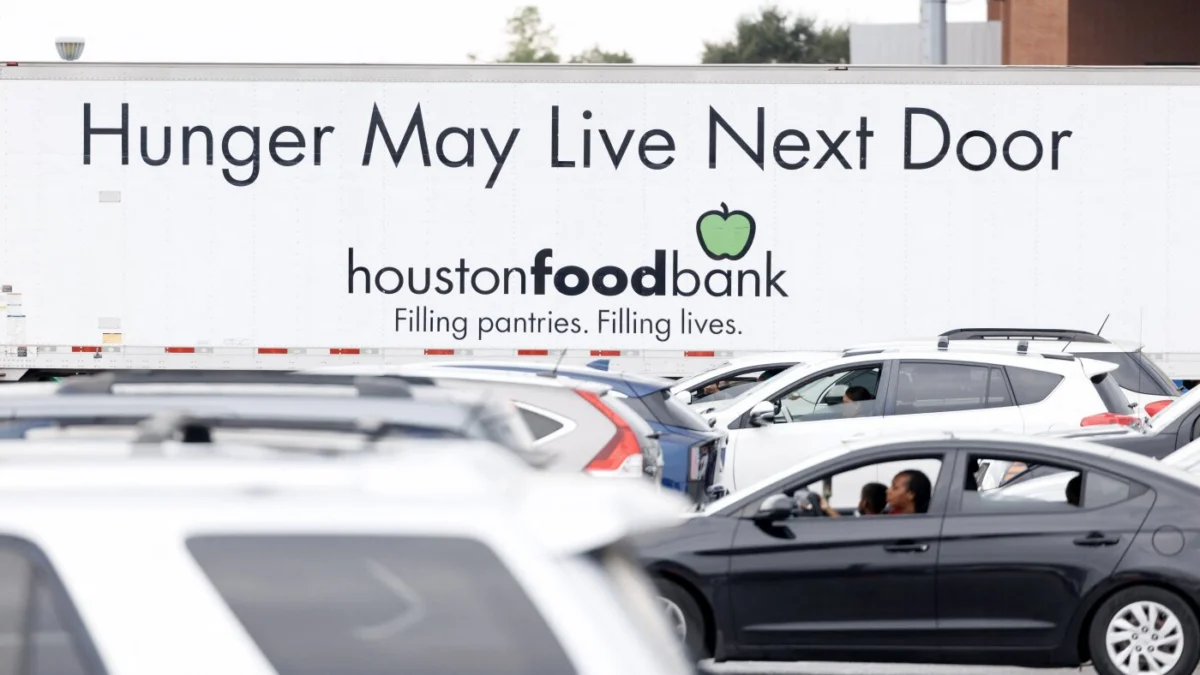
Food banks across the country are grappling with the escalating demand. The Community Food Bank of Central Alabama, which serves 12 counties, is expanding its operations by moving into a larger facility to accommodate the increased need. Nicole Williams, CEO of the food bank, emphasized that food insecurity can affect anyone. "Food insecurity could be your next door neighbor," Williams said. "When gas cost a little bit more or food costs a little bit more, or they have a repair on their car or a medical bill, that takes away what they might be using to spend on food."
These findings underscore what some economists have termed a "K-shaped economy," characterized by a widening gap between those who are financially secure and those who are struggling. Economists at the New York Fed noted in a blog post that while overall economic activity has been robust, significant portions of the population are facing high levels of economic insecurity and financial strain, contributing to a general decline in consumer sentiment.
The end of pandemic-era government relief programs, such as enhanced unemployment benefits and direct stimulus payments, has exacerbated the financial pressures on many households. Coupled with rapid increases in food prices over the past few years, these factors have made it more difficult for families to afford essential groceries.
Adding to the economic stress, the New York Fed's survey was conducted prior to the recent escalation of tensions and potential conflict with Iran, which has already led to a spike in gasoline prices. Breitmann highlighted the direct impact of rising fuel costs on household budgets. "If you're adding on another $100 to your budget a month just to put gas in your car to get to work or drop your kids at school and whatever they need their car for, where is that $100 coming from?" she questioned. "Most typically, they're having to pull it from the grocery budget."
The survey also revealed an increase in reliance on the Supplemental Nutrition Assistance Program (SNAP). Nearly 18% of families surveyed reported receiving SNAP benefits, a notable rise from 10.6% in 2020. For lower-income families, the dependency on SNAP is even more pronounced, with over 38% receiving benefits, compared to approximately 22% six years ago. This trend persists despite recent tightening of eligibility requirements for the program.


