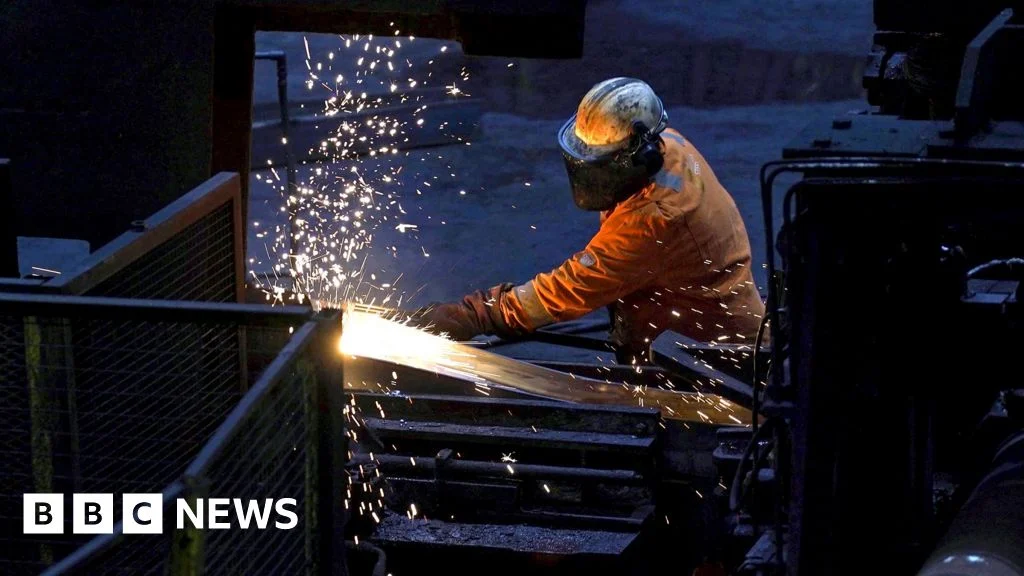
The UK government has announced its intention to bring British Steel into public ownership, a significant policy shift aimed at securing the future of the nation's steelmaking capabilities. Prime Minister Sir Keir Starmer revealed that legislation will be introduced this week to grant the government the authority to acquire full ownership of British Steel, contingent upon a public interest test.
This development follows the government's intervention in April of the previous year, when it took control of the Scunthorpe steelworks from its Chinese owners, Jingye. The initial seizure was a measure to prevent the immediate closure of the company's blast furnaces, a move that would have had severe implications for domestic steel production.
Sir Keir Starmer stated that extensive discussions with Jingye have not resulted in a viable commercial sale. He asserted that public ownership is now deemed to be in the public interest, particularly in light of the circumstances surrounding the company's financial standing and operational continuity. The Prime Minister framed this decision as a demonstration of his commitment to delivering change and addressing the concerns of the British public.
The steel industry has responded positively to the nationalisation announcement. Gareth Stace, director-general of the industry body UK Steel, highlighted that the move provides much-needed certainty for the approximately 2,700 employees at the Scunthorpe plant, as well as for the company's extensive customer base. He emphasized the critical importance of maintaining domestic production capabilities for national security and economic resilience.
However, Stace cautioned that nationalisation should not be viewed as a final objective. He stressed the necessity for a comprehensive, long-term strategy for British Steel, including a robust investment plan, to ensure its sustainable future. The industry body's stance indicates a desire for a clear roadmap beyond the immediate acquisition.
Prior to this announcement, the government had been actively seeking private investors to take over British Steel, opting against immediate full public ownership. The previous government control was initiated after negotiations with Jingye faltered, with accusations that the Chinese firm intended to cease operations at the blast furnaces. The potential cessation of operations posed a significant risk, as restarting these furnaces after a shutdown is an exceptionally complex and costly undertaking.
Virgin steel production, which involves extracting and purifying iron ore to create steel for major infrastructure projects like railways and construction, is a vital industrial process. The public interest test that will guide the nationalisation decision will evaluate key factors such as national security, the preservation of critical national infrastructure, and the broader support for the UK economy.
Jingye had previously reported that the Scunthorpe site was incurring daily losses of approximately £700,000, rendering it financially unsustainable. The BBC has learned that the government is currently expending around £1 million per day to maintain the loss-making operations. This ongoing expenditure underscores the financial challenges facing the company.
Recent reports from the National Audit Office (NAO) in March revealed that the government's oversight and funding of British Steel's operations, workforce, and raw material procurement at Scunthorpe had already amounted to approximately £377 million. The NAO projected that if current spending levels persist, the total cost could surpass £1.5 billion by 2028, depending on future policy decisions.
While a definitive cost for the full nationalisation has not been disclosed, it is understood that an independent valuation of British Steel will be conducted following the legislative process. This valuation will determine any potential compensation owed to Jingye. This is not the first instance of government intervention in British Steel's affairs; the company was previously managed by the Insolvency Service for nine months after its collapse in 2019, at a cost of £600 million.
Trade unions have expressed strong support for the government's decision. Roy Rickhuss, general secretary of the Community union, and Sharon Graham, general secretary of Unite, issued a joint statement endorsing the nationalisation plan. They highlighted the skilled workforce and the strategic importance of the steel produced for the UK's rail and infrastructure sectors. They also called for government procurement policies to prioritize UK-made steel for publicly funded projects.
Charlotte Brumpton-Childs, national secretary of the GMB Union, echoed this sentiment, stating that it is appropriate for the government to take all necessary measures to safeguard the long-term future of British Steel. The collective backing from major unions signifies a unified front in supporting the government's move to secure the company's operational continuity and strategic role.


