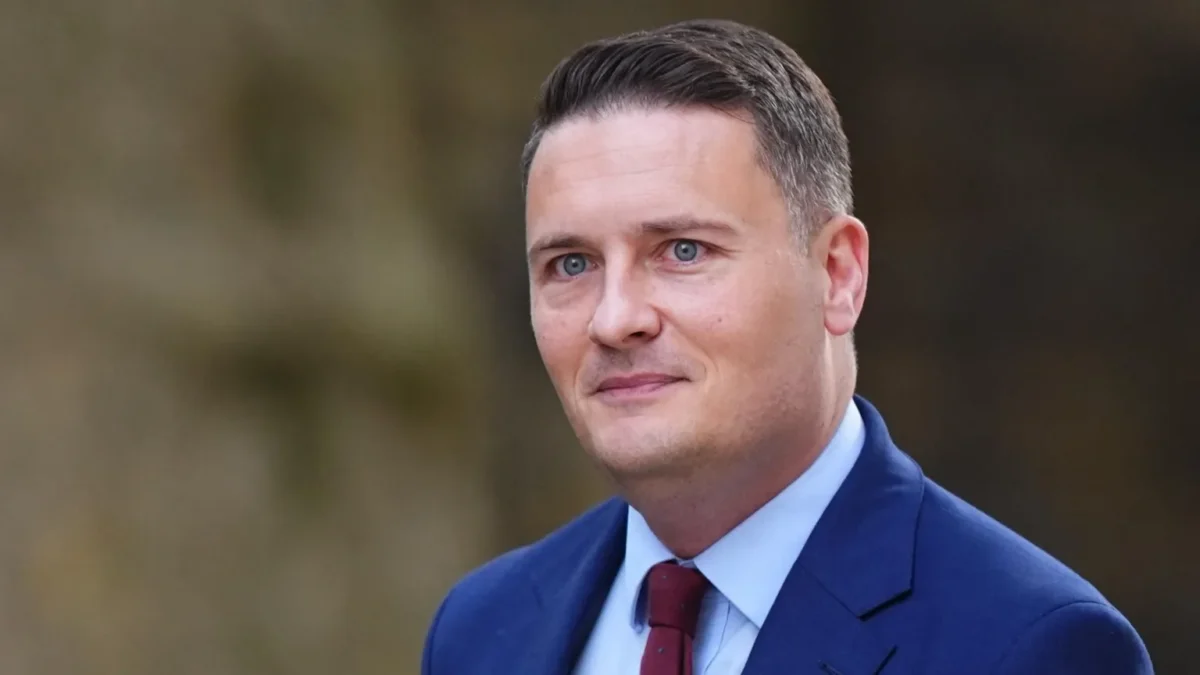
Former health secretary Wes Streeting has strongly advocated for a ban on social media access for individuals under the age of 16 in the UK, accusing regulators and politicians of being "asleep at the wheel" on the issue. Streeting, who recently resigned from Prime Minister Sir Keir Starmer's cabinet, told BBC Radio 4's Today programme that major technology companies have employed tactics similar to the tobacco industry in designing platforms intended to be addictive and harmful to children.
"The precautionary principle should apply here," Streeting stated, adding that the government must act swiftly as the UK is currently "behind the curve" on this critical issue. Prime Minister Sir Keir Starmer echoed this sentiment on Tuesday, vowing to take "decisive" action to address the impact of social media on children. "I'm absolutely clear that this needs to be something where there's a game changer, so we will be acting," Starmer told reporters. He further indicated that the government has secured powers to act very quickly, with the specifics of the measures to be announced soon.
This development follows an announcement by technology Secretary Liz Kendall, who stated that new measures for under-16s would be implemented by the end of 2026. The government's public consultation on the matter, which commenced in March, concluded on Tuesday night. Among the options being considered is an outright ban on social media for children, a measure already in place in Australia. Kendall mentioned that a formal response to the consultation would be published in the summer.
While the government is exploring an outright ban, there is a division among campaigners regarding the most effective approach. Since March, the government has been soliciting views from parents and children on potential interventions, including app curfews and enhanced age verification methods, which have undergone trials in some UK households. "The question isn't whether we're going to act – we will," Kendall affirmed to the BBC. She elaborated that the government's review encompasses a wide array of issues and platform features and their effects on children. This could lead to a closer examination of platforms not currently restricted in Australia, such as Roblox and Discord. Kendall emphasized the government's desire to consider "all views" gathered during the consultation, noting the importance of ensuring any implemented measures are both correct and enduring.
Streeting expressed that his resignation from his government post has provided him with greater freedom to discuss the issue openly. He conveyed his confidence in Kendall's ability to act promptly following the consultation's closure. The consultation process itself garnered approximately 70,000 submissions from various charities, campaign groups, and members of the public, offering their perspectives on a potential ban or alternative interventions. Participants were also invited to provide opinions on possible restrictions, such as disabling auto-play and infinite scroll features or implementing night-time curfews. The consultation also included inquiries regarding children's access to AI chatbots and the potential for strengthening age verification enforcement.
A diverse range of organizations, including police leaders, children's advocacy groups, and trade bodies, have shared their recommendations. Police leaders, for instance, have advocated for the government to focus on regulating specific features rather than entire applications. They proposed that features deemed "high-risk," such as private messaging, should be prohibited for users under 16. Donya Soni-Clark, associate director of TechUK, a trade association, also suggested to Today that regulating by features, rather than by platform, would be the most effective strategy moving forward.
In a separate submission, the Academy of Medical Royal Colleges highlighted the importance of doctors routinely inquiring about younger patients' device and social media usage. The Academy's Chair, Jeanette Dickson, drew a parallel between the current concerns surrounding social media and historical public health issues like smoking and the adoption of seatbelts, describing the issue as a "unifying force" for the medical profession. The Academy's response also cited instances of physical and mental health problems stemming from exposure to extreme violence online, framing screen time and social media use as a significant parallel concern to other health issues.
The comparison between screen time, social media, and the risks associated with smoking is not new. In recent years, there have been persistent calls for warnings on social media apps, similar to those found on cigarette and tobacco products, to highlight potential risks for young users. A recent legal case in California, where a young woman successfully sued Meta and YouTube over her childhood addiction to social media, has been characterized as a "big tobacco" moment for the technology industry. Streeting pointed to whistleblower testimonies over the years, which he said have revealed similar industry practices and an awareness of known harms. "They know that the product they're designing is addictive, they know that it is harmful, and the business model is orientated towards getting kids while they're young," he asserted.
Despite the push for stricter regulations, some groups and individuals oppose an outright ban. Ellen Roome, whose son Jools died at the age of 14 in 2022, is among the bereaved families and campaigners who planned to meet Prime Minister Sir Keir Starmer. They intended to urge the government to swiftly raise the age of access for social media platforms deemed harmful to 16. "Later today, I, and other families who have lost children to social media, will tell the prime minister directly: social media is a product, and like any other faulty product causing the deaths of children, it should be restricted until the companies responsible have fixed it and proven it is safe," Roome stated.
Lord Nash, a former Conservative education minister, reminded the government of its commitment to parliament to introduce age or functionality limits on social media for children, urging full and prompt delivery on this promise. However, other campaigners argue that restricting social media access could be detrimental to children. Reports from Australia indicate that children have managed to access sites supposedly blocked for under-16s, raising concerns about the effectiveness of existing laws. Ian Russell, chair of the online safety charity the Molly Rose Foundation, has previously advocated for the government to enforce existing laws rather than implement "sledgehammer techniques like bans."
An open letter signed by child safety charities proposed that tech firms should align with the British Board of Film Classification (BBFC), which assigns age ratings to films, to protect teenagers. The BBFC's Chief Executive, David Austin, noted that hundreds of millions of websites are already classified and filtered according to their standards by mobile network operators, questioning why social media companies cannot adopt similar content classification practices. He asserted that they are capable of doing so.
It remains unclear which specific tech platforms have formally responded to the government's consultation or its proposals regarding a ban on social media for under-16s in the UK. However, Meta, the parent company of Facebook, Instagram, and WhatsApp, has indicated its preference for age verification to be managed at the device level, thereby preventing underage children from downloading certain applications. Secretary Kendall reiterated her commitment to taking action, even in the face of potential opposition from major technology companies. "No one's going to stop me from doing what I think is right for this country," she declared.
The debate over social media regulation for minors is intensifying, with significant policy implications for the technology sector and child welfare. The government's consultation aims to gather diverse perspectives before finalizing its approach, balancing the need for online safety with concerns about potential overreach. The outcome could reshape how young people interact with digital platforms and influence the design and business models of major tech firms.
The government's commitment to addressing the harms associated with social media for children underscores a growing global trend towards increased digital regulation. As the UK moves forward, stakeholders will be closely watching the specific measures introduced, the effectiveness of age verification technologies, and the response from the tech industry. The potential for new regulations highlights the evolving landscape of online safety and the ongoing challenge of protecting vulnerable users in the digital age.
This regulatory push reflects a broader societal concern about the mental and physical well-being of young people in an increasingly connected world. The government's decision-making process, informed by the recent consultation, will be crucial in determining the future framework for children's social media use in the UK. The involvement of various bodies, from medical professionals to law enforcement and advocacy groups, indicates the multifaceted nature of the issue and the need for a comprehensive strategy.
As the government prepares to release its response to the consultation, the focus remains on finding a sustainable and effective solution. The potential for new legislation or regulatory measures could have far-reaching consequences for the technology sector, impacting everything from product development to user engagement strategies. The UK's approach may also serve as a benchmark for other countries grappling with similar challenges in safeguarding young users online.
The ongoing discussion highlights the combination between technological innovation, corporate responsibility, and public policy. The government's commitment to acting decisively signals a significant shift in its stance on regulating the digital environment, particularly concerning the protection of minors. The ultimate shape of these regulations will be a key indicator of the UK's approach to digital governance and its priorities in ensuring a safer online space for its youngest citizens.
Further details on the government's proposed actions are expected in the summer, following the analysis of the extensive consultation feedback. The timeline for implementation, set for 2026, suggests a deliberate and considered approach to enacting potentially impactful changes. The industry's response and adaptation to these forthcoming regulations will be a critical factor in their success and overall impact on the digital ecosystem for young people.
The government's proactive stance, supported by figures like Wes Streeting and Prime Minister Starmer, indicates a strong political will to address the issue. The involvement of technology Secretary Liz Kendall in driving these measures forward underscores the cross-departmental nature of this policy initiative. The comprehensive nature of the consultation, covering various aspects from feature restrictions to AI chatbots, suggests a thorough examination of the problem before policy decisions are made.
Ultimately, the UK's move towards regulating social media for under-16s represents a significant policy intervention aimed at protecting a vulnerable demographic. The government's commitment to acting swiftly, coupled with the detailed consultation process, signals a serious effort to balance innovation with safety in the digital realm. The outcomes of this initiative will be closely monitored by policymakers, industry leaders, and the public alike, as it navigates the complex challenges of the modern digital landscape.


