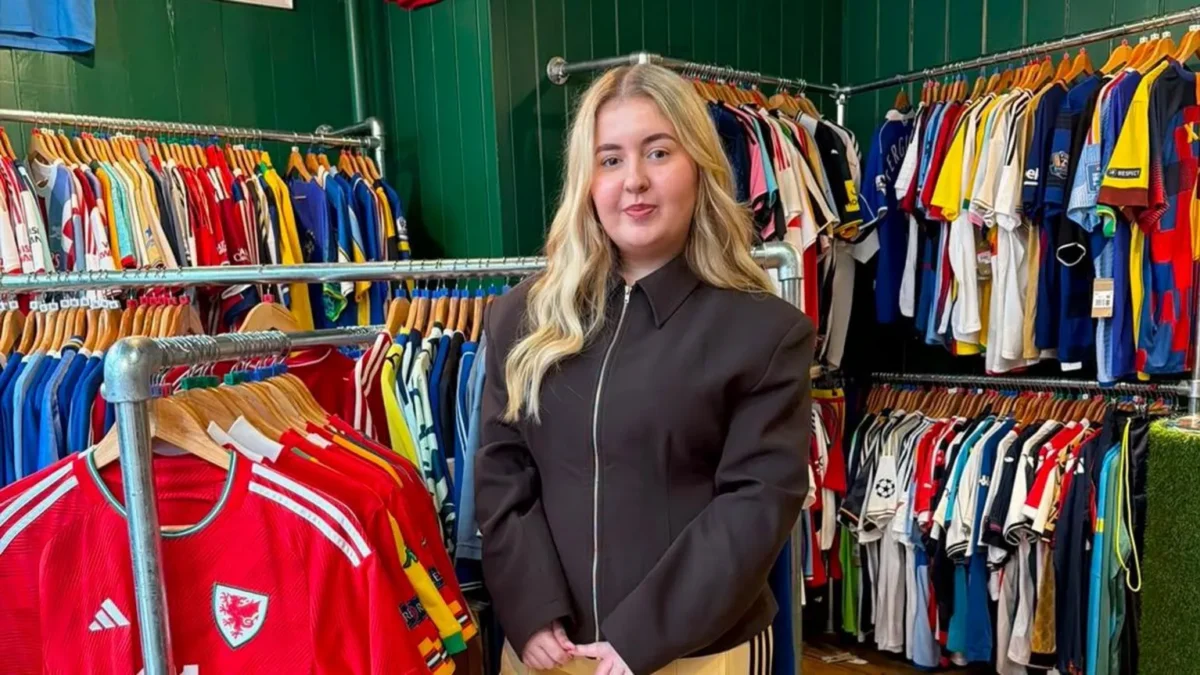
Eleri Williams, an 18-year-old from Aberdare, Rhondda Cynon Taf, began reselling vintage football shirts from her parents’ spare room during her GCSE years. Now, three years later, she has opened a shop in Cardiff and says the profits will help fund her law degree, describing the journey as “completely overwhelming” and a “surreal experience.” Williams’ venture sits in the broader context of more young people turning to side hustles to support education and daily living costs.
Her entry into the business began in 2023, when, at 15, she started selling some of her dad’s old shirts to earn extra money. What began as a small side project evolved into a formal business after she reinvested earnings and expanded her inventory. This week she opened a shop in one of Cardiff’s arcades, reporting £35,000 in profit before the storefront launch.
Williams explains that the aim was never to pay for university, but the income has allowed her to imagine attending Cardiff University debt‑free. She notes she is now in a financially comfortable position, with results and finances likely to shape when she starts her studies. She also emphasizes that her education remains a priority and that her results will influence the timing of her university plans.
The story resonates with concerns about student debt. The UK government’s decision to freeze the repayment threshold for English graduates has drawn scrutiny, while the Welsh government said it would not follow that move and supported a separate UK government measure to cap loan interest at 6%.
A recent survey of 600 students found that 65% had a side hustle last year, up from 38% in the 1980s, highlighting how private income sources are becoming more common among students. Williams says her own side hustle turned into a business that helps fund her university aspirations, though she stresses it won’t be a universal solution. Finder’s data on cost‑of‑living pressures underscores why many students take on extra work.
Williams runs the operation with support from her parents, who help manage the shop when she has classes or exams. She describes the business as flexible and notes that it will continue to operate around her studies. Her inventory includes notable pieces, such as a Juventus shirt once worn by Alessandro Del Piero that sold for about £150, and she has pursued rarer items like a Cardiff City shirt tied to a Super Furry Animals collaboration, although she does not expect to part with that one. She also highlights a preferred Manchester United 2002-03 third kit as a personal favourite and says customers can request specific shirts, which the shop will attempt to source.
The venture has also enabled Williams to travel within the UK and meet other vintage shirt sellers, a byproduct she describes as enriching. She stresses that her long‑term goal is to balance university studies with the business, which she expects to remain operational while she attends classes.
Overall, Williams frames her success as an example of how a teenage side project can grow into a source of funds for higher education, while acknowledging that outcomes will vary for other students. She remains grateful for the support network around her as she navigates the busy schedule of work and study.


