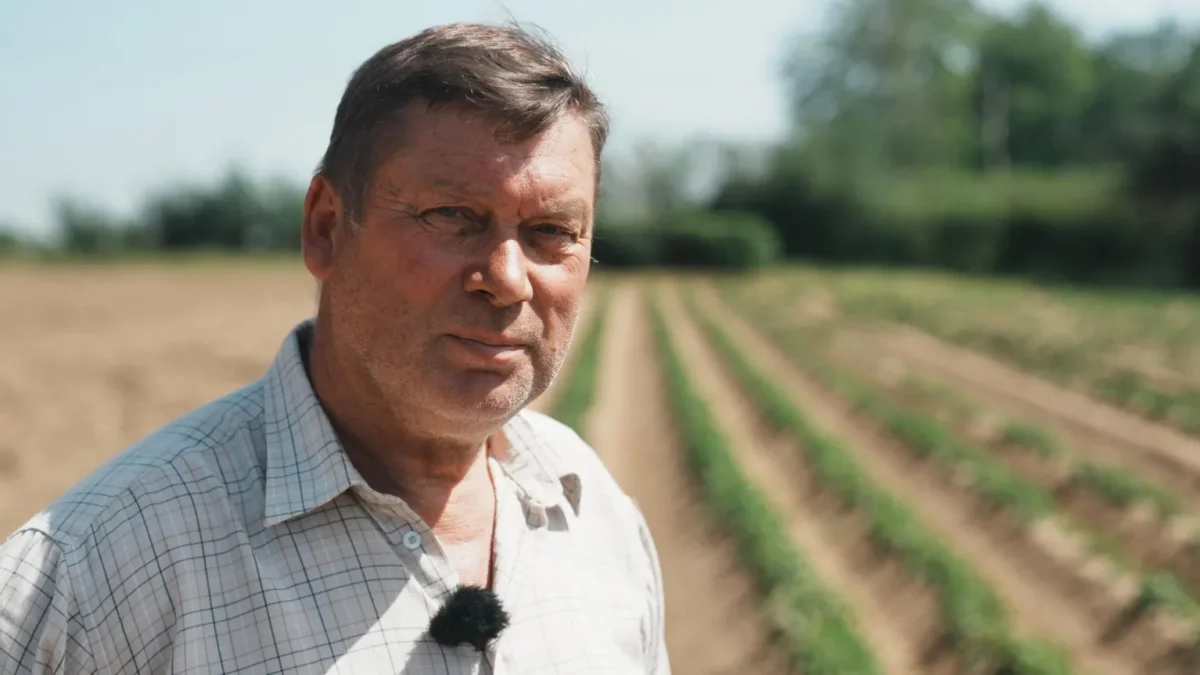
Fourth-generation farmer Chris Suckling, who operates Woodlands Farm in Holbrook, Suffolk, has voiced deep concerns about the financial viability of the agricultural sector, fearing for his son's future in the industry. Suckling reported that his operational costs have surged dramatically, with fuel and fertilizer expenses alone reaching £40,800 this year. He attributed these escalating costs, in part, to the conflict in Iran and noted that his attempts to diversify his farm's products have only added to his financial burden.
Suckling highlighted a significant increase in his red diesel expenses, which have doubled from £27,000 annually to £54,000. Furthermore, he stated that hauliers are imposing surcharges on their services, and the cost of fertilizers has climbed from £53,200 to £67,200 per year. The farm has been operating at a loss, and projections for next year's crops offer little financial relief. "Farmers are voting, they are packing it in," Suckling said, observing that land is increasingly being left fallow or converted into solar farms, renewable energy sites, or housing developments because farming is no longer profitable. He expressed guilt over potentially passing on a farm to his son, Harry, who represents the fifth generation of Sucklings, that may not provide the income he deserves. Suckling hopes for a change in government or political direction to encourage agricultural investment.
Another farmer, John Pawsey, an organic farmer at Shimpling Park Farm near Bury St Edmunds, also reported rising costs, particularly for diesel, although he does not use artificial fertilizers. Pawsey noted that his crop yields are subject to the weather, and a lower yield, combined with increased prices, could create a "perfect storm." His fixed costs have reportedly increased by 25% to 35%. Pawsey stated that he sees no solution to the challenges farmers face other than an increase in food prices, emphasizing that farmers need to be paid a fair price for their produce while retaining customers.
Cath Crowther, regional director of the Country Land and Business Association (CLA), shared that many individuals she has spoken with describe the current situation as the worst they have ever experienced. "We don't want to put doom and gloom on everything because we are a very innovative industry," she said, but stressed the necessity of seeing innovation and investment, which she believes is impossible without profitability. "It's very, very tough out there at the moment," Crowther added.
In response to these challenges, Emma Reynolds, Secretary of State for Food, Environment and Rural Affairs, stated that the government is taking action to support farmers. She announced that the government is reducing red diesel duty to its lowest rate in over two decades. "This government is taking decisive action to support farmers by cutting red diesel [fuel duty] to its lowest rate in over 20 years," Reynolds said in a statement. She affirmed the government's commitment to protecting the farming sector from global pressures, including the conflict in Iran.
These rising costs and financial pressures are impacting the livelihoods of farmers across Suffolk, raising concerns about the long-term sustainability of the industry and the ability to pass farms on to future generations. The situation highlights a broader economic challenge for the agricultural sector, where increased operational expenses are squeezing profit margins and threatening the viability of farming businesses.


