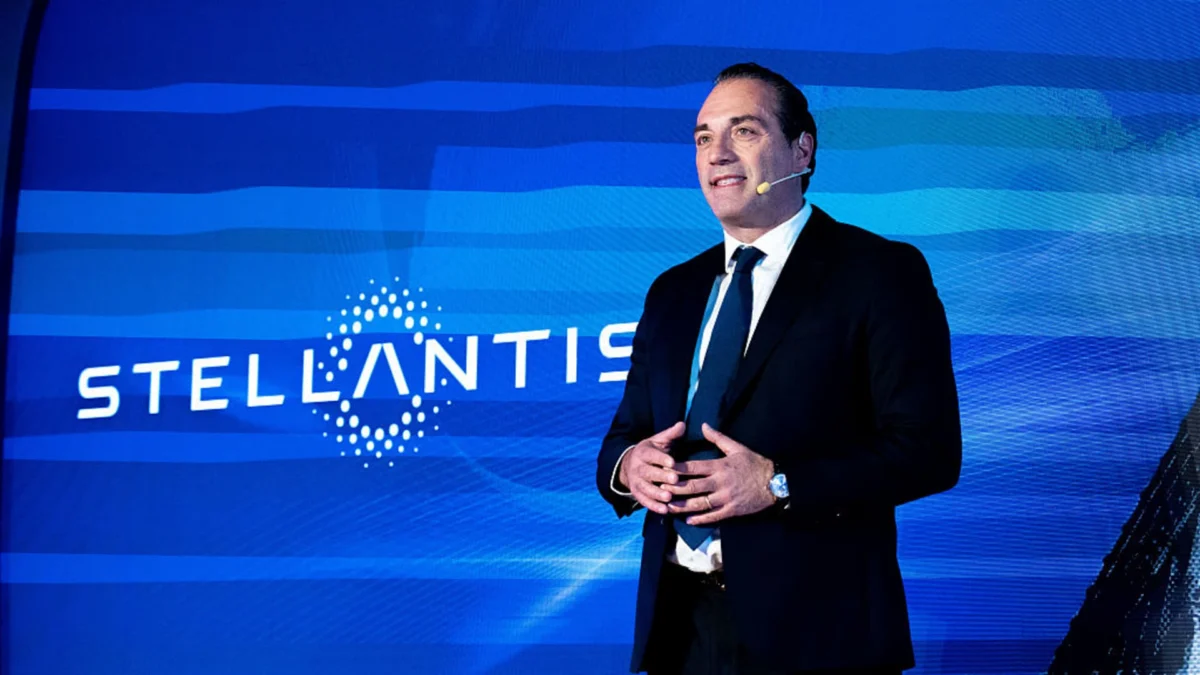
Stellantis announced a significant five-year strategic plan on Thursday, dubbed "FaSTLAne 2030," detailing an investment of 60 billion euros, approximately US$69.7 billion. The ambitious initiative, led by CEO Antonio Filosa, aims to reshape the company's future with a key target of achieving annual cost savings of 6 billion euros by 2028. This announcement was made during the company's first investor day under Filosa's leadership, held near Detroit at its North American headquarters.
The comprehensive plan allocates 36 billion euros towards revitalizing Stellantis' extensive portfolio of 14 automotive brands. This funding is earmarked for the launch of over 60 new vehicle models and significant refreshes for 50 existing models. These updates will span a range of powertrains, including all-electric vehicles, hybrids, and traditional internal combustion engines. An additional 24 billion euros will be dedicated to the development of global vehicle platforms and the integration of new technologies across the automaker's products, according to the company.
Stellantis also stated its intention to achieve positive free cash flow by 2028. This target follows a challenging previous year, during which the company reported a loss of 22.3 billion euros. This loss was partly attributed to a 22 billion euro restructuring effort that involved a shift away from a sole focus on all-electric vehicles. The company's strategic roadmap emphasizes maintaining all 14 of its automotive brands. However, it plans to consolidate the operational management of its European units, DS and Lancia, integrating them into Citroen and Fiat, respectively, according to company disclosures.
Fiat has been designated as one of four key "global brands," joining Jeep, Ram Trucks, and Peugeot. This grouping also encompasses the Pro One commercial operations. The company's regional brands will include Chrysler, Dodge, Citroen, Opel, and Alfa Romeo, alongside the luxury brand Maserati. To enhance cost efficiencies, Stellantis intends to introduce a new vehicle platform, dubbed "STLA One," in 2027. This platform is designed to unify five distinct existing platforms into a single, scalable architecture, thereby reducing complexity and broadening market coverage. The company targets achieving 20% cost efficiency through these measures, the company said.
Looking further ahead, Stellantis aims for 50% of its vehicle volume to be produced on just three global platforms by 2030, with an objective of up to 70% component reuse. CEO Antonio Filosa, who assumed leadership less than a year ago, and his executive team are set to elaborate on the "FaSTLAne 2030" plan throughout Thursday. The plan's core tenets include more focused brand management, strategic investments, strengthened partnerships, an optimized manufacturing footprint, a commitment to operational excellence, and the empowerment of regional and local teams. Recent partnership expansions include agreements with Jaguar Land Rover for the U.S. market and collaborations with Chinese automakers Leapmotor and Dongfeng Group.


