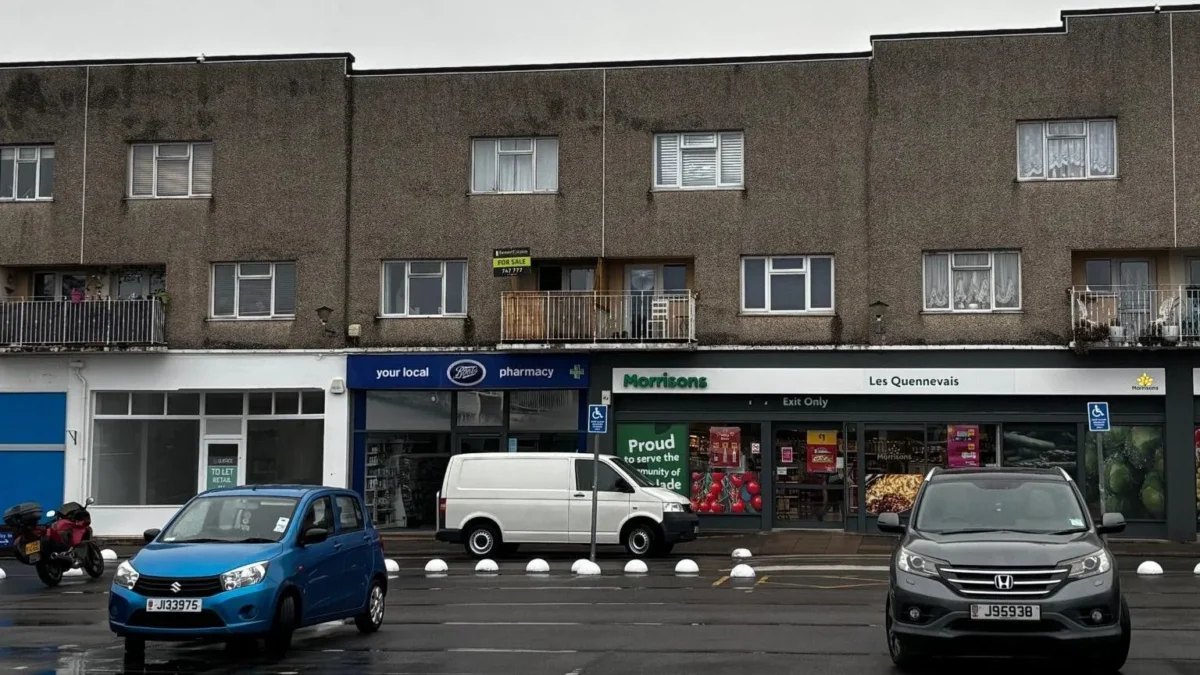
Voters in St. Brelade are expressing significant concerns over a growing number of empty retail spaces and the escalating cost of living, issues that have become central to the district's electoral landscape. As the BBC undertakes a roadshow visiting every voting district prior to the upcoming election in June, its stop in St. Brelade on Tuesday highlighted these pressing challenges.
Joe Pinzari, proprietor of two businesses located in Les Quennevais Parade, shared his difficulties, revealing that he has been forced to close one of his establishments due to prohibitive rents and operational costs. Les Quennevais, intended to serve as the island's secondary urban center, has long been perceived as neglected, with its parade and precinct marred by numerous vacant shopfronts.
"The rent as a percentage of the takings reached up to 27%," Pinzari stated, illustrating the unsustainable financial burden on local businesses. "You just can't operate like that as a business. I had to shut it." He lamented the decline of the area, recalling a childhood in St. Brelade when Les Quennevais was a vibrant hub. "I remember as a kid, I was brought up in St. Brelade and this area was busy. It was buzzing, it was a vibe, people came up here for a reason. But now this area is lacking a reason for people to come up."
Pinzari attributed the proliferation of empty shops to excessively high rents, deteriorating building conditions, and a general lack of investment in the area. Previous reports indicated that commercial landlords, often based in the UK, were charging steep rents and failing to undertake necessary repairs, exacerbating the problem.
His business, The Bean Café, has remained closed for over a year. Pinzari expressed a lack of local support and government assistance, which he believes is crucial for struggling enterprises. He proposed the establishment of a local enterprise center to provide a lifeline for businesses facing hardship. "People can come in and talk to them when they are struggling and find a way to help them," he suggested. "If we were to have a Jersey enterprise centre, I would say: 'Send Joe in from the Bean Café. What are his struggles? How can we help him through this difficult period? Let's support him, let's keep this café open and keep people employed and, once he's back on his feet, we pull [considerately withdraw] that support from him.'"
The cost of living crisis is a pervasive issue affecting many residents. Louis Bowen remarked on the paradox of a wealthy island like Jersey experiencing widespread reliance on food banks. "This is a rich island and you have people going to the food bank. That should not be happening in a place like Jersey," he asserted.
Ruth Perchard, who works in a church, corroborated these sentiments, noting that even employed individuals are resorting to food banks. "I meet a lot of people who are really struggling, and even people who are working are having to go to food banks," she said. "For some people, it's a case of either you eat or put the heating on." Perchard also suggested that wealthier individuals should contribute more through taxation.
Tony Bellows, editor of the parish magazine La Baguette, highlighted concerns regarding the social housing sector, pointing to a significant disparity between those who own property and those who rent. "There is a big gap between people who are well on the housing ladder and the people who have rented housing," he observed. He noted that the States' oversight on rents offers some protection to tenants against excessive landlord demands.
Greg Morel, a resident of St. Brelade and head of the Jersey National Park, emphasized the importance of preserving the island's natural environment. Approximately 16% of Jersey's landmass is designated as national park, subject to stringent development regulations. Morel stressed that environmental well-being is fundamental to the island's social and economic prosperity, attracting residents and businesses alike.
"I would argue that you need environmental wellbeing underpinning social and economic wellbeing," Morel stated. "People want to live and work here because it's such a nice place to live. So I think it's really important that the right policies are put in place to ensure that, while we all need infrastructure, it's done in a way that protects those things that make Jersey special – a well managed and well conserved natural environment."
The election for deputy in St. Brelade is scheduled for June 7. The list of candidates is available for public review. These issues of economic strain and environmental preservation are expected to dominate the electoral discourse in the district.


